

Mr. Mantuk Phom
KVK Longleng
Background and Transformation through Natural Farming
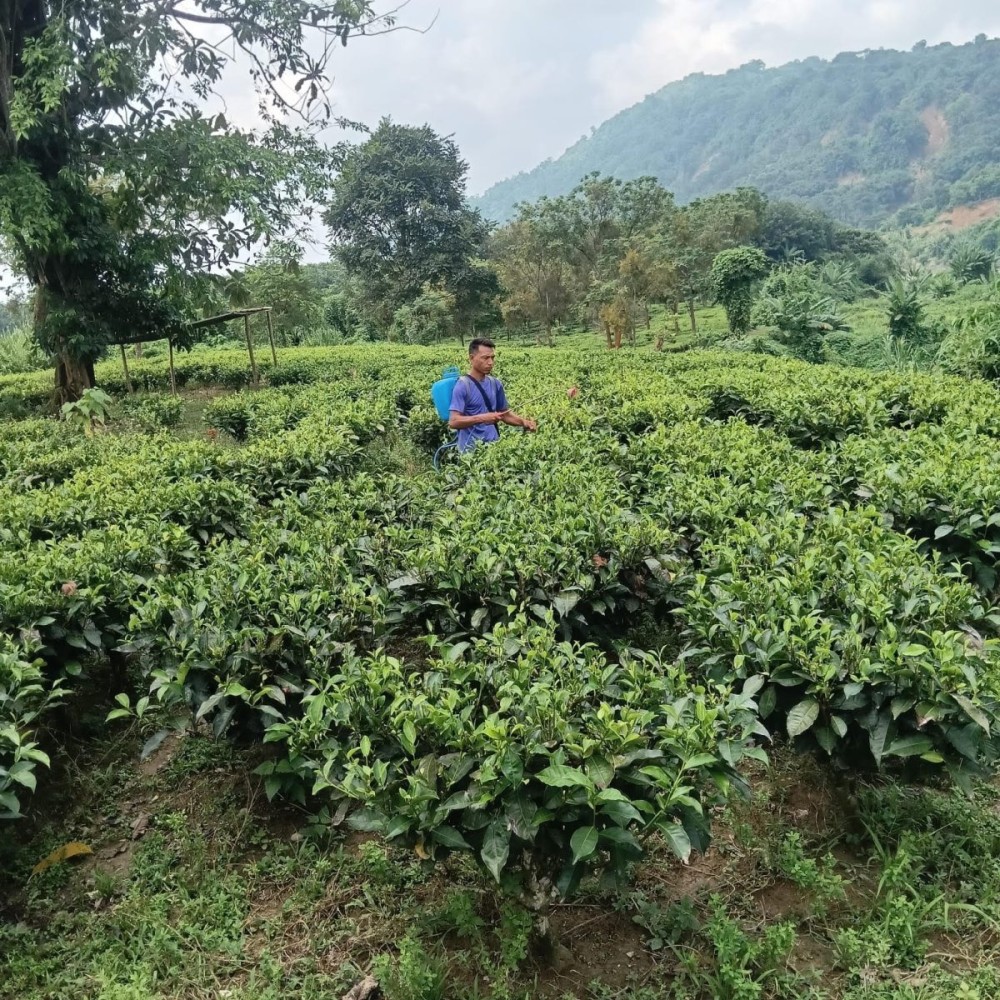
Mantuk Phom, a progressive farmer of Apoiji Village, Tamlu Block, Longleng District, Nagaland, has emerged as an inspiring example of natural farming, farm diversification and sustainable agricultural entrepreneurship. He began adopting natural farming in 2020 on an initial area of 3 acres after receiving training from ICAR–Krishi Vigyan Kendra (KVK), Longleng. Despite an initial decline in crop yield following the discontinuation of chemical inputs, he continued learning, experimenting and following recommended natural farming practices. With sustained technical guidance and determination, he gradually converted his entire 12-acre farm into natural farming. His diversified enterprise integrates tea, rice, banana, vegetables, livestock and fisheries, generating a reported annual gross farm return of approximately Rs.14.25 lakh. His journey reflects the importance of farmer innovation, perseverance and technical support in developing sustainable agricultural livelihoods.
Adoption of Natural Farming Technologies and Resource Recycling
The transformation of Mantuk Phom’s farm has been supported by the adoption of crop diversification, mixed cropping, mulching, livestock integration and on-farm resource recycling. He prepares and utilizes natural inputs such as Ghanajeevamrit, Jeevamrit, Beejamrit, Neemastra, Agniastra and botanical extracts for crop production and protection. Ghanajeevamrit is applied at approximately 400 kg per acre, while Jeevamrit is applied through irrigation water and foliar spraying at approximately 15-day intervals. Beejamrit is used for seed treatment, with approximately 20 litres applied for treating up to 100 kg of seed. The farmer also practices Pre-Monsoon Dry Sowing (PMDS)/Navadanya, comprising 18–20 crop species, as a summer relay crop. His locally developed botanical preparation, popularly known as Mantuckastra among the Phom Tribe, represents an important example of farmer-led innovation in natural crop protection.
Improvement in Soil Health and Farm Sustainability
The adoption of natural farming has reportedly contributed to improvements in soil health, crop performance and overall farm sustainability. Phom has observed better crop performance under drought conditions, reduced dependence on external agricultural inputs and more regular income from diversified enterprises. Crop residues are utilized as cattle feed and mulch, while livestock resources support the preparation of natural farming inputs, strengthening the farm’s internal resource recycling system. More than 50 analysed soil samples were reportedly rich in organic carbon after two years of natural farming, with organic carbon exceeding 1.25% in some fields. Compared with May 2024, available phosphorus increased by 89%, 32% and 179% in samples collected during May 2025, October 2025 and May 2026, respectively. Available potassium and selected micronutrients also showed reported increases. These observations highlight the potential contribution of sustained natural farming and resource recycling towards improving soil fertility and supporting climate-resilient agriculture.
Technical Guidance and Role of Shubhendu Kumar Behera
Shubhendu Kumar Behera, Subject Matter Specialist (Plant Pathology), ICAR–KVK Longleng, Nagaland, has played an important role in providing technical guidance and supporting the development of Mantuk Phom’s natural farming enterprise. The farmer received training from ICAR–KVK Longleng and benefited from continuous technical support through field visits, Farmer Field Schools, training videos, KVK events and exposure visits to Assam. Through this guidance, the farmer strengthened his knowledge of natural input preparation, crop diversification, botanical crop protection and resource recycling. Phom has also taken an active role in disseminating natural farming practices among neighbouring farmers and rural communities. His farm serves as a practical learning platform for farmers interested in adopting locally suitable and resource-efficient agricultural practices.
Production, Economic Gains and Wider Farmer Outreach
Mantuk Phom’s diversified 12-acre farm demonstrates the economic importance of integrating multiple agricultural enterprises. Tea occupies 6 acres and reportedly produces 158 quintals of green leaf, generating a gross return of Rs. 7,90,000 at an average price of Rs.50 per kg. Rice, banana, king chilli, maize, ginger, turmeric and various vegetables contribute additional income throughout the year. The reported total gross return from the listed enterprises is Rs.14,24,850, with an estimated cultivation and marketing cost of Rs.3,15,000 and an estimated net return of Rs.11,09,850. The enterprise reportedly provides employment to 10 workers. As a Community Resource Person, Phom has reportedly trained 211 farmers, of whom 67 farmers from Setap, Ngetchongching, Namha, Bura Namsung and Pongching are practising natural farming. His farmer-to-farmer extension activities demonstrate the potential for wider dissemination of sustainable agricultural practices in Longleng District.
Conclusion and Future Prospects
The journey of Mantuk Phom from adopting natural farming on 3 acres to managing a diversified natural farming enterprise across 12 acres illustrates the importance of perseverance, farmer innovation, technical guidance and efficient utilization of local resources. His experience demonstrates how crop diversification, livestock integration, natural input preparation and on-farm resource recycling can contribute to sustainable agricultural livelihoods in the hilly and predominantly rainfed conditions of Longleng District. The reported improvements in soil health, crop resilience, farm income and employment generation provide valuable learning for other farming communities. His continued collaboration with ICAR–KVK Longleng, under the technical guidance of Shubhendu Kumar Behera, and his role in training fellow farmers create opportunities for further dissemination of natural farming practices. Future efforts towards small-scale tea processing, packaging, branding and value addition may further strengthen market access and farm income. Shri Mantuk Phom’s experience stands as a valuable farmer-led example of diversified and sustainable agriculture in Nagaland.
Article contributed by:
Shubhendu Kumar Behera, Subject Matter Specialist (Plant Pathology), ICAR-KVK Longleng, Nagaland
Avaneesh Kumar, Subject Matter Specialist (Agronomy), ICAR-KVK Longleng, Nagaland
Dr Kalu Ram, Subject Matter Specialist (Fruit Science), ICAR-KVK Longleng, Nagaland
Dr Hari Charan Kalita, Senior Scientist and Head, ICAR-KVK Longleng
Dr Homeswar Kalita, HoRC, ICAR-Research Complex forNEH Region, Nagaland Centre
Dr A K Mohanty, Director, ICAR-ATARI Zone-VII, Umiam, Meghalaya

