IANS Photo
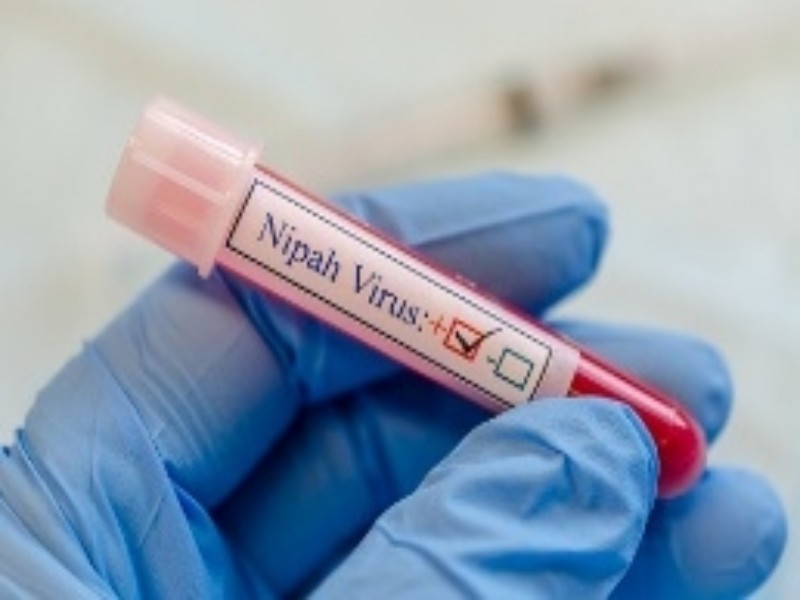
Kolkata, January 14 (IANS): The detection of two suspected Nipah virus cases in West Bengal has put health authorities on alert, prompting the Centre to deploy a National Joint Outbreak Response Team to support containment and public health measures.
Doctors said that the Nipah virus is rare, unpredictable and can be deadly.
On Wednesday, they said that awareness and early action are crucial to prevent its spread.
Dr Rakesh Pandit said Nipah virus is a zoonotic disease, meaning it can spread from animals to humans.
"Fruit bats are the natural carriers of the virus. People can get infected by consuming contaminated food or through close physical contact with infected individuals," he said.
He said, "Past outbreaks have shown that the virus can also spread from human to human, particularly in healthcare and household settings. From fever and respiratory symptoms to neurological complications, the illness can take many different forms. Patients may experience encephalitis, a potentially fatal brain inflammation, in more advanced cases."
Doctors pointed out that while Nipah does not spread as fast as airborne infections like Covid-19 or influenza, it is highly contagious in situations involving close and prolonged contact.
Dr Sushrut Ganpule, Consultant Pulmonologist, Pune, said, "Medical personnel and caregivers are particularly at a higher risk in the absence of stringent infection control procedures. Because of this, preventing secondary transmission requires early detection and isolation. Previous infections with the virus have resulted in up to 75 per cent of deaths, making it deadlier than the majority of viral infections. The illness is life-threatening, and survivors may experience long-term neurological problems like seizures and personality changes."
Experts stressed that early diagnosis plays a key role in controlling Nipah outbreaks and saving lives.
Dr Aakaar Kapoor said, "With Nipah, time is everything. The symptoms can initially look like a routine viral fever, but neurological signs or breathing difficulty are red flags. Early lab confirmation allows doctors to isolate patients quickly and protect contacts."
He added that testing for Nipah requires special handling and coordination.
"Samples must be handled with extreme caution. RT-PCR testing and close coordination with reference labs are essential to confirm cases without delay. Imaging and lab diagnostics together help doctors assess how severely the organs are affected. Early detection of lung or brain involvement can change the course of treatment and improve outcomes," Dr Kapoor said.
Doctors say Nipah is not limited to just one part of the body. In severe cases, it can affect multiple organs.
Dr Vineet Malhotra, Urologist, explained, "On severe or advanced cases, we also see kidney involvement, which can worsen prognosis. This multi-organ impact is why patients require intensive monitoring and supportive care."
At present, there is no approved vaccine or antiviral treatment for the Nipah virus. Treatment mainly focuses on managing symptoms and preventing complications.
Dr Pranjit Bhowmik said, "Currently, there is no approved antiviral medication or vaccine to treat or prevent the disease. Treatment remains largely supportive, focusing on symptom management and preventing complications.
The Centre's decision to closely monitor the situation reflects the virus's history of sudden outbreaks and high mortality.
"Vigilance, early diagnosis, strict isolation, and public awareness remain the strongest tools to prevent a limited outbreak from escalating into a larger health crisis," it said.