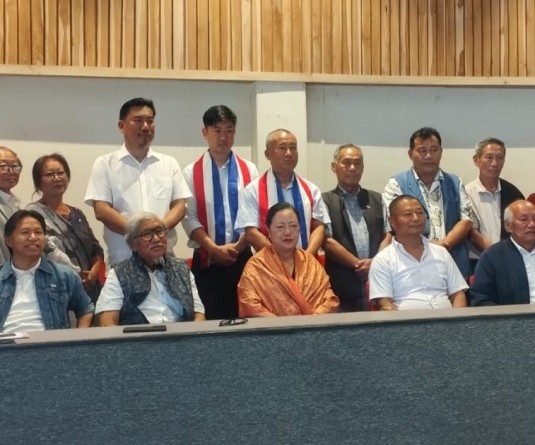
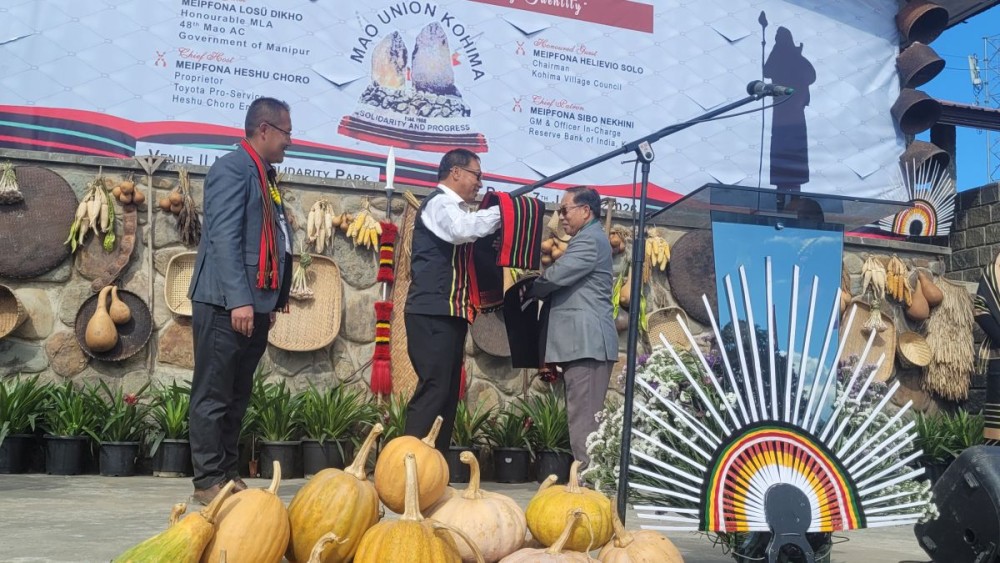
Losü Dikho, MLA 48th Mao AC, Government of Manipur and KVC Chairman, Hielievio Solo exchange traditional shawls in a gesture of strengthening the bonds of brotherhood between the two communities.
Morung Express News
Kohima | January 7
The MLA of 48th Mao Assembly Constituency, Government of Manipur, Losü Dikho spoke on the deep-rooted brotherhood and historical relationship between the Mao and Angami communities, expressing gratitude, humility and reaffirming unity among the Naga people.
Speaking at the Chüthuni festival at Kohima as the special guest on January 7, Dikho said the Mao people consider themselves “fortunate to be an immediate neighbour” with the Angamis. He described the Mao community as a small tribe occupying a limited geographical area, yet blessed to be immediate neighbours of their “big brother, the Angamis.”
“We will never forget you, and we are not supposed to forget you,” he said, acknowledging the blessings and leadership bestowed upon the Angami community by God. He noted that the Angamis have received divine blessings and, importantly, have shared those blessings with the Mao people.
Recalling history, Dikho said the relationship between the Mao and Angami communities goes back to time immemorial. “You are our big brothers. We are not supposed to challenge you or compete with you. We will never do that,” he stated, adding that while minor misunderstandings may arise at times, which he said, are ‘temporary’ and should be understand by all.
He maintained that the Angamis, as a community has been richly blessed by God and anointed to lead the Naga people. “Our Mao people have been protected by you since time immemorial. Because of you, we are surviving,” he said, thanking the Angamis for their kindness, care, and acceptance of the Maos as “forever brothers.”
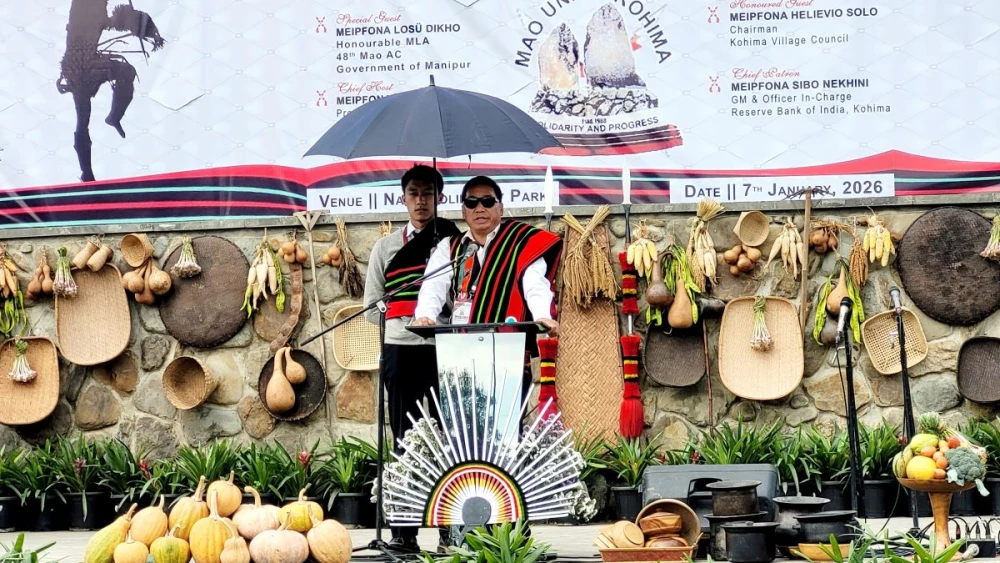
Also reflecting on the spiritual journey of the Mao people, Dikho said, although the gospel first reached Mao areas during a time when the community was still engaged in headhunting, it was initially rejected. However, he noted that God did not forget the Mao people, and eventually, the gospel reached them through the Angamis.
“Because of the Angamis, we are entering into 100 years of Christianity this year,” Dikho said, announcing that the centenary would be celebrated later this year or in early January next year, and extended an invitation to the Angami community to be part of this historic celebration.
He maintained that the Angamis not only provided protection, political, social and fraternal but also shared the gospel, calling it one of the greatest gifts received by the Mao people.
Touching upon his political journey, Dikho said he never intended to join politics. However, circumstances changed when Nagaland Chief Minister Neiphiu Rio wanted to launch his party in Naga-inhabited areas of Arunachal Pradesh and Manipur. He recalled the challenges faced due to strong opposition and anti-Naga sentiments in Manipur, stating “many people were scared to take his party and refused to take it. Nagas were also confused but Rio’s determination to launch a “Naga party” inspired many.”
“In 2012, I was not ready for politics,” Dikho said, recounting how party leaders from Nagaland persuaded him to contest elections to help the Naga people suffering in Manipur. He recalled how he then, went on to win with a high margin, securing the second-highest margin in Manipur at the time, followed by the highest margin in the subsequent election, and again winning strongly for the third time despite many difficulties.“This is because of you, because of your brotherly love,” he said, attributing his political journey and success to the support and leadership of the Angami community.
Speaking on Chüthuni, the traditional harvest festival of the Mao people, he expressed gratitude to the Nagaland leadership, particularly Chief Minister Rio, for declaring Chüthuni a restricted holiday in Nagaland. “This is a very big message for our people in Manipur,” he said, stating that this festival is not being recognised in Manipur till today.
He further recalled how Mao people benefited from job reservations and opportunities in Kohima and nearby areas, leading to generations being educated, settled, and established there. “People respect us because of you,” he said, explaining why Mao people continue to feel closely attached to Kohima and the Angamis.
Calling for continued unity, Dikho said the Mao people recognise their shortcomings and weaknesses, but are grateful for the understanding and support they receive. “We are not here to compete. We are not here to go against you,” he said, pledging continued support to Angami leadership.
He also emphasised the importance of cultural and linguistic unity, appreciating the development of Tenyidie as a common language. He said efforts are being considered through the Tenyimi Public Organisation to promote learning of Tenyidie among Tenyimi people, especially the youth, to foster unity and collective growth.
“Without a common language, it is not easy,” Dikho said, stressing that shared language, leadership, and mutual support are essential for serving the people.
Meanwhile, Dikho said that as a smaller community, the Mao people believe in supporting the stronger and larger Angami community as its elder brother, standing together to support leadership and guide the Naga people forward.