

Photo Courtesy: Image by Rosy / Bad Homburg / Germany from Pixabay | For representational purpose only
Mughalu T Kinimi
Dimapur
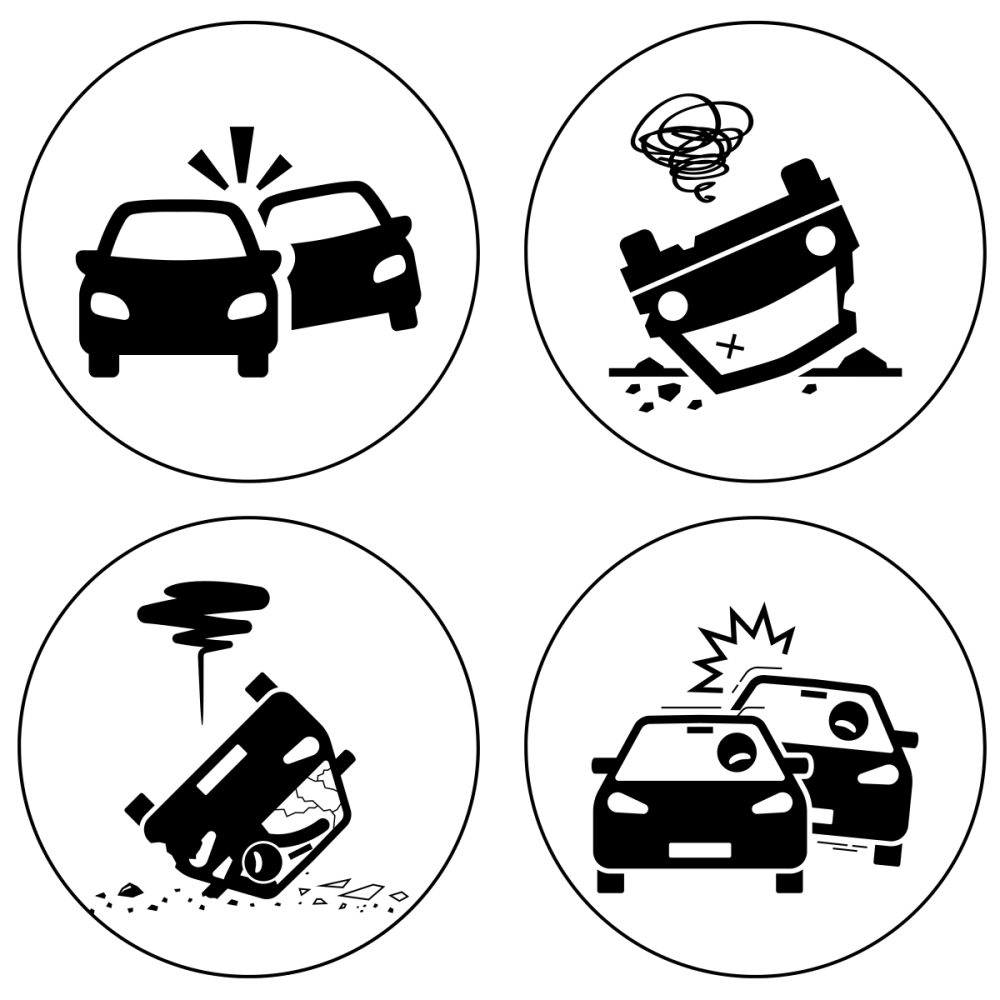
There is something deeply disturbing about the recent hit-and-run incident in Dimapur involving a daily-wage worker from Bihar. According to a report by Hornbill TV, a man was struck by a vehicle during the early hours of 27th August 2026. Yet what followed the accident appears to be even more disturbing than the collision itself. The police reportedly could not immediately locate the victim. The reason, according to the account carried in the report, was that the victims had allegedly been threatened and forced to leave the scene.
Imagine the situation. A daily-wage worker and his acquaintance are involved in an accident. On the other side are allegedly a drunken driver and three intoxicated companions. Instead of remaining at the scene, taking responsibility, assisting the injured, or allowing the matter to proceed legally, the victims were allegedly intimidated and threatened with violence. Faced with the possibility of being beaten, they reportedly retreated rather than lodging an immediate FIR. If this account is established through proper investigation, then this is not merely a case of a motor vehicle accident. It raises a much more serious question about power, intimidation, drunkenness and the denial of justice.
An Accident Is Not Always “Just an Accident” We have become too casual in the way we speak about road accidents. “Accident hoishe.” “Compromise kuri dibo.” “Settlement hoi jabo.” These words are frequently used to close uncomfortable conversations. But when a person drives after drinking, drives recklessly, injures another person, and then attempts to intimidate the victim, we must ask: At what point does an accident cease to be simply an accident? Drunken driving is not an unavoidable misfortune. It is a conscious decision made before the vehicle even begins to move. A person drinks, He/she knows that he/she has consumed alcohol, He/She knows that alcohol affects judgement, reaction time and control, and then he/she chooses to sit behind the steering wheel. The consequences of that decision may be irreversible—not only for the driver but for pedestrians, labourers, cyclists, passengers and ordinary families who simply happen to be on the road.
The recent incident should therefore disturb us not because the alleged victim was a Bihari daily-wage worker, but precisely because his identity should not matter at all. Whether the victim is Naga, Bihari, Assamese, Bengali or anyone else, the law and human dignity must be the same. A poor migrant worker walking on a Dimapur road deserves exactly the same protection and justice as the son or daughter of the any family in Nagaland.
The Numbers Tell Us That We Cannot Be Complacent; Dimapur and its surrounding jurisdictions have seen significant fluctuations in road accidents over the past few years. Official traffic data reported for Dimapur, Chümoukedima and Niuland recorded 557 accidents in 2022, 267 in 2023, and 110 in 2024, reflecting a substantial decline during that period. The reduction was attributed to stronger enforcement, road-safety campaigns and improved traffic management. But a reduction in statistics should never be mistaken for the disappearance of the problem. The beginning of 2026 has already provided a serious warning. According to Dimapur Traffic Police data reported in March, 21 road accidents occurred in January and February alone, resulting in eight deaths and 20 injuries. Traffic authorities identified overspeeding, rash driving and drunken driving—particularly during late-night and early-morning hours—as major contributing factors. This is precisely why we cannot treat drunken driving as a minor social offence. It is not merely about violating a traffic rule. It is about placing other human beings in danger.
Our Traffic Police Cannot Be Everywhere; It is easy to criticise the traffic police whenever an accident occurs. But we must also acknowledge reality: traffic personnel cannot follow every vehicle, monitor every party, or stand outside every drinking establishment. The Dimapur Traffic Police and police authorities have repeatedly conducted enforcement drives against overspeeding, rash driving and drunken driving. During intensified festive-season enforcement in 2023, police specifically deployed personnel at strategic locations to check these violations. Nagaland's Motor Vehicles enforcement structure also includes dedicated enforcement personnel to implement the provisions of motor vehicle laws. But enforcement alone cannot solve a problem when society itself quietly tolerates the behaviour. A police checkpoint may stop one drunken driver. But what about the ten who decide not to drink and drive because society has made the practice morally unacceptable. That is the real challenge.
The Dangerous Culture of “Compromise”; Perhaps one of the greatest obstacles to road justice in our society is the culture of compromise. Not every compromise is wrong. Civil disputes can sometimes be resolved peacefully. Minor property damage may be settled amicably. Human relationships sometimes require forgiveness. But drunken and reckless driving that causes serious injury or death should never be casually reduced to a private compromise. Why? Because the consequences are not private, a victim may suffer permanent disability, a daily-wage worker may lose the ability to earn, a family may lose its only breadwinner, a child may lose a parent. And yet, after some negotiation, money may change hands, community elders may intervene, apologies may be offered—and the matter disappears.
The accused goes home, The damaged vehicle is repaired, But the injured person's body may never be repaired. That is why we must clearly condemn the normalisation of compromise in serious cases involving drunken and rash driving. Forgiveness is a moral and personal matter. Legal accountability is a matter of public justice. The two should not be confused.
Punishment Must Also Be Seen; India's Motor Vehicles law provides serious penalties for drunken driving. Under Section 185, drunken driving can attract substantial fines and imprisonment, with harsher consequences for repeat offenders. But here is an important question for our society: How often do we hear about the final consequences? We hear about accidents, we see photographs of damaged vehicle, we watch videos of police checking motorists. But what happens afterwards? Was the driver prosecuted? Was the licence suspended? Was the offender convicted? Was there imprisonment? Was the victim compensated? Did the case disappear through private settlement? The publicity of enforcement should not end at the roadside checkpoint.
The aftermath of justice must also be visible; When the public knows that drunken driving resulted in licence suspension, prosecution, heavy penalties or imprisonment, the message becomes much stronger. The purpose is not public humiliation. It is public deterrence. People must understand that drinking and driving is not something that can always be solved through influence, family connections or a quiet compromise.
A Question for Our Own Society; We must also have the courage to look inward. Too often, we condemn outsiders for bringing problems into Nagaland while remaining reluctant to confront the destructive behaviour of our own people. If one of us drives drunk and kills someone, we cannot defend him because he belongs to our tribe, our locality, our church or our circle of friends. Wrong does not become right because the offender is “one of us.” Indeed, the true test of a mature society is whether we can hold our own people accountable. The Naga community speaks often about dignity, community and responsibility. Those values must also extend to the roads of Dimapur. What dignity is there in threatening an injured victim? What community is protected when drunken friends shield a reckless driver? What honour is preserved when a poor labourer is frightened into walking away from justice?
Enough of Silence and Settlement; The recent incident should therefore not disappear after a few days of social-media discussion. It should provoke serious reflection. We need stronger enforcement of existing laws against drunken and rash driving. We need consistent prosecution in serious cases. We need greater public awareness of the legal consequences. We need the police and relevant authorities to communicate—not merely the number of people checked or fined, but, where legally appropriate, the outcomes of serious cases.
Most importantly, we need to end the culture in which victims are pressured into silence and accused persons are rescued through compromise. A road accident can destroy a vehicle. But drunken and reckless driving can destroy a body, a livelihood, a family and an entire future. Those things cannot always be repaired.
The question before us is therefore simple: How many more lives must be damaged before we stop calling drunken driving a mistake and begin treating it as the serious public danger that it truly is? Dimapur deserves safer roads. But safer roads will not come merely from more traffic police. They will come when every driver understands one fundamental principle: If you drink, do not drive. And if you choose to drive drunk and destroy another person's life, society must not help you escape responsibility.

