


A comparative research analysis of Social/Development Impact Bonds and layered blended finance
Er Anirudh Khajuria
Indian Institute of Forest Management Bhopal MBA Forestry Management (25-27)
THE CORE QUESTION: When India wants to finance a last-mile health programme, when should it use a single-tranche SIB/DIB and when should it use layered blended finance?
The financing question behind better care
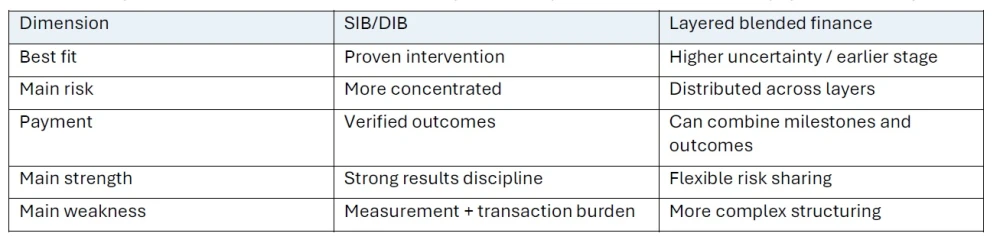
Finding money is not only the problem in financing better health care it is main deciding between who takes the risk when a program or may not produce the this research article makes a comparison between two structures a single tranche social impact bond where investors provide money up front and are repaid when agreed results are achieved and layered blended finance where different type of capital takes different level of risks Three main comparison variables are taken into consideration capital structure risk allocation verification cost transaction cost investor return and speed of repayment The main finding are quite simple SIB is more suitable when an intervention is already proven and its results are measurable Blended finance can be more useful earlier when uncertainty is higher and risk needed to be shared.
Rajasthan provides the real-world test
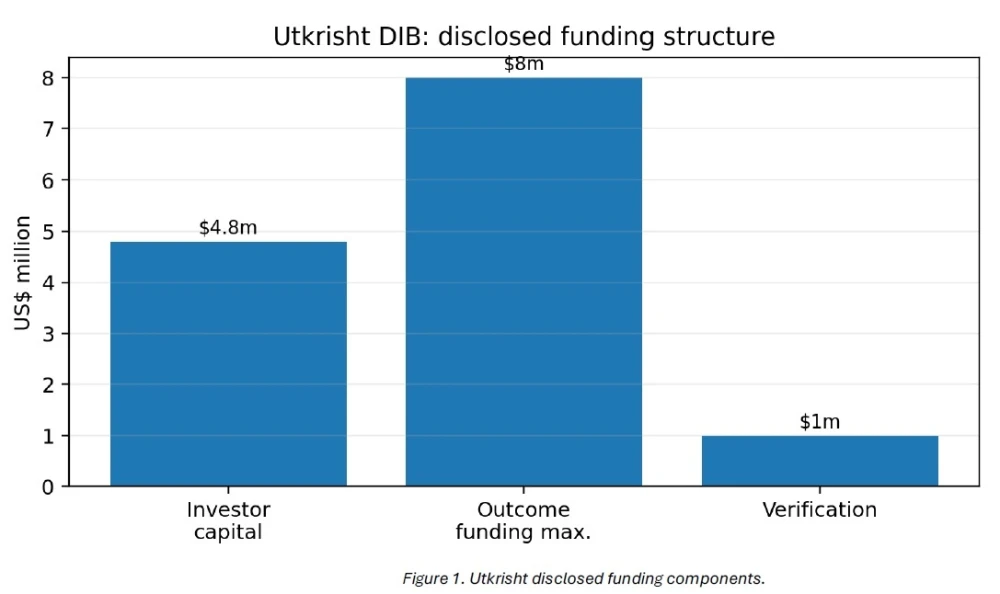
The Utkrish development impact bonds Gives a into real health sector It was originally designed to improve maternal and newborn care in private facilities in Rajasthan Investors supplied capital upfront health care providers use it to improve quality and independent assessment was done to determine whether agreed results were achieved or not The disclosed structure included about US $ 4.8 million of upfront investor capital and up to US dollar$ 8 million in outcome funding Utkrish serves as an output link health financing in India while also showing that verification and measurement of impact a central idea in impact economics.
Two structures, two ways of carrying risk
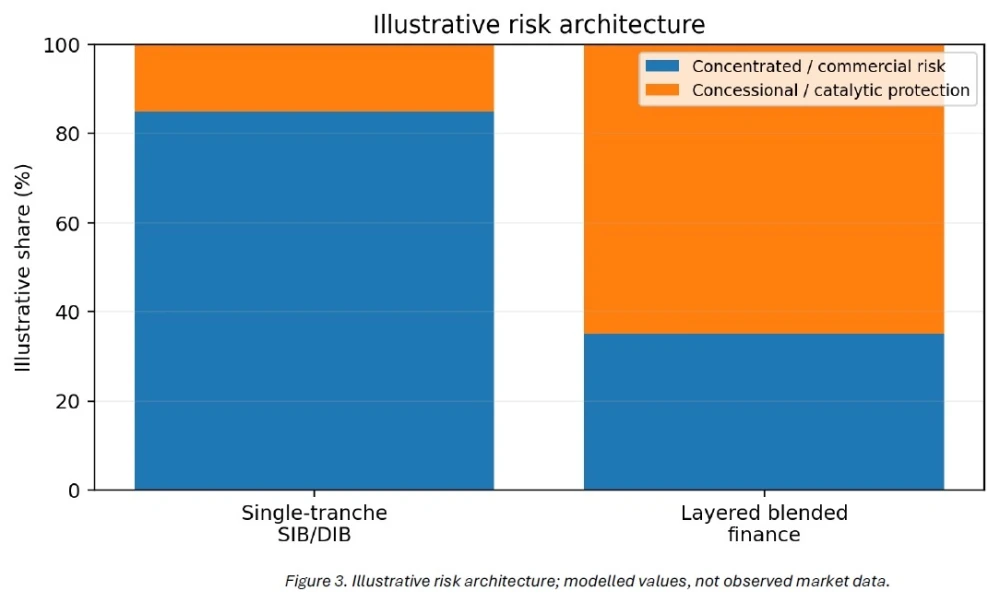
In single tranche SIB most financial risk is concentrated with investors If in any case outcome is missed investor may lose their money or receive less than expected interest This creates a strong pay for results incentive but the willingness of the investors to take risk must originally be there layered blended finance spreads the uncertainty across the different levels of financing structure the highest position of risk is usually taken by concessional tranche and the highest return is taken by private senior tranche The early losses are absorbed by the zero interest tranch that effectively lowers the weighted average cost of capital in comparison to highest interest payment of the layer.
What the Indian cases show
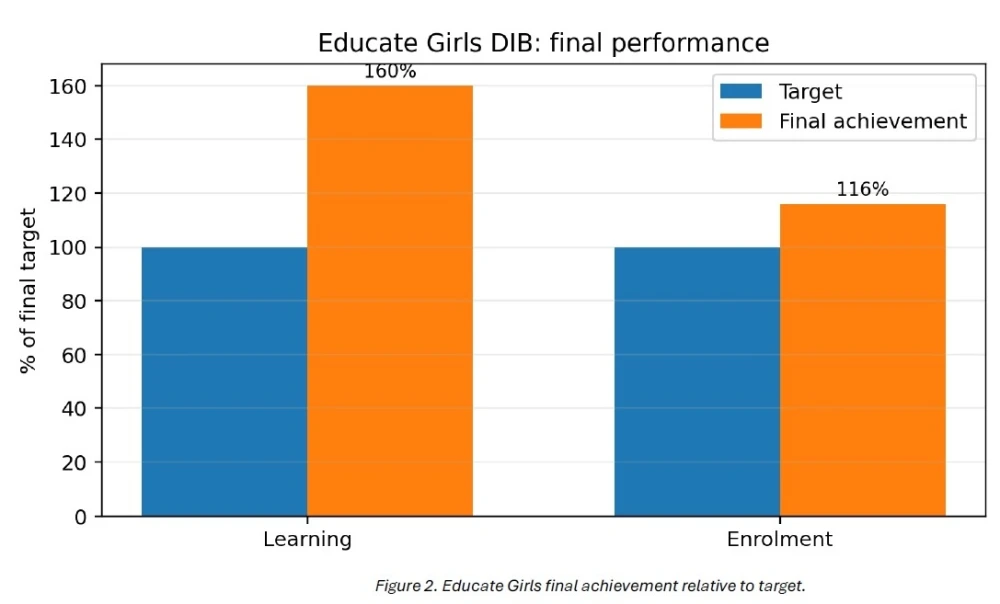
Educate girls the second example of Indian Impact bond reference its development Impact Bonds linked payment to learn and enrolment final results reportedly achieved 160% of learning target and 160 in person of the end target while the investors received principal plus a reported 15% return on their original investment This shows that outcome finance can work but they do not mean that the Impact Board is automatically the right instrument for every program.
This research article therefore models both structure against each other Illustrative US $14 million program and makes a fair comparison and test the financial architecture rather than comparing programs of different sizes and their outcomes the proposed blended stack contains grant first loss working capital and senior outcome layers plus verification and program management fees These figures are modelling assumptions not an existing Indian transaction
Why scale changes the answer
There are fixed costs associated with impact financing There should be a defined outcomes collection of data verification of results managing the contracts the cost are heavy for a small program but easier to carry as scale increases That is why research treats programs scale as an important condition when choosing between financing structures The model suggestion that layered finance can be useful at a early stage because concessional and catalytic capital can absorb uncertainty once the intervention is proven attribution is credible a pair is committed and the program is large enough to spread fixed cost a single tranche SIB/DIB becomes more attractive
What practitioners should learn
An investor should ask what is the appropriate level to carry the risk not only the promise of return should be the criteria for evaluation government finance should use outcome based payment policy This should not replace public health budgets but it provides great alternative for the public health expenditure gaps that is looming in our country The philanthropic and catalytic investors can create greater value by being the risk absorbers in such programs then outrightly doing philanthropy.
Conclusion: finance should follow maturity
This research does not conclude that the blended finances simply better than Sib DIB But it gives a stronger conclusion that financing should change as a program becomes more certain at the beginning the priority is learning and evidence based analysis of what the outcomes and outputs might be once this has been established and the return can be somewhat probabilistically made certain then the single tranche bars should be used for a viable replacement of blended finance .
The practical choice is therefore not just “SIB/DIB or blended finance?” It is: where is the programme on its journey from uncertainty to evidence to scale? That answer should determine who provides the money, who carries the risk and when repayment happens.
Author
Anirudh Khajuria is an MBA-FM researcher and a student working at the intersection of sustainability, impact finance, environmental policy and development. His interests include innovative finance, ESG, climate policy and outcomes-based approaches to sustainable development. He an Engineer from University of Jammu and currently Doing post graduation from Indian institute of forest management Bhopal .his expertise rein from machine learning to impact investing and many more .
SDGs: SDG 3 – Good Health and Well-being | SDG 10 – Reduced Inequalities | SDG 17 – Partnerships for the Goals.
Live sources
Oxford Government Outcomes Lab — Utkrisht Impact Bond: https://golab.bsg.ox.ac.uk/knowledge-bank/case-studies/utkrisht-impact-bond/
Mathematica — Utkrisht Impact Bond: https://www.mathematica.org/projects/independent-assessor-for-maternal-and-neonatal-health-impact-bond-in-india
Educate Girls — Development Impact Bond: https://www.educategirls.ngo/dib/
Brookings — Quality Education India DIB: https://www.brookings.edu/articles/from-evidence-to-scale-lessons-learned-from-the-quality-education-india-development-impact-bond/
OECD — Blended Finance: https://www.oecd.org/en/topics/sub-issues/mobilising-private-finance-for-development/blended-finance.html
World Bank — India health expenditure: https://data.worldbank.org/indicator/SH.XPD.OOPC.CH.ZS?locations=IN
Government of India — maternal mortality data: https://notto.mohfw.gov.in/WriteReadData/Portal/News/951_1_Annual_Report_of_the_MoH_FW__2025_-_2026.pdf

