
Meribeni T Kikon
Wokha | April 21
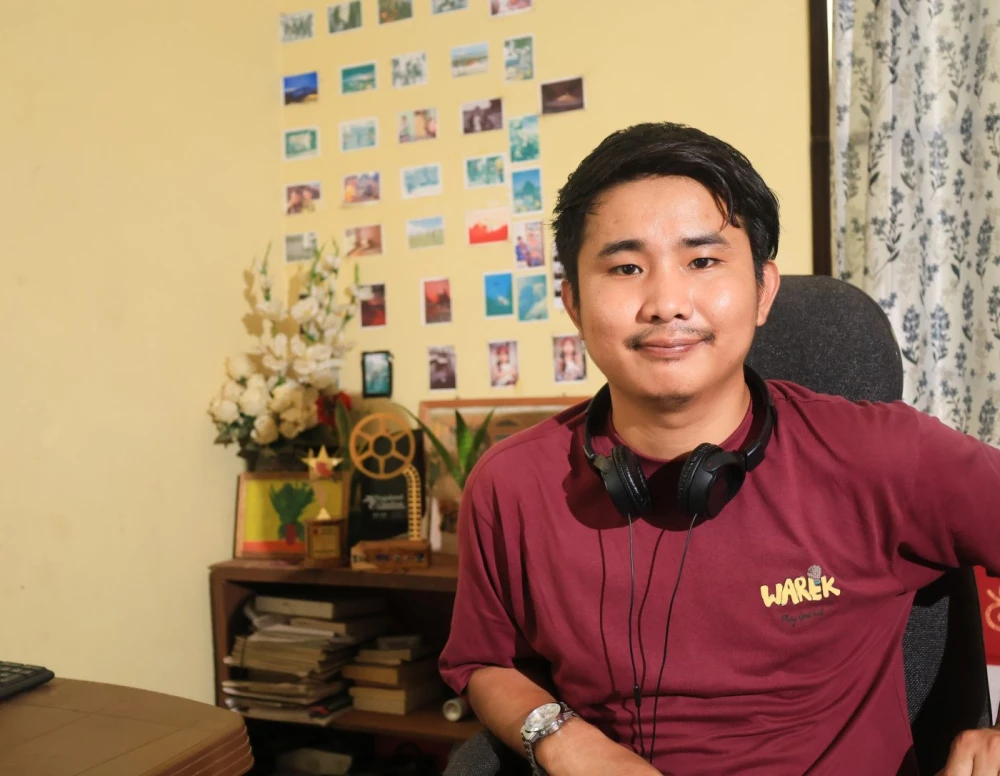
In a region where filmmaking is still developing, 26 year-old Itoka Achumi from Chümoukedima is steadily making his mark without formal training, industry backing, or a defined path.
Itoka Achumi, is a filmmaker from Chümoukedima, Nagaland, a region where filmmaking is still very new and evolving. Without a formal film school background, he began his journey into filmmaking four years ago, driven by passion, curiosity, and self-learning. By studying films closely and learning through experimentation, he has steadily developed his own voice as a storyteller.
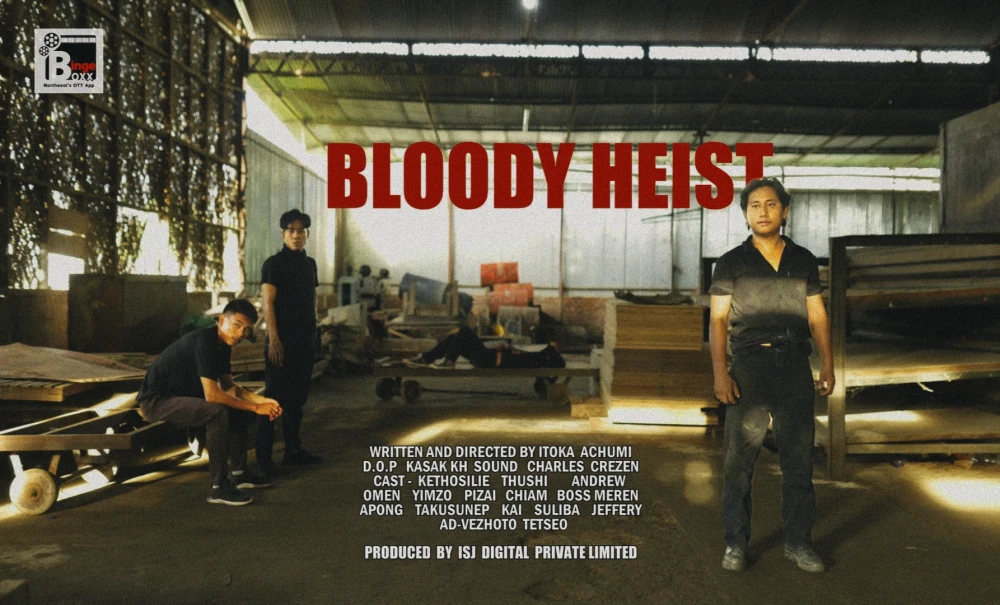
So far, he has created ten short films and two feature films, each contributing to his growth in visual storytelling and narrative craft. His first feature film, Bloody Heist, marks an important milestone and is backed by ISJ Private Limited. His second feature, Dear Lhiyeih, was made with very limited resources but carries a strong emotional core.
Speaking exclusively to The Morung Express, Itoka said his interest in filmmaking began during his higher secondary years, at a time when there was little exposure to cinema as a career in his hometown.
“I didn’t really have direct influences or a clear path. But I started watching films more seriously, not just for entertainment, but to understand how stories were told,” he said.
That curiosity soon turned into experimentation. Without access to formal training, Itoka relied on online resources, particularly YouTube tutorials and behind-the-scenes videos, to learn the basics of filmmaking. “It wasn’t easy. I had to depend on trial and error. But my friends supported me from the beginning, even when the work wasn’t perfect. That helped me continue,” he added.
He credits filmmakers such as Paul Thomas Anderson, Quentin Tarantino and Martin Scorsese for shaping his early interest in cinema. However, he noted that a deeper realisation came after watching Ship of Theseus by Anand Gandhi. “That film made me understand how powerful cinema can be. It felt like more than storytelling, it felt like expression and philosophy. That’s when I knew I wanted to take this seriously,” he said.
Reflecting on his early work, Itoka admitted that he initially tried to imitate the styles of filmmakers he admired. Over time, however, he began focusing on originality and stories rooted in his own surroundings. “I started noticing how many untold stories exist around me, within my people and my place. Now I try to tell stories that feel real and personal,” he said.
His films often explore themes of struggle, uncertainty, inner conflict, and loss, while maintaining subtle elements of hope. One of the key lessons he learned early on, he shared, was the importance of storytelling over technical aspects. “I used to think good visuals were enough. But without a strong story and emotion, nothing connects,” he said.
On the process of developing a film, Itoka explained that ideas often begin as a simple feeling. “I sit with it, listen to music, build characters, and then write. After that, it’s constant rewriting and visualising until it feels honest,” he said.
Despite the creative drive, filmmaking in Nagaland continues to face structural challenges. According to Itoka, lack of awareness, limited funding, and minimal institutional support remain major hurdles. “Many people still don’t see filmmaking as a serious career. There’s also very little support in terms of funding, policies, or infrastructure. Most of us are doing everything on our own,” he said.
To sustain his projects, he takes up freelance work such as music videos and event shoots, gradually saving funds to invest in his films. Casting is often done with friends or individuals willing to be part of the process, while production relies heavily on collective effort.
Discussing his feature film Bloody Heist, Itoka said the project evolved from a short film idea after encouragement from Imsusunep Jamir of ISJ Entertainment. “We had gone to pitch a short film, but he encouraged me to think bigger and turn it into a feature. That really changed things,” he said, adding that the film will be released on YouTube soon.
However, it is Dear Lhiyeih that remains closest to him. During the final stages of production, he lost his father, an experience that deeply affected him. “I was very demotivated and even thought of leaving the project. But I kept thinking about everyone involved and decided I had to finish it,” he said.
He describes his filmmaking style as “raw and honest”, focusing on real emotions rather than polished visuals. “I don’t want to overdo things. I want it to feel natural, something people can relate to,” he added.
When asked about success, Itoka said his focus at this stage is simply on continuing to make films and improving with each project. “It’s not about fame or money right now. It’s about growth and finishing what I start. If people connect with my films, that’s enough,” he said.
Looking ahead, he hopes to eventually take his work to film festivals and wider platforms, while continuing to tell grounded, culturally rooted stories. He also expressed optimism about the future of filmmaking in Nagaland, noting that increased visibility from projects shot in the state could encourage growth in the sector. For aspiring filmmakers, especially those without formal training, his advice is straightforward: “Don’t wait. Start with what you have. The rest will come.”