Prof (Dr) Ch Priyoranjan Singh of Manipur University
Morung Express News
Dimapur | August 28
Inner Line Permit (ILP) is “not the golden wand” for the Northeast and cannot by itself address the region’s deeper challenges of land, employment, migration and development, Prof (Dr) Ch Priyoranjan Singh of Manipur University said today.
He said the Northeast has, in the last few years, come to an “equilibrium”, social, political and otherwise, although the region remains uncomfortable in several areas, particularly population. He observed there has nevertheless been an “unmistakable stride” of the Northeast towards development and into a globalising world.
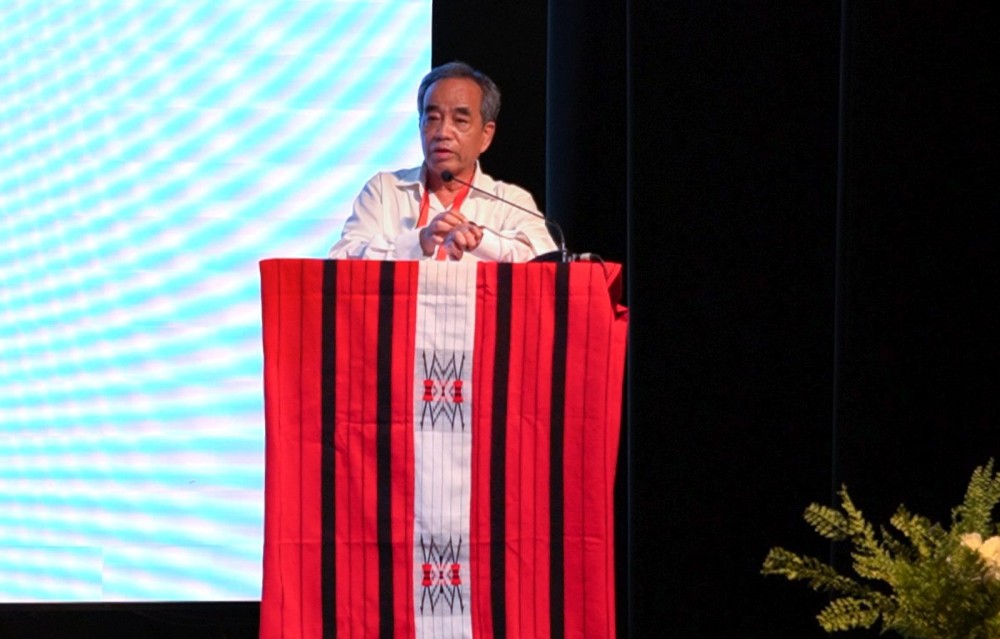
Prof Singh of the Department of Economics, was addressing the technical session on “Enforcement of the BEFR, 1873 in the State of Manipur” at the two-day national seminar on the Bengal Eastern Frontier Regulation (BEFR), 1873, organised by the Naga Students’ Federation (NSF) at Town Hall, Dimapur. He viewed the present trajectory of the Northeast as being shaped largely by the Government of India’s policy for the region, beginning with the Shukla Commission report and culminating in Vision 2020.
He said the policy sought to allow the Northeast to “grow as you want” and “grow at your genius”, while the Centre focused on providing funds and infrastructure and creating an enabling environment for the region to protect its culture and identity.
Singh, who presented hard data on ILP implementation and population trends in Manipur, said migration, land alienation, employment and changing demographic balances were among the fundamental issues driving demands for ILP. Manipur, he noted, was never part of British India but a native state, and had its own pass system where a foreigners’ pass was issued as early as 1901.
However, he cautioned that “ILP is not the golden wand”, but only one instrument for the development of the Northeast. He urged the region to move beyond dependence on “crutches” and strengthen its own skills, employment, land and investment policies.
“The biggest historical problem with Northeastern India… is our insular-mindedness,” Singh said, stressing the need for greater trade, investment, competition and a fraternity based on a common cause.
He called for data-based policymaking and cooperation among the state, communities and civil society. He concluded his talk with a question to ponder: “How long can the Northeast live supported on crutches?”
.jpg)