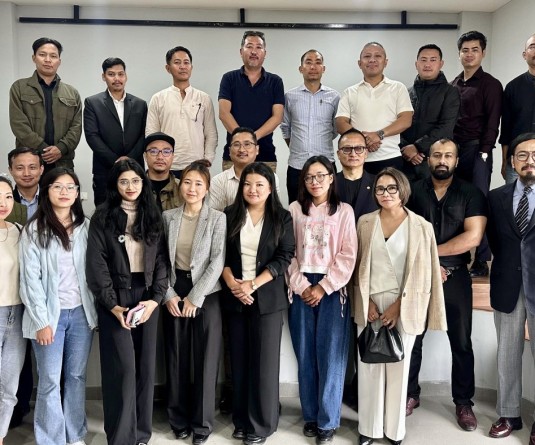
Nagaland-based label Otsü presented a collection rooted in texture, memory and contemporary craft.
Morung Express News
Dimapur | May 7
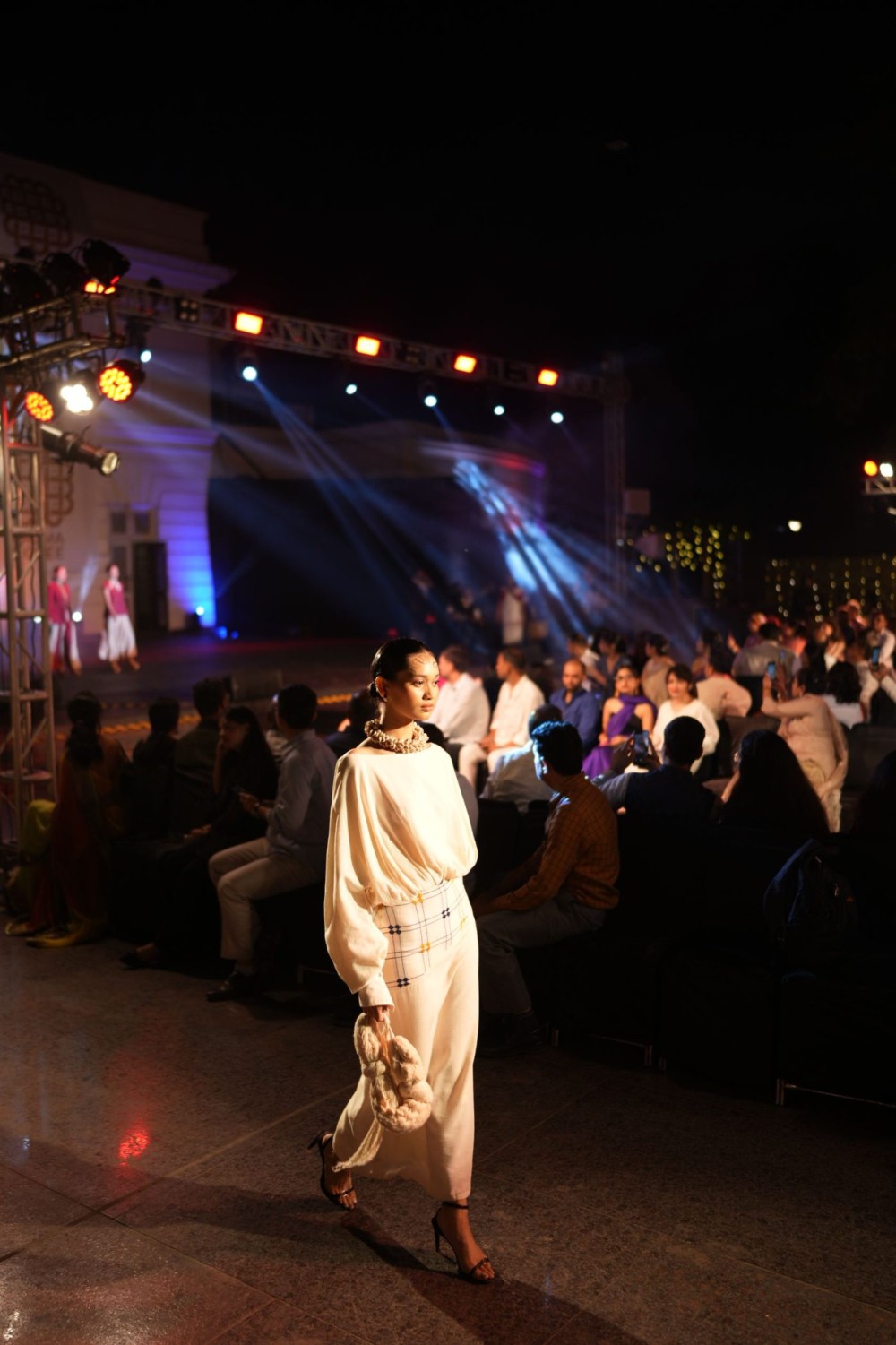
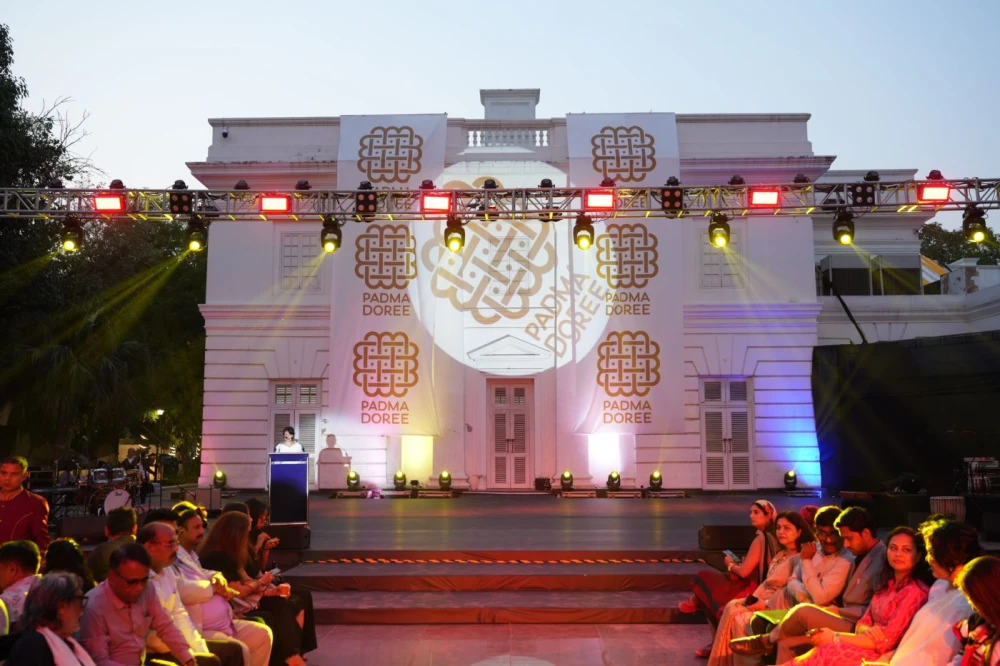
Inside the historic halls of Travancore Palace, where designers from across India gathered to experiment with a newly developed textile blending Northeast India’s Eri silk traditions with the weaving heritage of Chanderi, Nagaland-based label Otsü presented a collection rooted in texture, memory and contemporary craft.
Founded by designer Asenla Jamir, Otsü showcased two original looks during the launch presentation of Padma Doree on May 1, followed by a three-day public exhibition in the national capital.
The showcase, organised by the North Eastern Handicrafts and Handlooms Development Corporation under the Ministry of Development of North Eastern Region, brought together 13 designers from Northeast India and Madhya Pradesh to explore the possibilities of the newly developed textile.
For Otsü, the project became less about spectacle and more about material conversation.
Jamir’s garments moved through draping, reconstruction and layered hand-finishing, while allowing the fabric itself to remain central to the silhouette. The collection explored how the tactile density of Eri silk, often called “Ahimsa silk” because it is produced without killing the silkworm, could coexist with the fluidity and lightweight finesse associated with Chanderi weaving traditions.
The result was a restrained but textural presentation that reflected the label’s ongoing engagement with Northeast identity, slow fashion processes and contemporary reinterpretations of regional textiles.
Founded in Nagaland, Otsü has gradually developed a reputation for garments that combine experimental construction with storytelling drawn from memory, landscape and indigenous visual culture. Rather than treating Northeast textiles as static heritage objects, the label approaches them as living materials capable of evolving within contemporary fashion.
Padma Doree itself emerged as an ambitious cross-regional textile initiative bringing together Eri silk from Northeast India and Chanderi weaving traditions from Madhya Pradesh. The project was conceived by NEHHDC as part of a broader attempt to position Indian handloom traditions within the growing global conversation around sustainability, ethical luxury and artisan-led production.
Government officials and designers involved with the initiative described it as an experiment in collaboration rather than preservation alone.
“Padma Doree is not just bringing heritage, but also bringing innovation,” Ministry of DoNER Secretary Sanjay Jaju said during the launch event. The exhibition also highlighted a growing shift within Indian fashion, where independent labels from regions historically underrepresented in mainstream fashion circuits are increasingly shaping conversations around craft, sustainability and identity.
For Nagaland-based designers such as Jamir, the New Delhi presentation marked more than participation in a national showcase. It represented the continuing emergence of Northeast India as a space of contemporary design thinking, one where textiles are not only preserved, but reworked, questioned and reimagined.
Alongside Otsü, designers from Assam, Meghalaya, Arunachal Pradesh, Mizoram, Sikkim, Tripura and Madhya Pradesh also presented original Padma Doree garments, reflecting the project’s wider attempt to build a collaborative textile ecosystem across regions and artisan communities.