Vice Chancellor, Nagaland University, Prof Jagadish K Patnaik, with officials and beneficiaries of the Backyard Poultry Initiative at NU Lumami, Zunheboto on July 14. (DIPR Photo)
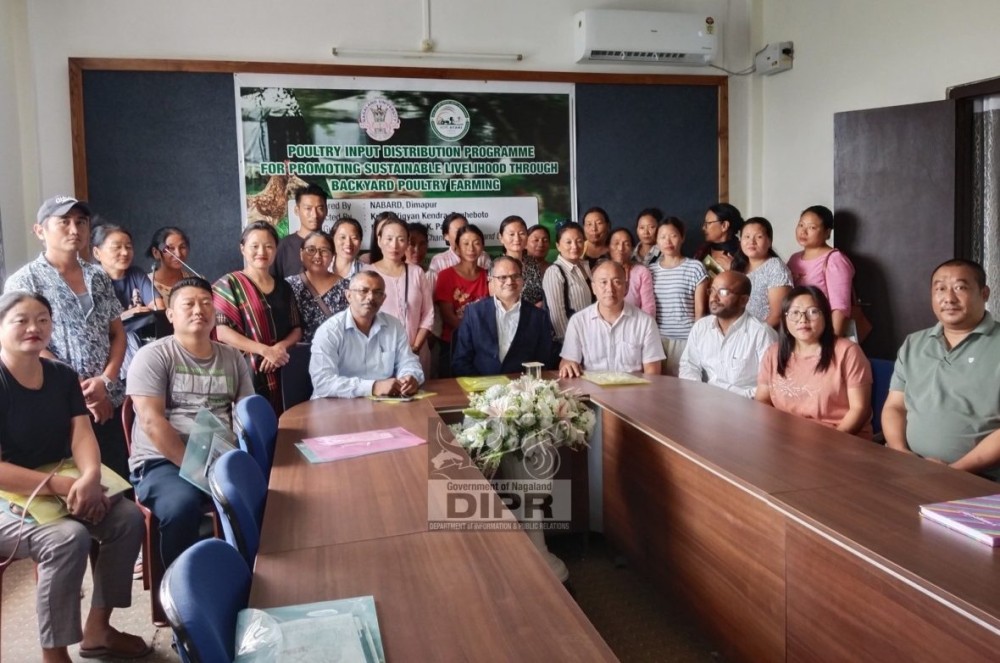
Kohima, July 14 (MExN): A Nagaland University-led backyard poultry project implemented in Zunheboto district has reportedly enabled 60 women from five self-help groups (SHGs) to collectively earn over Rs 30.8 lakh while increasing household access to poultry meat and eggs.
As per the State DIPR, the project, titled 'Promoting Sustainable Livelihood and Nutritional Security of Women SHGs through Low-Cost Egg Incubator and Backyard Poultry Production', was implemented by the Krishi Vigyan Kendra (KVK), Zunheboto, under Nagaland University (NU) with financial assistance from the National Bank for Agriculture and Rural Development (NABARD).
According to the university, the initiative sought to improve rural livelihoods and nutritional security by introducing scientific backyard poultry farming and low-cost egg incubators in villages where access to quality poultry inputs is limited.
The programme covered 60 women SHG members from Sumisettsu, Zaphumi, Lumami, Alaphumi and Shichimi villages in Akuluto block. Beneficiaries received training in scientific poultry management, Rainbow Rooster day-old chicks, starter feed, vaccination and medication support, poultry equipment and low-cost egg incubators designed to enable year-round chick production.
Citing data from the Department of Animal Husbandry and Veterinary Services' Annual Administrative Report (2022–23), the university noted that Nagaland faces an annual shortfall of over 1,520 lakh eggs and nearly 38.5 metric tonnes of meat, underscoring the need to strengthen local poultry production.
The university stated that beneficiary households consumed 1,380 birds and sold another 2,135 during the reporting period, generating a cumulative income of Rs 30,80,360.
The project also recorded the production of 22,618 eggs, which were either consumed by households or sold in local markets. It said each beneficiary earned an average net income of about Rs 32,592 under the programme to date.
The project was led by Dr Rakesh Kumar Chaurasia, Principal Scientist and Head of KVK Zunheboto, who said the introduction of low-cost village-level incubators had begun creating a local supply of chicks and could reduce dependence on external sources while supporting neighbouring poultry farmers.
According to the university, the project's findings have been published in the International Journal of Agriculture Extension and Social Development, a peer-reviewed journal.
Vice Chancellor Prof Jagadish K Patnaik said the initiative demonstrated how scientific interventions and extension activities could contribute to livelihood generation, nutritional security and sustainable rural development.
The university said it expects incomes under the programme to increase further as the birds reach full laying capacity and farmers expand sales of eggs, chicks and culled birds. It added that the model could be replicated in other remote parts of Nagaland.