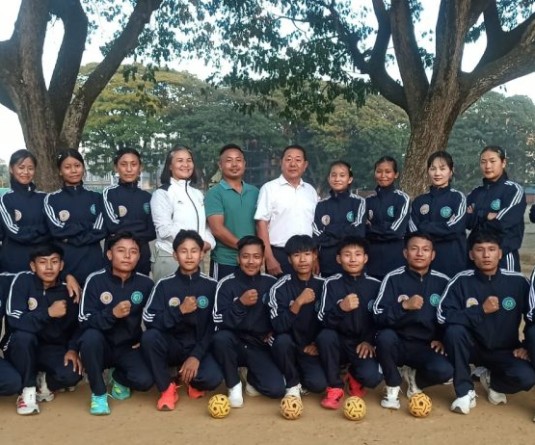
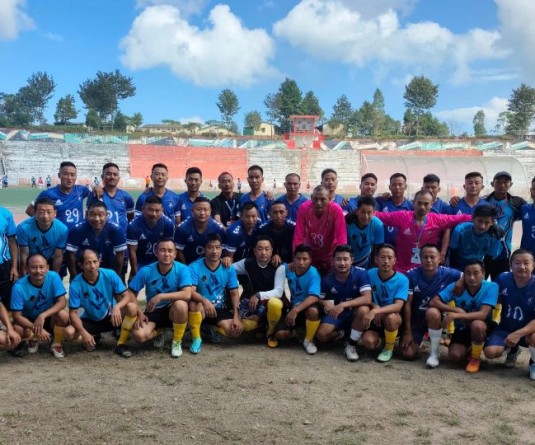
Action from the opening match between Royals FC and Knight Riders during the second edition of the Pangolin Cup at Meluri local ground on October 26.

MELURI, OCTOBER 26 (MExN): The second edition of the Pangolin Cup began at Meluri local ground on October 26, with eight local football teams competing in a tournament aimed at raising awareness about pangolin conservation and illegal wildlife trade.
Organised by the Wildlife Trust of India (WTI) in collaboration with the Meluri Range Sports Association (MRSA) and the Nagaland Department of Environment, Forest and Climate Change, the tournament will continue until October 30. It is supported by the Pangolin Crisis Fund under the Wildlife Conservation Network and the Serenity Trust.
The opening match was played between Royals FC and Knight Riders. The inaugural programme featured a traditional performance by the Meluri Area Public Organisations (MAPO), addresses by dignitaries and conservation representatives, and felicitation of community leaders for their contributions to wildlife conservation.
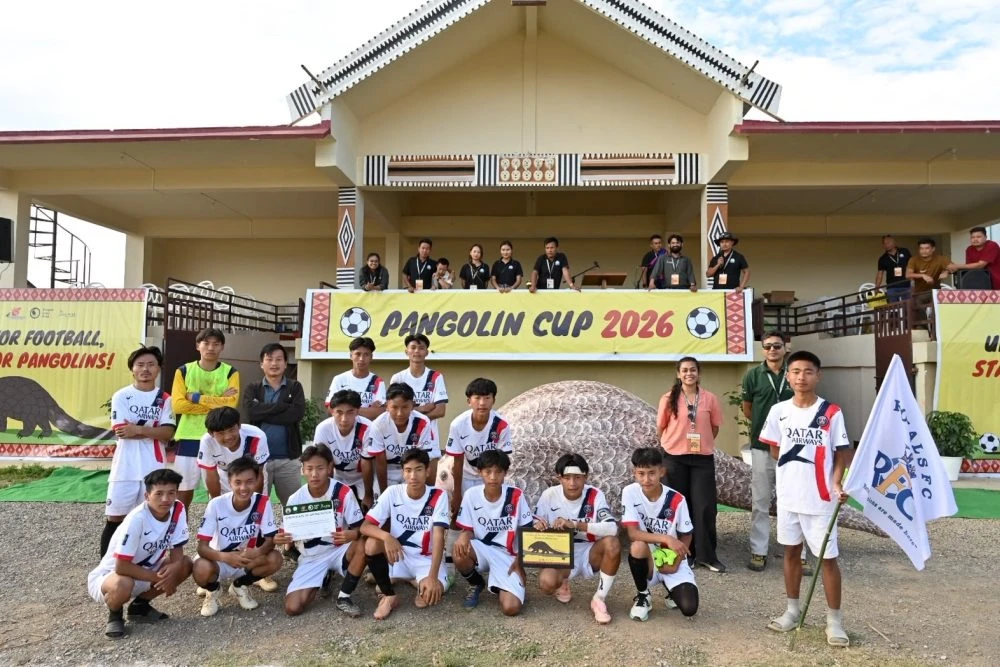
The tournament is part of WTI’s ‘Countering Pangolin Trafficking’ project, which targets illegal pangolin trade in Manipur and Nagaland through community engagement and awareness initiatives.
Speaking at the inaugural programme, Kiphire Wildlife Warden Sheijutho Katiry called for the revival of traditional conservation values, particularly among younger generations. “Traditionally, pangolins were left undisturbed due to ancestral beliefs; they held little value as a target for hunting, but the growing influence of illegal wildlife trade has changed this relationship, placing the species under increasing threat,” he said.
“We must revive these cultural values and strengthen our commitment to conservation. Like football, conservation is a team effort. Let the Pangolin Cup be more than a tournament—a pledge to protect pangolins and preserve our natural heritage for future generations,” Katiry added.
The Pochury Hoho stated that over 30 Pochury villages had adopted resolutions banning pangolin hunting, with a fine of Rs 50,000 for offenders involved in hunting or illegal wildlife trade. “This collective effort reflects our commitment to protecting wildlife, culture and traditions. The Pangolin Cup strengthens this community-led conservation message, reminding us that safeguarding our natural heritage is a shared responsibility,” it stated.
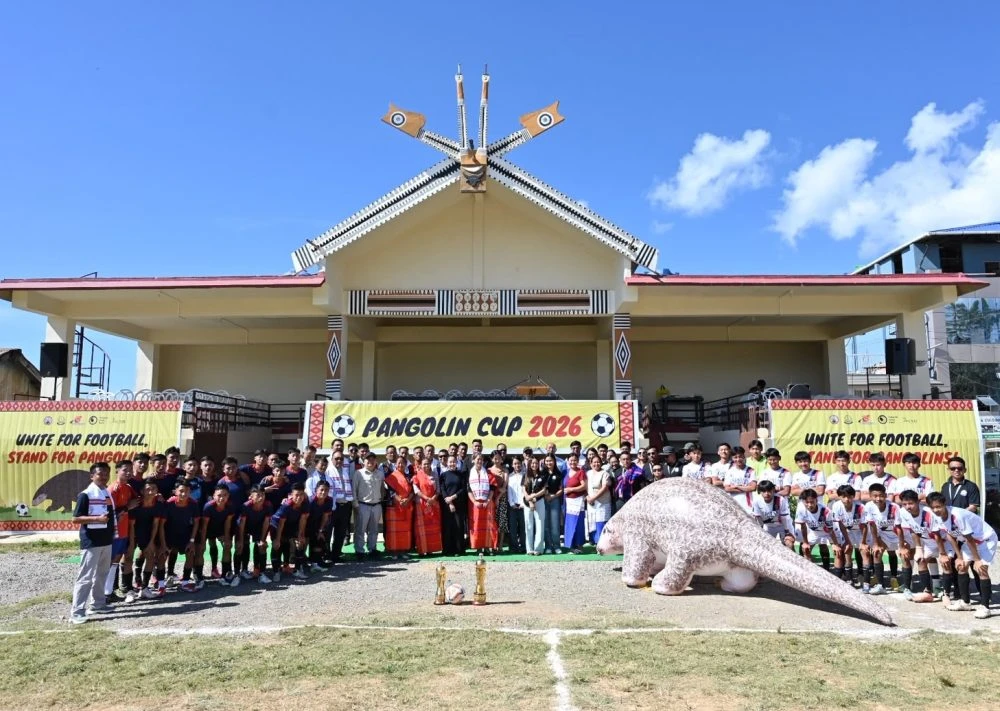
WTI Joint Director Sunil Kyarong said pangolins played a vital ecological role and were part of the region’s natural heritage. He cited the organisation’s work with communities across Northeast India over the past 25 years, including lessons from Amur falcon conservation in Nagaland. “By combining community awareness, locally driven conservation measures and efforts to combat illegal wildlife trade, we can secure the pangolin’s future,” Kyarong said.
Pangolins are among the most trafficked mammals in the world, largely due to demand for their scales and meat. Illegal wildlife trade poses a serious threat to their survival, requiring collective action by local communities, enforcement agencies and conservation organisations.