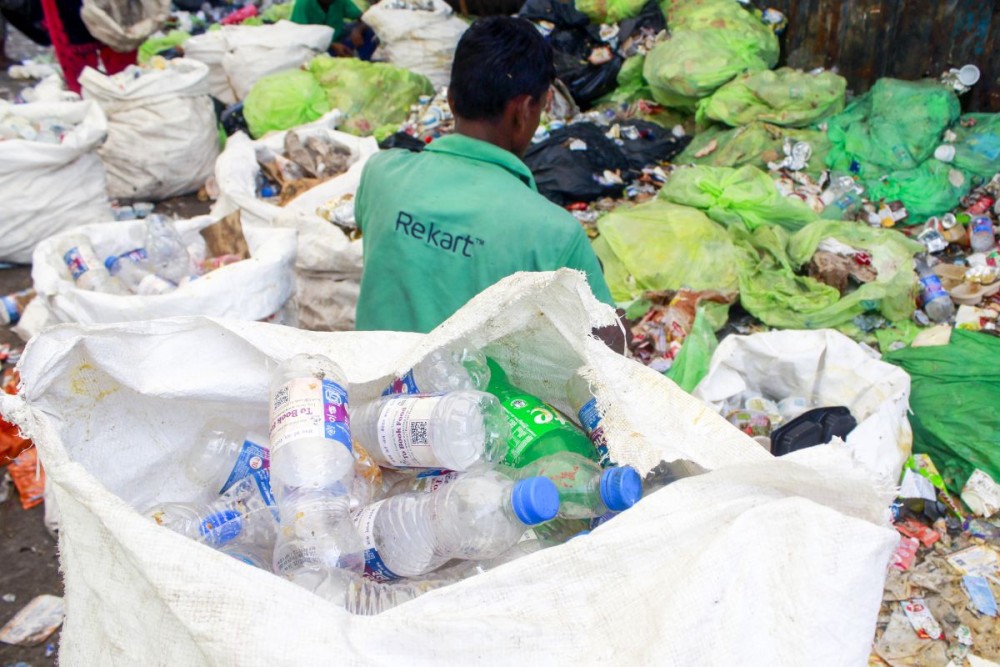
New Delhi: A worker collects plastic bottles and usable plastic materials from a garbage pile near Ajmeri Gate on the eve of World Environment Day, in New Delhi, Wednesday, June 04, 2025. (Photo: IANS/Qamar Sibtain)
New Delhi, January 27 (IANS) Emissions from the global plastics system --greenhouse gases, air-polluting particles, and toxic chemicals released particularly from plastics production processes -- could double health risks by 2040, if no meaningful action is taken to change current practices, according to a study on Tuesday.
The research, published in The Lancet Planetary Health journal, identified health harms at every stage of the life-cycle of the plastics: from the extraction of fossil fuels, the feedstocks for more than 90 per cent of plastics, and material production to their eventual disposal or release to the environment.
The modelling-based study compared the global human health impacts of several different future scenarios for plastics consumption and waste management between 2016 and 2040.
Under a ‘business as usual’ scenario, by 2040, the negative health impacts from plastics could double, with greenhouse gas emissions and associated rising global temperatures accounting for 40 per cent of the health harms.
Air pollution -- predominantly from plastics production processes -- would account for 32 per cent, and the impact of toxic chemicals released to the environment across plastics' life cycles would account for 27 per cent.
The remaining health harms (less than 1 per cent) relate to reduced availability of water, impacts on the ozone layer, and increased ionising radiation, the researchers said.
"We found that emissions throughout plastics lifecycles contributed to human health burdens of global warming, air pollution, toxicity-related cancers, and non-communicable diseases, with the greatest harms from primary plastics production and open burning," Megan Deeney, from the London School.
The model found that if the plastics system continues with no change to policy, economics, infrastructure, materials, or consumer behaviours, annual health impacts could more than double from 2.1 million healthy years of life lost in 2016 to 4.5 million healthy years of life lost in 2040.
Overall, the study estimates that the global plastics system could be responsible for cutting 83 million years of healthy population life between 2016 and 2040.
The study also predicted little impact from improving plastic waste collection and recycling alone. But, together with improvements to waste collection and recycling, substituting or reusing materials, health impacts linked to plastic emissions showed a reduction.
"To effectively reduce plastic emissions and their impact on health, policymakers must better regulate and significantly reduce the production of new plastics for non-essential uses," the team said.

.jpg)