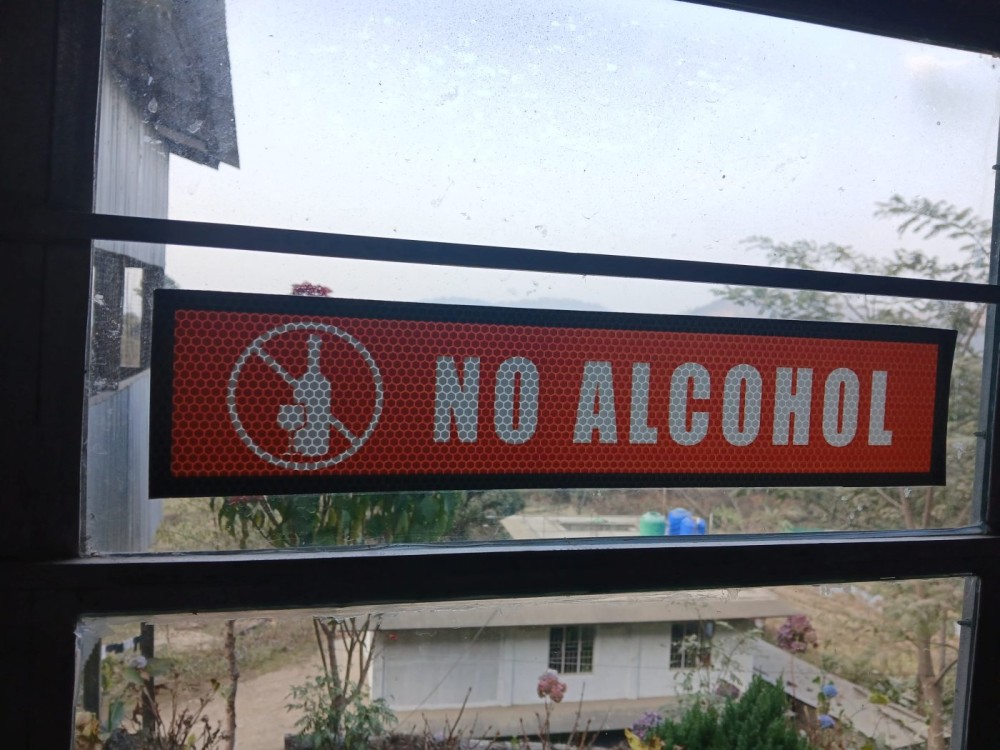
A “No Alcohol” sticker displayed at a restaurant on the Dimapur-Kohima highway - a small but telling symbol of Nagaland’s long-standing liquor prohibition under the Nagaland Liquor Total Prohibition (NLTP) Act, 1989. The signage encapsulates a debate that has simmered for decades in the state, a tussle between faith and governance, and between morality and economic pragmatism. Nagaland, a predominantly Christian state, enacted total prohibition driven largely by the influence of church bodies who view alcohol as a social evil. Yet liquor flows freely through a thriving illegal trade, depriving the state exchequer of potential revenue while enriching bootleggers. While trade bodies and a section of civil society have pressed for legalisation, arguing it would curb illicit trade and generate revenue, the church and several tribal bodies remain firmly opposed, making liquor prohibition one of the most politically sensitive issues in Nagaland. The humble “No Alcohol” sticker reflects a state still caught between its Christian identity and the economic compulsions of a modernising society. (Morung Photo)