Dimapur, September 5 (MExN): The Nagaland Legislative Assembly on September 3 passed the Frontier Nagaland Territorial Authority (FNTA) Bill, 2026, creating a new autonomous body for the state’s six eastern districts nearly seven months after the Centre, the state government and the Eastern Nagaland Peoples' Organisation (ENPO) signed a memorandum of agreement (MoA) on the issue.
The legislation, cleared during the 9th session of the 14th Assembly, establishes the FNTA as a body within the state of Nagaland with legislative, executive, and financial autonomy, as outlined in the Memorandum of Agreement (MoA) signed between the Centre, the state government, and the ENPO on February 5, 2026.
“Aftermath the signing of the MoA dated February 5, 2026, the passing of the Bill today is just a second step towards many obstacles in future,” the ENPO said in a press release, referring to the long-pending demand for a separate administrative mechanism for the six districts – Mon, Tuensang, Kiphire, Shamator, Noklak and Longleng.
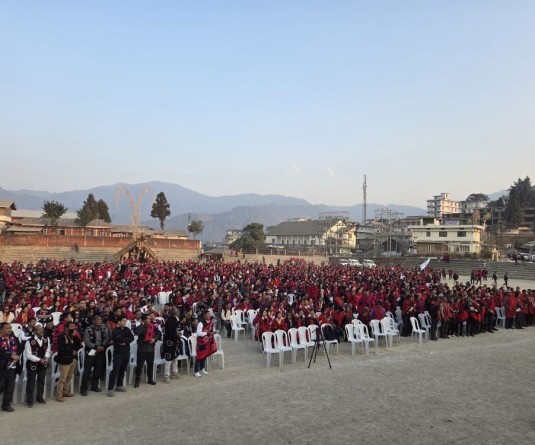
The ENPO, which has spearheaded the “statehood movement” for Eastern Nagaland since 2010, observed the Assembly’s approval as a culmination of years of negotiations, but stressed that the real work begins now. The organisation appealed to the Ministry of Home Affairs, Government of India and the Nagaland government to “continue to support and guide the FNTA in every possible means and to assist in all its future endeavours.” It also appealed to all sections of the people to “stand committed as rightful thinking citizens upholding integrity and responsibilities towards our shared common goal.”
The Bill was moved on the floor of the House by Deputy Chief Minister Y Patton, with the ENPO acknowledging the support of all legislators, Eastern Nagaland Legislators Union (ENLU), and the state bureaucracy in framing the draft.
According to the ENPO, the FNTA Bill was passed following a post-MoA stalemate that was resolved with proactive interventions from central officials, including the current Director of the Intelligence Bureau, Mahesh Dixit, and Ajit Lal, Advisor (NE) at the MHA.
The ENPO also noted that Chief Minister Neiphiu Rio, who has been at the helm both when the movement began in 2010 and now, provided unwavering support since the organisation first approached him on August 23, 2024. “The ENPO looks forward for his continuous support and guidance on the way forward action plan,” the release added.
The genesis of the ENPO movement, the organisation said involved contributions from numerous past and present leaders, some of whom are no longer alive. “This historic moment would not have arrived without the selfless contributions of those leaders... The present ENPO leadership humbly dedicates this historic moment to all the sacrifices,” it stated.
The path to the legislation involved a Union Home Ministry fact-finding exercise led by AK Mishra, then Advisor (North East) in the ministry, along with senior officials including Union Home Secretary Govind Mohan. Following what the ENPO statement described as a stalemate after the MoA was signed, the current Director of the Intelligence Bureau, Mahesh Dixit, and the present Advisor (North East), Ajit Lal, are said to have stepped in to help move the Bill toward passage.
Nagaland’s two Members of Parliament, Rajya Sabha MP S Phangnon Konyak and Lok Sabha MP S Supongmeren Jamir, were also involved in pushing the matter at both the state and central levels, as per the statement.
The Eastern Nagaland Legislators’ Union (ENLU) played a role in negotiating between the state government and the ENPO in the run-up to the Bill's passage, the statement said, while the state’s eight tribal Hohos, Angami, Sumi, Ao, Lotha, Chakhesang, Rengma, Zeliangrong and Pochury also backed the process.
With the Bill now passed, the focus shifts to the formation and operationalisation of the FNTA, which is envisioned to address the long-standing grievances of the eastern region regarding perceived underdevelopment and lack of representation.