Liba Hopeson
In many places today, our understanding of the gospel is shaped by an idea of escape—as if the main goal of salvation is to leave this world and go to heaven forever. It is true and precious that believers go to be with the Lord after death, and this hope must never be denied. Yet when this becomes the central focus, the fullness of the gospel can be reduced. The Bible presents a deeper and wider good news. God’s plan does not end with us leaving the world; His purpose is to restore what He has made, to renew creation itself, and to establish His kingdom in its fullness.
The world was created good, and even after sin entered, God did not give up on it. Instead, Scripture says that the whole creation has been groaning, longing to be set free from corruption (Romans 8:21–22). This groaning is not a cry for destruction, but for renewal. The mission of Jesus must be understood in this light. He came not only to save individuals, but to redeem and reconcile all things to Himself (Colossians 1:20).
His teaching about the Kingdom makes this clear. When He taught His disciples to pray, “Your kingdom come, Your will be done, on earth as it is in heaven” (Matthew 6:10), He pointed toward a future where God’s rule fully fills the earth. This hope was already promised in the book of Daniel, where God declares that He will establish a kingdom on earth that will never be destroyed (Daniel 2:44). That kingdom began through the life, death, and especially the resurrection of Jesus Christ.
The resurrection stands at the center of this plan. Jesus did not rise as a spirit, but bodily. He invited His disciples to see and touch Him, showing that He had flesh and bones (Luke 24:39). At the same time, His body was transformed—no longer subject to death. This reveals something very important: God does not discard the physical world; He renews it. The resurrection body of Jesus is both the same and yet gloriously changed. In Him, we see the pattern of what God intends to do for all creation.
The Bible calls Christ the “firstfruits” (1 Corinthians 15:20). This means His resurrection is the beginning of a greater work that will follow. What happened to Him will also happen to those who belong to Him. We are not promised a life without a body, but a renewed and glorified body. As Philippians 3:21 says, He will transform our lowly body to be like His glorious body. This gives us a firm and living hope—not just life after death, but a restored life in a restored creation.
This also helps us understand the meaning of the new creation. Scripture does not say that God will make all new things, but that He will make all things new (Revelation 21:5). There is continuity, but also transformation. Just as Jesus’ body was raised and glorified, so also the world will be renewed. There will be a new heaven and a new earth (Revelation 21:1)—not a completely different creation, but this creation freed from sin, decay, and death, and filled with God’s presence.
In this sense, the resurrection of Jesus is the prototype of the new creation. It is the first clear example of what God will do in the future. In His resurrection we see victory over death, transformation without loss of identity, and the beginning of a new kind of life. What is true of Christ will one day be true for His people and, in a wider sense, for creation itself. The future has already begun in Him.
This truth shapes how we live now. It teaches us that creation matters, because God intends to redeem it. It calls us to honor our bodies and live in holiness, since our bodies have a future in God’s plan.
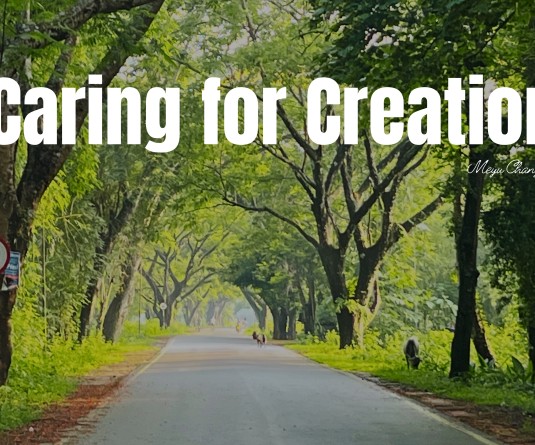
It encourages us to care for the world around us, not to neglect it. It also gives us hope in suffering, because the present brokenness is not final. Even now, through Christ, we begin to experience a foretaste of this new life, though its fullness is still to come.
The resurrection is not only a past event or a distant hope. It is the beginning of God’s new creation. What God started in the risen Christ, He will complete in the whole world. One day, all things will be made new, and God will dwell with His people in a renewed heaven and earth. The resurrection stands as the sure promise that this coming renewal of all things is real and certain. In light of this, we are called to live even now as people of this new creation—walking in holiness, hope, and faithful stewardship of all that God has made.