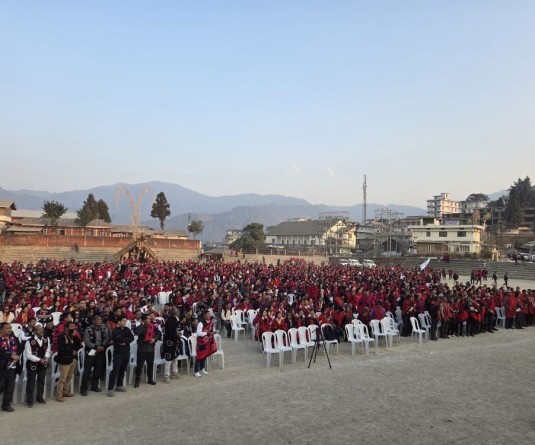
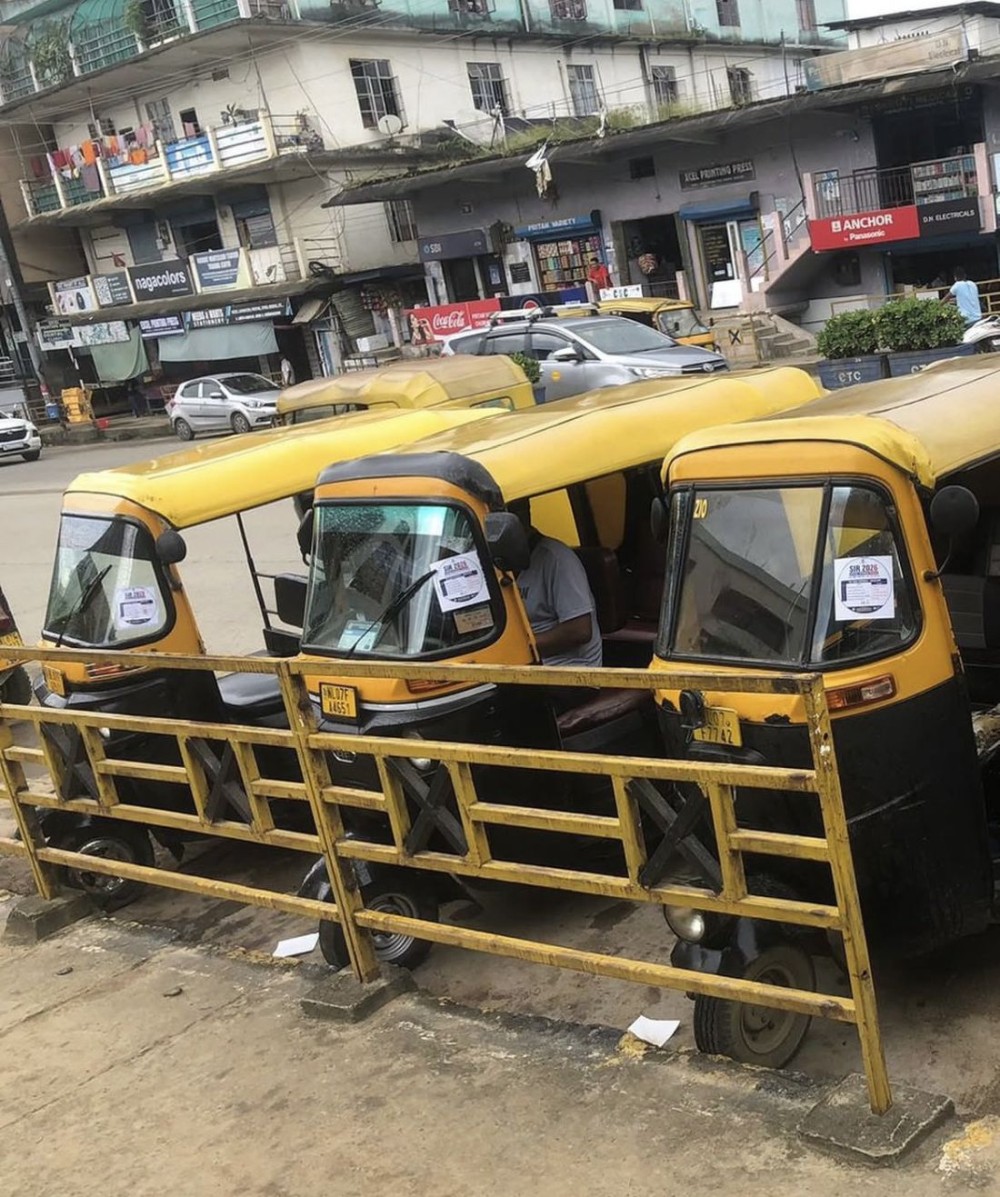
1. Posters on the Special Intensive Revision (SIR) 2026 in Nagaland are seen pasted on autos as part of an awareness campaign, in this photo shared by the CEO, Nagaland, on August 29. (Photo Courtesy: @NAGALANDCEO/X)
Morung Express News
Dimapur | September 13
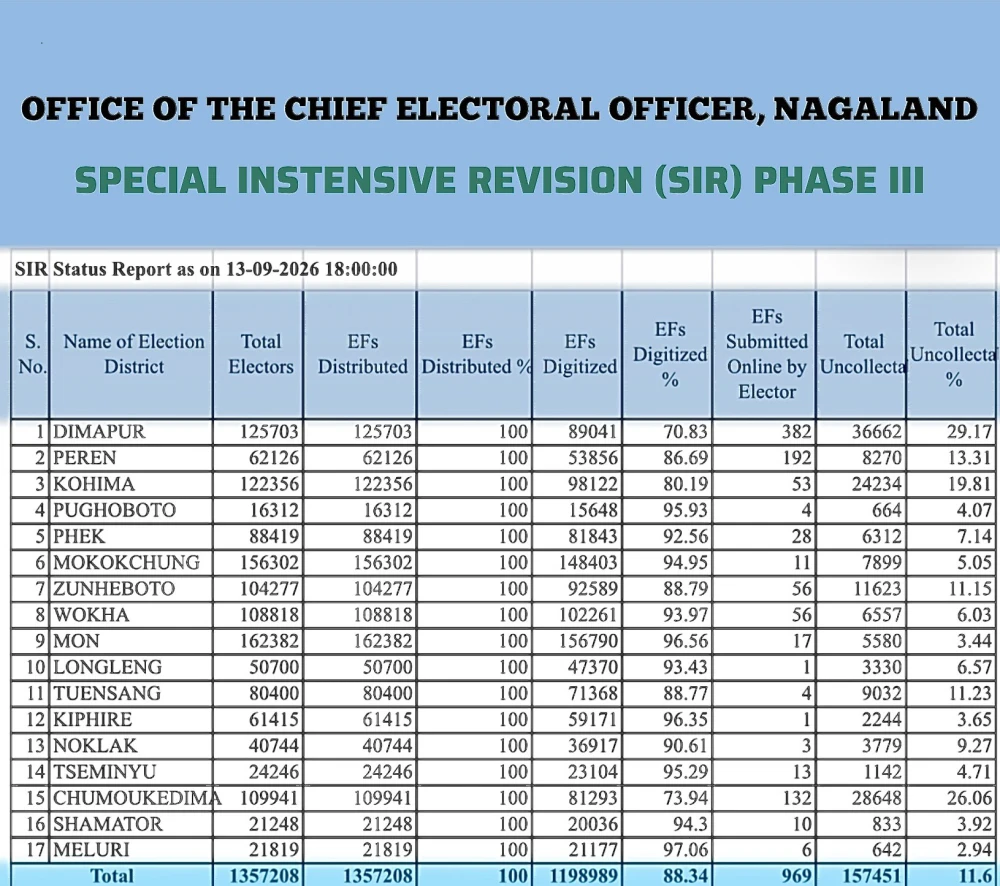
With one day remaining for the house-to-house enumeration exercise under the Special Intensive Revision (SIR) of electoral rolls in Nagaland, 1,57,451 Enumeration Forms (EFs), or 11.6% of the State’s 13,57,208 electors, have been recorded as ‘uncollectable’.
The number of uncollectable EFs has increased from 1,53,457 (11.31%) recorded as of September 12, an increase of 3,994 in a day.
According to the latest status report of the Office of the Chief Electoral Officer (CEO), Nagaland, as of 6 pm on September 13, EFs had been distributed to all 13,57,208 electors, representing 100% distribution. Of these, 11,98,989 EFs (88.34%) had been digitised, while 969 had been submitted online by electors.
Dimapur recorded the highest number of uncollectable EFs at 36,662, accounting for 29.17% of its 1,25,703 electors. It was followed by Chümoukedima with 28,648 (26.06%) and Kohima with 24,234 (19.81%).
At the other end, Meluri recorded 642 (2.94%), Pughoboto 664 (4.07%) and Shamator 833 (3.92%) uncollectable EFs.
The house-to-house enumeration phase is scheduled to conclude on September 14, under the SIR schedule notified by the CEO.
During this phase, Booth Level Officers (BLOs) are required to visit households, distribute EFs containing pre-printed details of existing electors and collect the completed forms.
The exercise is part of the SIR ordered by the Election Commission of India with October 1, 2026 as the qualifying date.
The stated objective is to ensure that no eligible citizen is left out while no ineligible person is included in the electoral roll.
It must be noted here that “uncollectable” EF does not by itself mean that an elector has been deleted or found ineligible.
As reported earlier, forms may remain uncollectable for reasons including an elector being absent, having permanently shifted, being deceased or already enrolled elsewhere. The latest status report does not provide a reason-wise breakdown.
The draft electoral roll is scheduled for publication on September 20.
Eligible electors will have an opportunity to seek inclusion through the claims and objections process, thereafter until October 20.
The disposal of claims and objections is scheduled to continue until November 18, with the final electoral roll due to be published on November 22.