

Photo courtesy: Bhaarat Vyas
Anagha Sudhama Jahgirdar
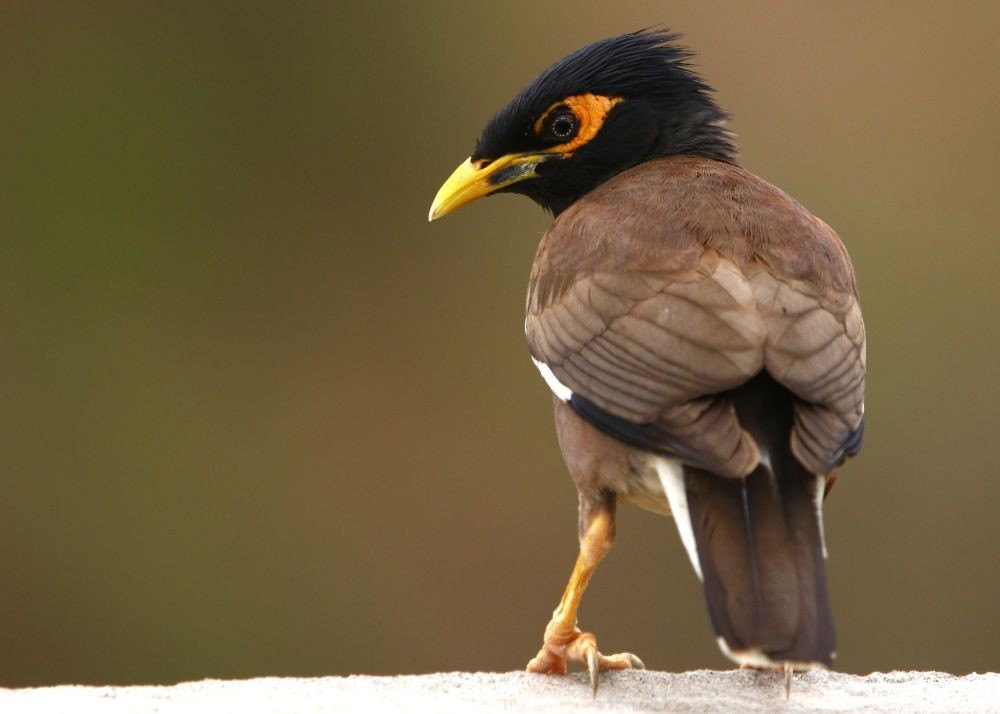
How beautiful is the Earth surrounded by trees and many greens. Spotting an owlet through the contours of gardens, or mynahs (Accridotherestristis) cackling the spaces with crows. There are many changes in the urban areas, can it be a radical and moral change only? Without buildings, more social structural change and more tree spaces? Oldness and chattering of the mynahs on the trees is comical, they are never in a solitude state. There may be two or three trees with the roosts very close by or far. Any roost flock size may be hundred birds or less or more.
These mynahs are caught laying eggs in crow’s or woodpecker’s nests with their eggs. This is known as commensalistic or kleptoparasitic behaviour. Roosts especially are for antipredatory benefits, thermoregulatory benefits and to increase foraging behaviour of all the roost members. The foraging members of roost rarely give information about the unknown food spaces to others as advertisement. There is diurnal activity meaning in the mornings or during sunrise and during sunset or in the evening; there is activity of predation among the roosts of mynahs for foraging with many other members of roosts depending on flock sizes. They feed on grains, lizards, earthworms or insects, fruits of the season on trees or on ground or garbage foraging, nectar of flowers and animal remains as they are omnivorous too. The annual cycle of Mynahs are pre-breeding season (November to March), breeding season (April to July) and post-breeding season (August to October). Innocent juveniles that are dependent individuals are characteristic to Post breeding season in Common mynahs. Mynah roosts flock numbers vary from season to season and also day time like sunrises/sunsets along with foraging areas.
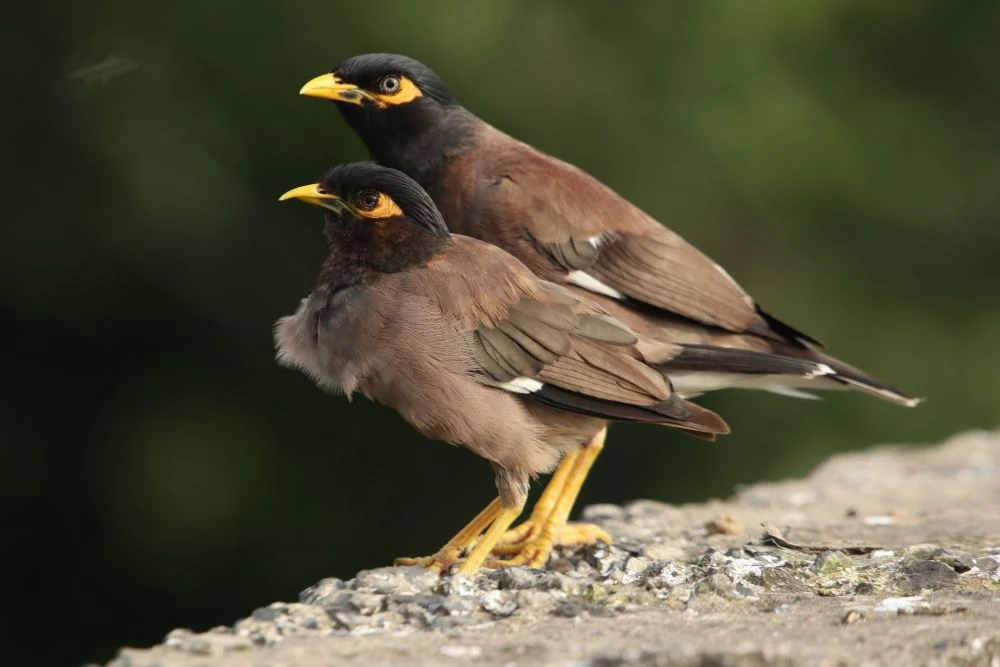
Mynah chicks from these clutch of eggs of other birds, are solely identified after their birth when they come out of their eggshells during post-breeding. These other birds cannot be sensitive to approaching female mynahs to their nests usually on Raintrees (Albizzia sps). These circles of roosts have to be taken care of because these roosts are also ecological indicators of pollution in any geographical urban area with intensity and awareness. These roosts are vulnerable to tree cutting or afforestation and predators such as snakes or few predatory birds when chicks hatch and are very young to fly away from any raptors. One can be entranced by the chicks sweet cackling in a mixed group of chicks.
Older mynahs become nuisance after foraging and finding nothing in urban spaces. The best way is to keep a small tray with grains or cut vegetables for these mynahs to arrive at your building window panes or terraces with a birdbath bowl filled with fresh water from taps of the building hoping it to not disappear by the dawn. If one can truly accept trees, to what they do in spaces and love intensely any tree and the members among the trees. If the urban setting with lots of trees and roosting mynahs should not be a rare sight, there should be more citizen activity, informed about the trees, about birds becoming permanent dwellers, between the tree canopies.
The author is a post graduate, award winning poet, author and a children's library facilitator from Mysuru

