Dignitaries and others during ‘Sharing of Concept on Living Morung’ programme at Hovishe on April 20.
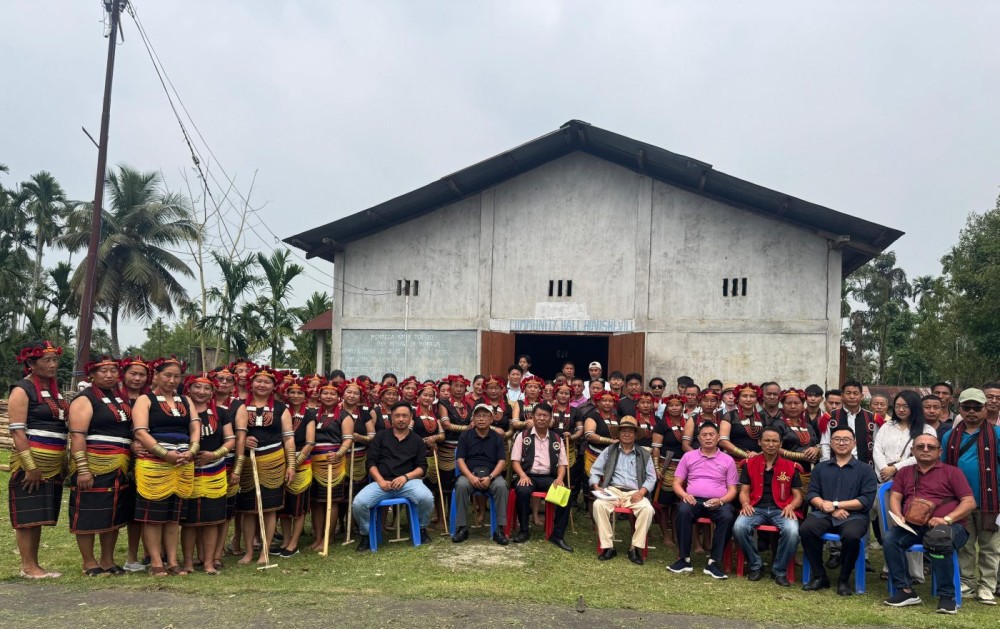
Kohima, April 20 (MExN): The Department of Art and Culture, Government of Nagaland, on April 20 organised a one-day programme to document and safeguard the intangible cultural heritage of Naga communities, with a focus on traditional healing practices and indigenous medicinal knowledge.
The event, titled “Sharing of Concept on Living Morung, Traditional Knowledge and Traditional Healing Practices and Indigenous Medicinal Knowledge,” was held at Council Hall, Hovishe Village, Niuland district, and drew around 150 participants from Hovishe, Kuhoxu and Hokuto villages.
In his welcome address, Deputy Director of Art and Culture Teisovikuolie Therie spoke on the concept of ‘Living Morung’ and traditional knowledge systems. He stated that the morung remains a vital institution for transmitting indigenous knowledge, including traditional healing practices and medicinal wisdom, from elders to younger generations. He added that the Department is creating a digital repository of such knowledge to ensure its preservation.
Special Guest Kasheto T Holo addressed the gathering and delivered a Morung Narration on the role of village councils and traditional institutions in preserving healing practices.
The technical session was led by two resource persons. Dr Hokuto, GB, as Knowledge and Identification Lead, spoke on the identification of medicinal plants and traditional diagnostic methods, while Vikheyi Awomi of Hukhayi Village, as Practice and Preparation Lead, demonstrated preparation techniques. Both resource teams conducted a two-hour hands-on demonstration on traditional healing and practices related to medicinal and cultural use.
The cultural segment featured a folk tale narration by Atoni Holo and a folk dance by Kuhoxu Village, illustrating the connection between oral traditions, community life, and indigenous health knowledge.
The programme concluded with an open discussion and experience sharing, followed by distribution of certificates. Katoho Holo, Head GB, proposed the vote of thanks.
Documentation gathered at the programme will be archived by the Department as part of its broader initiative to protect and promote Nagaland's traditional knowledge systems. The Department of Art and Culture regularly conducts such programmes across the state to strengthen cultural identity and ensure the intergenerational transmission of traditional wisdom.