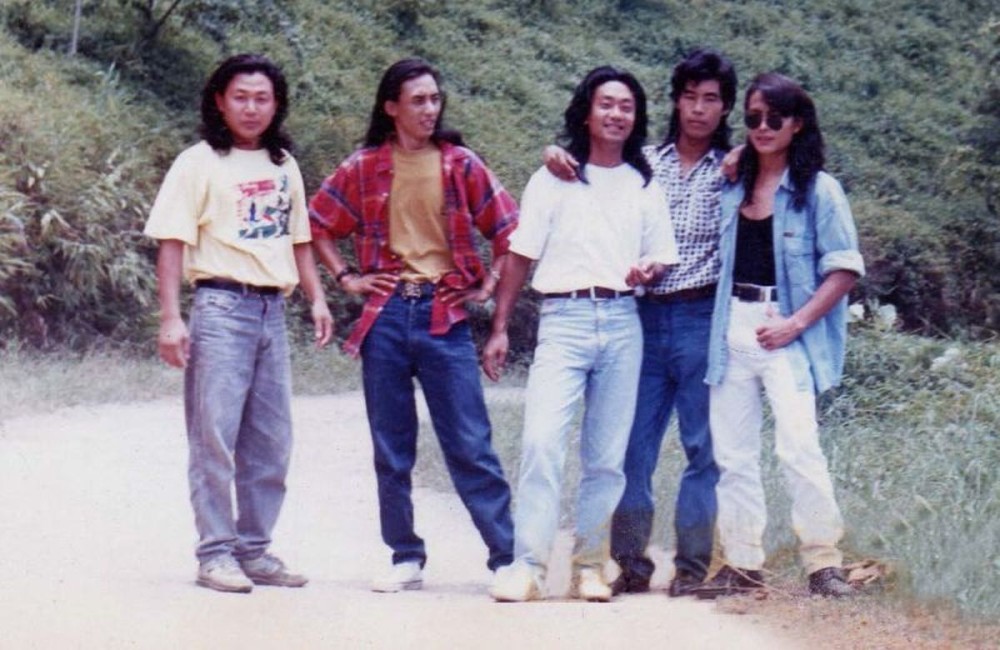
Members of Squadron pose for lens in this file photo. The veteran band remains a symbol of Mokokchung’s rich live music tradition. (Photo Courtesy: Squadron/Morung File)
Yarden Jamir
Mokokchung | June 21
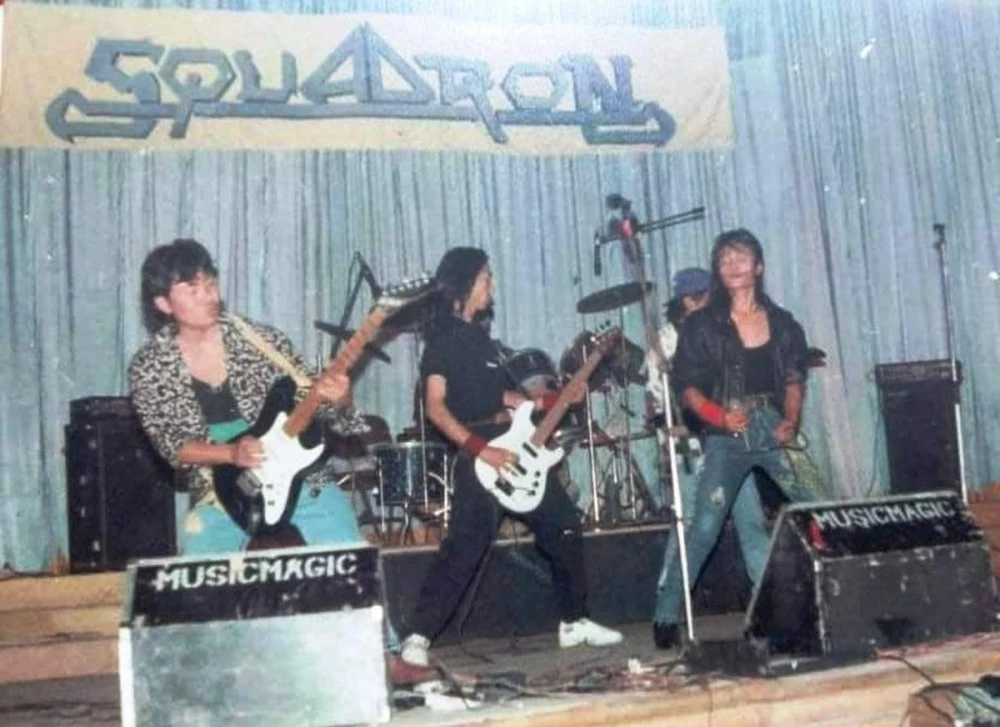
“We used distortion sound when the speaker coil was half-burnt, and that became our guitar effect,” Longriwati Imchen recalled with a laugh, reminiscing about an era when limitations inspired musicians to create their own distinctive sound.
For a generation of musicians in Mokokchung, music was more than entertainment—it was an experience.
A single guitar chord, a song crackling over the radio, or the anticipation of a live performance was enough to spark excitement that today's instant digital world may find difficult to comprehend.
Changing rhythm
On World Music Day, as Nagaland celebrates its rich musical heritage, a quieter question lingers in Mokokchung: Has the town that once breathed on live bands, concerts and passionate musicians lost some of its rhythm?
For Longriwati Imchen, frontman of Squadron, one of Nagaland’s longest-running and most popular bands, the difference between then and now is not simply about talent, but about how people experienced and valued music.
“During those days, music was very dedicated,” he said. “People had just moved from gramophones to cassette players. Songs had huge value and the interest to listen to music was very high. Even listening to songs on the radio was exciting.”
He recalled that during those years, access to music itself was rare, making every experience precious.
“When we listened to music live, even a single chord could give you a feeling like you were going to faint from excitement,” he shared. “There is nothing like live music.”
For musicians, Longriwati recalled, the old Town Hall was more than a venue; it was the heart of Mokokchung’s entertainment scene with almost sacred significance.
“If we were going to play there, it felt like we were going to play in heaven,” he said.
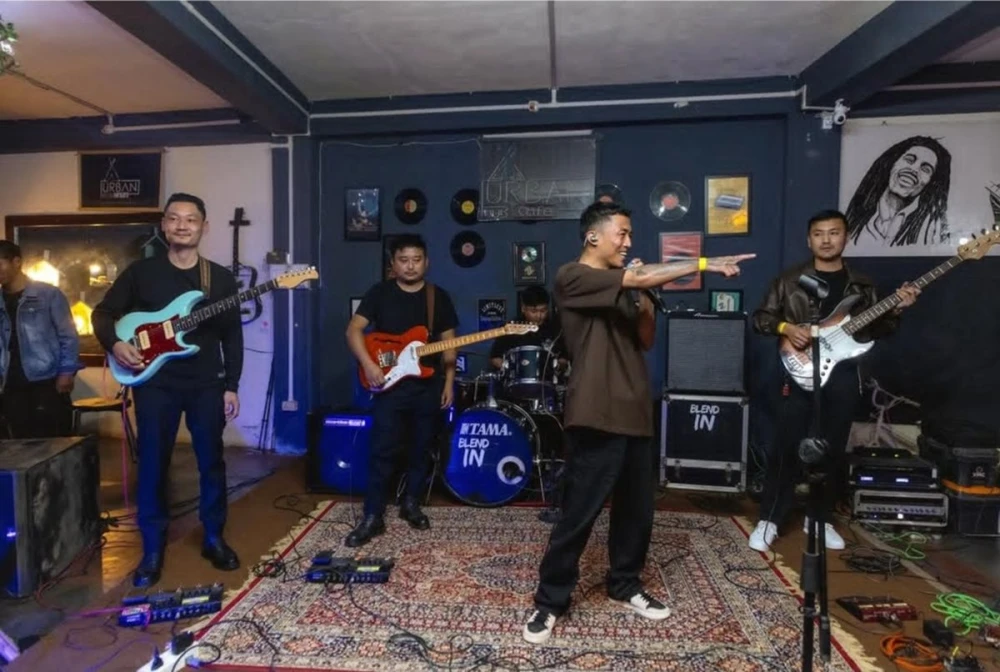
Unlike today’s era of advanced equipment and endless options, musicians then relied on whatever was available. Speakers were assembled from different sources, wires pieced together, and creativity often made up for the lack of technology.
“There are countless equipment today, but back then, all that mattered was whether sound came out from the speaker or not. And we were fully satisfied with that,” Longriwati reminisced, expressing hope that younger generations could experience that same sense of excitement and fulfilment, even if only for a day.
However, he admitted that discussing today’s music scene is complicated. Having devoted much of his youth to music, he understands both the passion it inspires and the realities of pursuing it as a career.
“We devoted our whole prime youth life to music but we did not survive through that,” he reflected. “But at the same time, we do not want to discourage talented youngsters.”
The musician, who serves as Mokokchung district representative of the Task Force for Music and Arts (TaFMA), said the town has no shortage of talented young musicians, but a lack of adequate platforms and investment hinder their growth.
He observed that Mokokchung was once at the forefront of music infrastructure, with its sound and lighting equipment being used across Nagaland.
However, other districts gradually overtook the town through greater investment and development.
““When you have money, you can attend institutions, receive proper music education and invest in equipment,” he said, noting that many talented musicians come from families that lack the means to afford such opportunities.
In an era where professionalism and technology are increasingly essential, Longriwati said young musicians face greater challenges than ever before.
“Our struggles were tolerable compared to what youngsters face now,” he remarked.
Yet, he does not believe the music has disappeared.
According to the Squadron frontman, the abundance of home and online entertainment has made audiences more selective than before.
“Today we are spoiled for choice,” he said. “But in the past couple of years, people are also beginning to understand that there is nothing like enjoying live shows.”
While older generations recall packed halls and thriving bands, younger musicians face a different reality- one where talent abounds but the support ecosystem struggles to keep pace.
Promise amid persistent challenges
The contrast is not lost on the younger generation. Along Jamir, frontman of Stereo Grove, one of Nagaland’s prominent current-generation bands, described Mokokchung’s current music scene as competitive, yet lacking adequate support systems.
“In terms of artists and bands, it is going quite good. Many have released music in the last few years,” he said. “But when it comes to opportunities and platforms, it is very low.”
According to Along, the visibility of performances and music releases often creates the impression that bands are thriving, even when the reality is far more challenging. “People think they are doing well because they are showing up, but inside they are struggling a lot.”
One of the biggest needs, he said, is a range of consistent platforms, from school level events to concerts and competitions, to support young musicians.
Reflecting on Mokokchung’s musical past, Along said earlier generations possessed a level of dedication and patience that many young musicians struggle to maintain today.
However, while technology has made recording and releasing music more accessible, quality production still requires significant financial investment, he added.
Mokokchung’s strong association with rock music sometimes prevents audiences from embracing new ideas, he held noting that it is “still stuck in the rock era,” and young musicians can become discouraged when their efforts to introduce new sounds are met with little interest.
He said supporting local talent is a shared responsibility, with communities needing to back musicians and artists themselves needing to improve how they promote their work.
“We should not expect people to show up just because there is an event,” Along said. “People should come because they know what they are coming to experience.”
For him, one major change needed in Mokokchung is stronger music management and organisation, he added, further raising concerns over artists often being expected to perform without proper payment.
“Bands spend time preparing and dedicating themselves, but many times organisers say they can only provide food and travel expenses. That becomes discouraging,” he justified.
Still, he remains cautiously optimistic.
“A few years ago, it was fading,” he said. “But if we strive for it, there is hope.”
Keeping the stage alive
For event organisers, the challenge is not merely creating platforms but ensuring their sustainability. Wapang Jamir, founder of BlendIn Events, said people have not lost interest in music, although the way audiences engage with it has changed significantly.
“But unless it is an artist they really want to see, people are reluctant,” he added.
According to him, organisers in Mokokchung contend with multiple challenges, including ticket sales, unpredictable weather and the lack of proper venues.
“For indoor events, we don’t have a single acoustically treated hall. The only indoor venue we have is Town Hall, and even that is not good for acoustics,” he said.
Outdoor events, meanwhile, demand bigger production and higher costs.
Wapang noted that the number of bands has declined compared to earlier years. He recalled a time when inter-school, inter-ward and Battle of the Bands competitions regularly produced new talent, with “at least a couple of bands from every colony.”
Explaining why BlendIn Events did not organise a World Music Day celebration this year, he said the occasion coincided with a Sunday, among other logistical challenges.
Wapang said both artists and audiences have a role in revitalising the music scene. While musicians must keep improving, the community must support local talent, he added, noting that many artists eventually leave Mokokchung in search of better opportunities.
“The scope is bigger outside, so artists venture out and eventually leave the district. That is how musicians migrate,” he said.
Yet, like the others, he refuses to believe Mokokchung’s music story has reached its final chapter.
The stages may be quieter. The crowds may have changed. And the sound may no longer echo the days when a half-burnt speaker coil doubled as a guitar effect.
But the passion that once defined Mokokchung’s music culture has not disappeared. It survives in its musicians, its memories and its aspirations.
Perhaps the town has not lost its rhythm—it is simply waiting for the next generation to set the tempo.
Related article:
SQUADRON: The Unbeaten Rockers