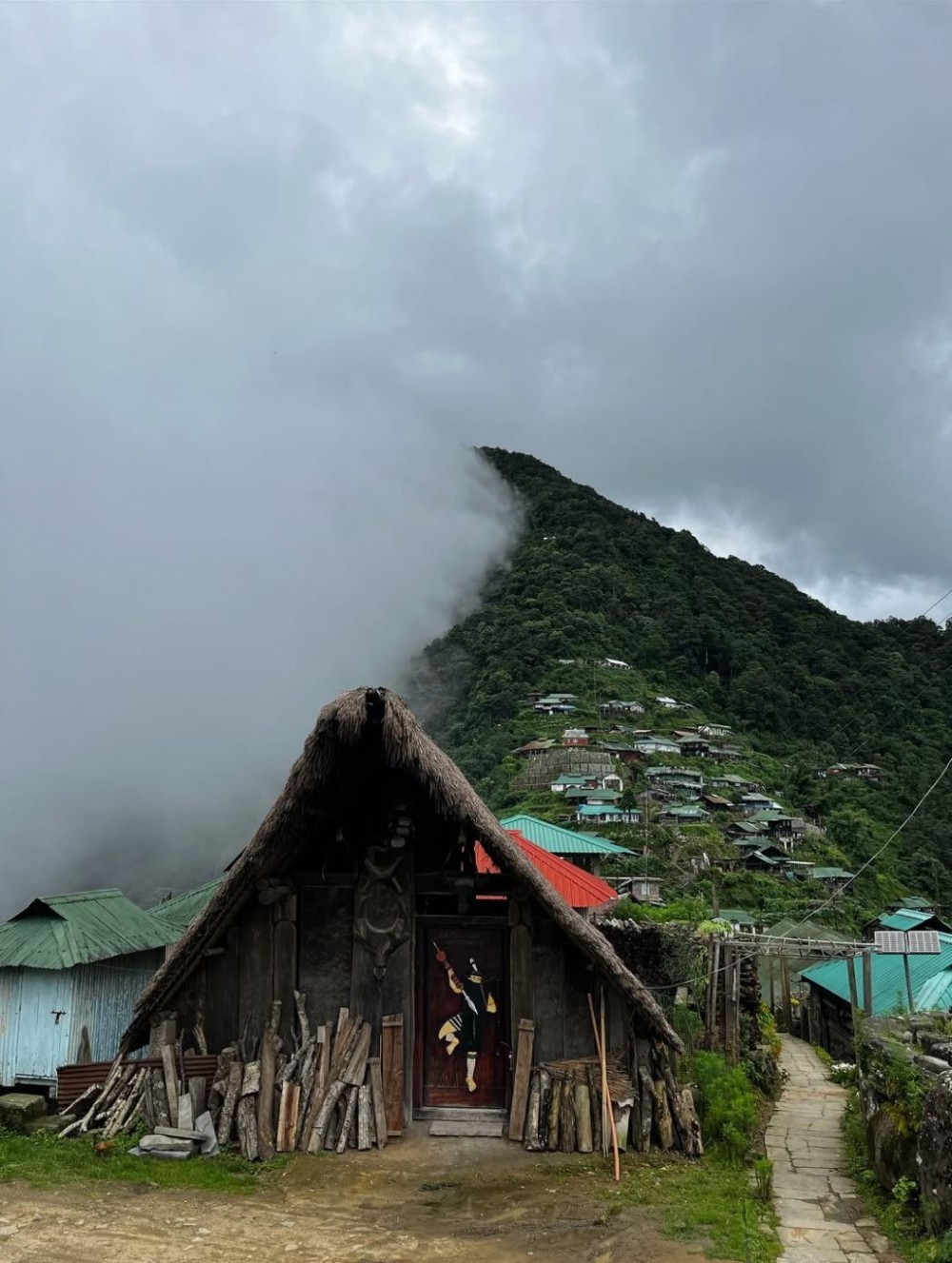
Benreu village, also called ‘Mount Pauna Tourist Village’, is slowly gaining momentum as one of the top tourist destinations in Nagaland state. (Photo Courtesy: apen.small_villageguy on Instagram)
Community control key to sustainable tourism, says poll respondents
Morung Express News
Dimapur | October 18
“Local communities are what keep Nagaland’s culture and natural beauty alive,” said one respondent to a reader poll by The Morung Express, in which 87% endorsed community ownership and management of tourism in the state to keep it sustainable.
Five per cent voted “No” and eight per cent gave qualified or alternative views, mostly calling for a government-community partnership and pointing to poor road connectivity as the sector’s biggest hurdle.
Authenticity and livelihoods
Supporters said community control would give tourists more authentic experiences while keeping earnings within local families.
“When tourism benefits local people, travellers get more authentic experiences, and local families get to earn a living from their own culture and traditions,” the respondent said.
Another said indigenous people understand the region’s biodiversity better than outsiders. “This autonomy would ensure greater cooperation for sustainable governance,” the respondent said. Others said locals “know their land and how it works” and would manage it best, and that community-run ventures would create jobs within the state and boost the local economy.
One respondent said local inhabitants could offer “ethnic food” that is organic and healthy, drawing domestic and foreign tourists and providing financial stability as a sustainable alternative venture. Another said community involvement would bring stability and security for both residents and visitors.
Monitoring and guidelines
Some supporters said community control should come with safeguards. One expressed “firm belief” in northeastern communities, describing them as “well behaved and cultured”, but cautioned that any system needs monitoring.
“They should be given some control (may not be fully) to operate and bloom. If in long run there are many complaints, withdraw control,” the respondent said.
Another said communities were largely independent and could deliver good service “under given government guidelines”.
Case for partnership
Several of the “Other” respondents argued for shared responsibility. One said some sectors need government intervention on national security grounds, while Nagaland’s cultural diversity requires “extraordinary guidance” from local communities. The respondent wanted “reasonable” sectors handed to communities with training and awareness programmes, along with financial independence, support to upgrade institutions and better ground-guide training. “For me both are necessary in the interest of Nagaland,” the respondent said.
Another respondent said community ownership would generate employment, preserve culture and protect the environment, but warned of “a lack of funding, professional skills, poor management, and unequal distribution of profits”. The government, the respondent said, could help through financial assistance, training, infrastructure, marketing support and clear regulations, while ensuring transparency and fair sharing of benefits.
Roads and the Tourism Department
Two respondents said the poll missed the larger issue. “How can we increase tourism in Nagaland? First build good roads,” one said. “No point of tourist resorts and homestays when tourist can’t even get to the destination. Our biggest problem is road connectivity.”
Another said tourism cannot be promoted without connectivity and pointed to the state’s unemployment problem. The respondent said Nagaland has potential comparable to neighbouring Meghalaya, but added, “The government initiatives look good only on paper, the reality is something else.”
A third questioned the poll itself. “If this is a question, what’s the point of having the Tourism Department? This question already shows the weakness of the Department,” the respondent said.
The 5 per cent “No” voters gave no reasons in the responses made available.