Amur Falcon _ Renuka Vijayaraghavan
Shakti Swarup Dash
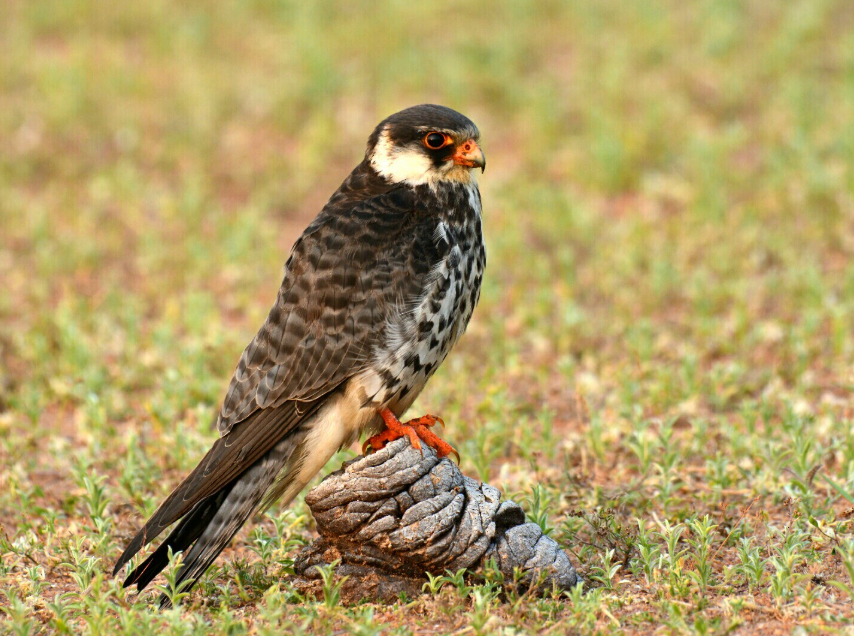
As dusk settles over the forested hills of Nagaland, the sky begins to change—not with clouds, but with movement. Thousands of wings cut through the fading light, gathering, circling, and settling into the trees. For a few moments, it feels like the forest is breathing. These are the Amur Falcon, small raptors that have arrived after an extraordinary journey, one that stretches across continents and quietly challenges what we imagine such a small bird can do.
At first glance, there is little to suggest the scale of what these birds accomplish. Weighing barely 150 grams, the Amur Falcon breeds in the far reaches of East Asia, across southeastern Siberia and northern China. Each year, it undertakes a migration that spans nearly half the globe. From its breeding grounds, it travels southward, passing through Northeast India before continuing to southern Africa. What appears to be a seasonal movement is, in reality, one of the most remarkable migrations in the bird world.
What makes this journey astonishing is not just how far they travel, but one particular stretch—the crossing of the Indian Ocean. Unlike many migratory birds that follow coastlines or pause along the way, the Amur Falcon sets off over open water with no place to land. It covers thousands of kilometres in a near non-stop flight. Before departure, the falcons build up fat reserves, nearly doubling their body weight—energy that must last through days in the air.
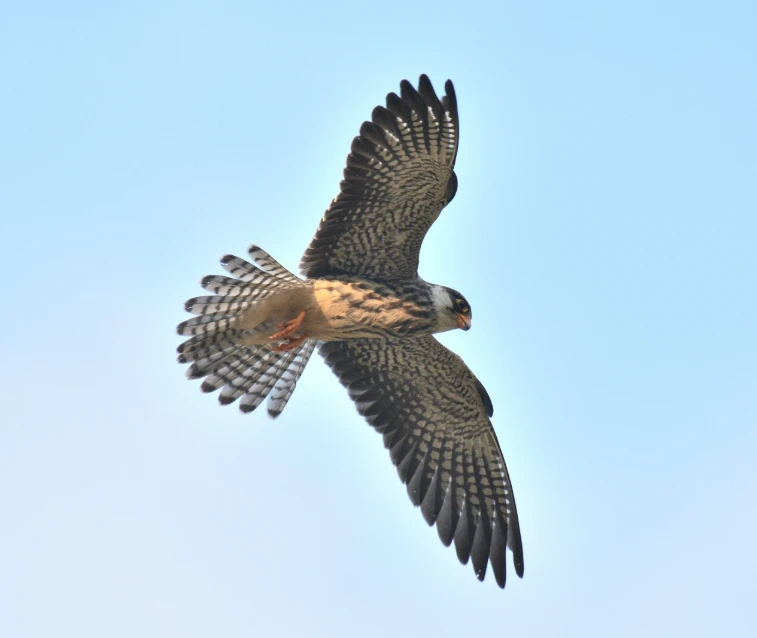
But endurance alone doesn’t explain it. The Amur Falcon’s migration is closely tied to atmospheric conditions. These birds don’t simply push forward; they wait for the right moment. By aligning departure with favourable winds, they ride these currents across vast distances, saving energy. It is less about strength and more about timing, knowing when the sky itself will help carry them forward.
Their journey is also shaped by what they find along the way. When they arrive in Northeast India, it is often when insect life, especially termite swarms, is abundant. For the falcons, this is a brief but crucial window. They feed intensively, rebuilding energy before continuing onward. Their migration feels carefully stitched into the rhythms of the landscape—weather, insects, and geography all playing a part.
One of the most striking sights associated with the Amur Falcon is the way they gather. In parts of Nagaland, thousands or sometimes more come together to roost in a single area. As evening falls, the sky fills with movement, and trees that seemed ordinary suddenly hold an overwhelming number of birds. Branches bend, the air fills with calls, and for a while, the scale is hard to take in.
For a long time, however, this behaviour also made them vulnerable. Dense roosts meant easy hunting, and thousands of birds were once captured during their stopover. What followed is a story that has quietly changed the narrative. Through awareness efforts and local community involvement in Nagaland, hunting gave way to protection. Today, the arrival of the Amur Falcon is seen very differently—not as something to exploit, but to protect.
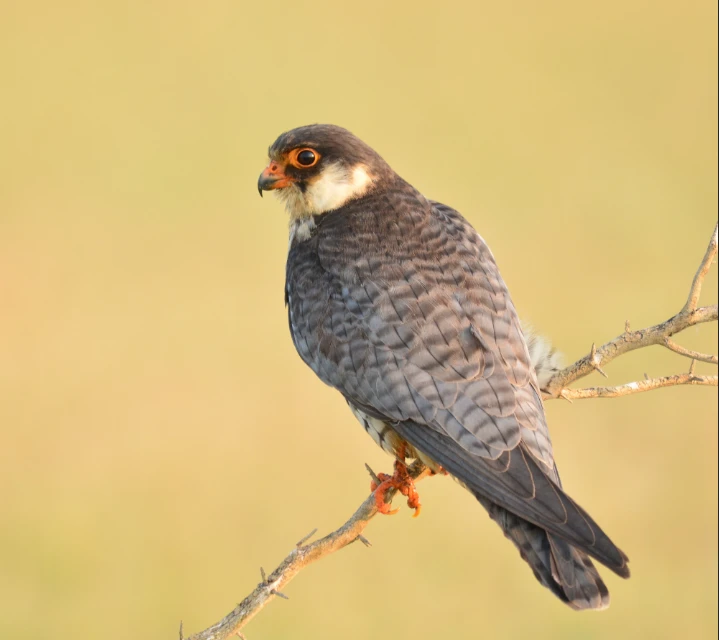
Even now, much about these birds remains uncertain. How they navigate such vast distances with consistency is still being studied. What triggers their departure, or guides them across open oceans, is not fully understood. Satellite tracking has revealed parts of this journey, but also raised new questions.
In the end, the Amur Falcon is more than a migratory bird. It is a quiet link between distant landscapes—a traveller moving between the forests of Siberia, the hills of Northeast India, and the grasslands of Africa. Its journey may seem understated in the moment, but when you step back, it becomes something else entirely.
As the night deepens in Nagaland and the forests grow still, the falcons settle into the trees, almost disappearing into the dark. Soon, they will rise again, carried by winds they seem to understand better than we do, and head out over an ocean with no margins for error. And somehow, they make it across.
Shakti Swarup Dash passed his 12th from Ravenshaw Higher Secondary School and currently preparing for medical entrance examination.