Union Minister Shivraj Singh Chouhan speaks in the Lok Sabha during the Winter Session of Parliament in New Delhi on Tuesday, December 16, 2025. (Photo: IANS/Video Grab/Sansad TV)
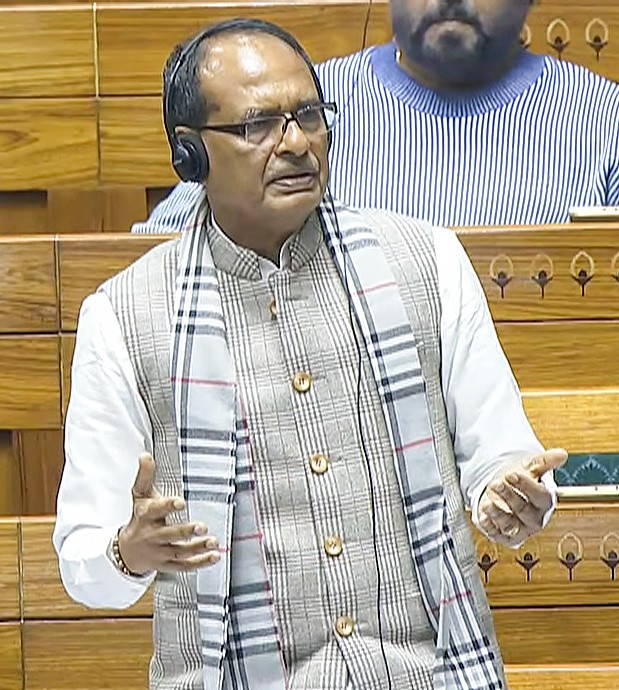
New Delhi, December 17 (IANS): As the Lok Sabha prepares to discuss the Viksit Bharat - Guarantee for Rozgar and Ajeevika Mission (Gramin) (VB-G RAM G) Bill, 2025, government sources have revealed that extensive consultations and preparatory work were undertaken before finalising the legislation.
The Bill, introduced on December 16 by Union Agriculture and Farmers Welfare Minister Shivraj Singh Chouhan amid opposition protests, seeks to repeal the Mahatma Gandhi National Rural Employment Guarantee Act (MGNREGA), 2005, and establish a new framework guaranteeing 125 days of wage employment annually to rural households -- up from the existing 100 days.
Officials emphasised wide-ranging stakeholder engagements, including discussions with experts, to ensure the Bill addresses transparency, efficiency, and alignment with the Viksit Bharat @2047 vision.
Sources highlighted the Bill's focus on modernising infrastructure creation through thematic priorities such as water security, core rural connectivity, livelihood assets, and climate resilience works, integrated into a national rural infrastructure stack.
A significant provision requires gram panchayats to submit weekly progress reports on completed works, fostering real-time monitoring, quick identification of gaps, and optimal resource utilisation. This feedback mechanism aims to strengthen coordination between local bodies and central authorities, reducing delays in rural development programmes, said sources.
Key proposed measures include skill mapping of workers for better job allocation, digital tracking of workdays, and advanced technologies like facial recognition to prevent fraud and duplication in beneficiary identification -- steps described as advancing "maximum governance" in scheme delivery.
Minister Chouhan is expected to lead the government's response during the debate, following discussions on other pending legislation like the Atomic Energy-related Bill.
He has positioned the initiative as building on MGNREGA's legacy while promoting empowerment, growth, convergence, and saturation for a prosperous rural India.
The legislation introduces changes like normative state-wise allocations, shared funding patterns, and pauses during peak agricultural seasons to ensure labour availability for farming.
If enacted, it promises to transform grassroots governance by blending digital tools, local accountability, and structured oversight, marking a pivotal shift towards a more resilient and citizen-centric rural employment ecosystem.