Morung Express News
Dimapur | June 9
Nagaland has recorded substantial improvements in key child nutrition indicators, according to the latest National Family Health Survey (NFHS-6), with marked reductions in major measures of undernutrition among children under five years of age.
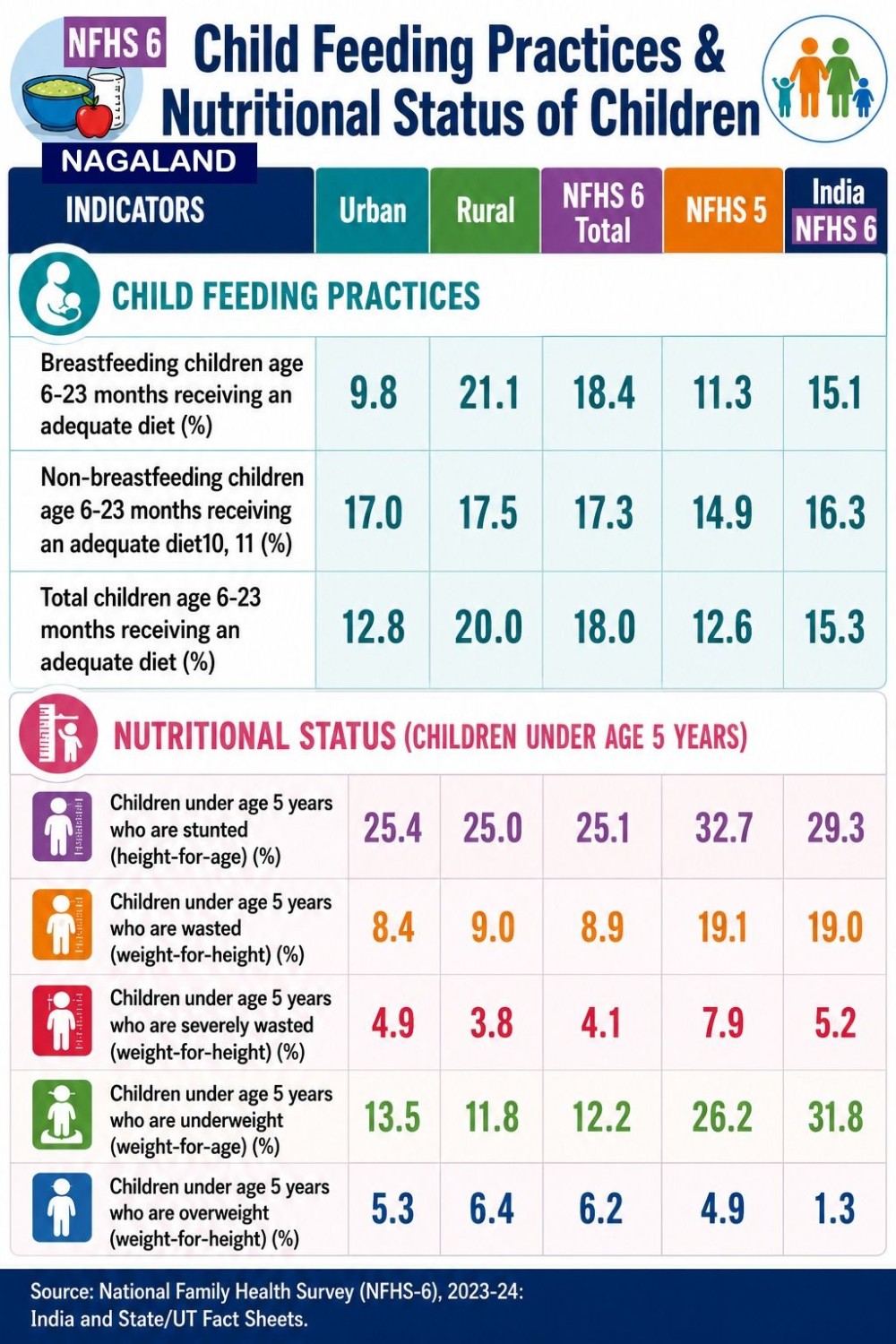
The survey data show that stunting, which reflects chronic undernutrition, declined from 32.7% in NFHS-5 to 25.1% in NFHS-6. Wasting, an indicator of acute undernutrition, fell sharply from 19.1% to 8.9%, while severe wasting declined from 7.9% to 4.1%.
Similarly, the proportion of underweight children dropped from 26.2% to 12.2%, representing one of the most significant improvements recorded across the nutrition indicators.
In all four categories, Nagaland performed better than the corresponding national averages, reflecting improvements in child health and nutrition outcomes over the survey period.
At the same time, the survey points to continuing concerns regarding the quality and adequacy of diets among infants and young children.
Only 18% of children aged 6-23 months were reported to be receiving an adequate diet, although this marked an improvement from 12.6% in NFHS-5.
Among breastfeeding children in the same age group, 18.4% received an adequate diet, up from 11.3% in NFHS-5. For non-breastfeeding children, the corresponding figure improved from 14.9% to 17.3%.
The data also reveal notable rural-urban differences. Twenty per cent of rural children aged 6-23 months received an adequate diet compared to 12.8% in urban areas. Among breastfeeding children, the corresponding figures were 21.1% and 9.8%, respectively.
The survey also recorded a modest increase in the proportion of children under five who are overweight, rising from 4.9% in NFHS-5 to 6.2% in NFHS-6.
Broader nutrition indicators among adults point to the coexistence of undernutrition and excess weight. According to NFHS-6, 8.8% of women and 8.2% of men had a Body Mass Index (BMI) below the normal range, while 17.2% of women and 23.7% of men were overweight or obese.
The survey further recorded improvements in child health indicators associated with nutrition and overall well-being.
The prevalence of diarrhoea among children in the two weeks preceding the survey declined from 3.4% to 3.0%, while symptoms of acute respiratory infection (ARI) fell from 1.1% to 0.3%. Care-seeking for children with fever or symptoms of ARI increased from 30.9% to 34%.
NFHS-6 also highlighted the prevalence of hypertension among adults. Among women aged 15 years and above, 23.7% had elevated blood pressure or were taking medication to control hypertension, while the corresponding figure among men was 28.7%.