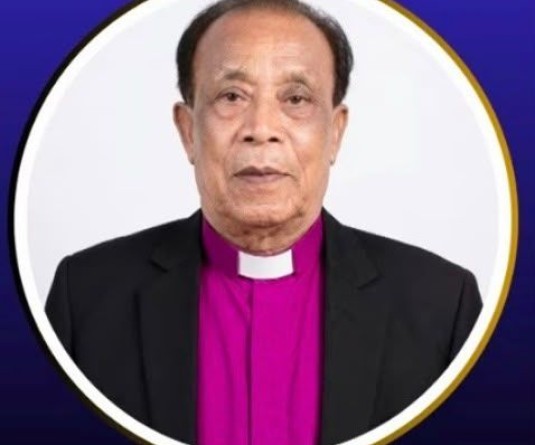
Akok Amer
Impur
Church is the easiest place on earth to get power you didn’t earn. A lawyer has to pass the bar exam, a doctor has to be licensed, a teacher has to be certified, a pastor needs a formal seminary and not just, “God called me”. However, lots of people come to the sacred ecclesiastical structures and functions even without “a call” degree.This unearned power that the church gives us and what we do with that power once we get it,simplifies in two categories. First, people who go to church because they genuinely believe, they like the structure of worship, their tradition, their faith is real. Their religion doesn’t hurt anyone else. Second, there are people who go to church for what it gives them, status, title, authority, the appearance of being a good person. Dark tetrad personalities are not interested in genuine belief. Genuine belief requires empathy, humility and putting others first. Those are the exact qualities dark tetrad people don’t have.
Psychologist Delroy Paulas at the university of British Columbia did research on a cluster of personality traits that travel together in the most dangerous people you will ever meet. He called it the dark tetrad. He concludes by saying that there are four types of predators all drawn to one place (Church).
1. The Narcissist: A narcissist is a person who does not go to church to worship God but, to be worshipped, to have control, and to abuse power. Psychologist Otto Kernberg at Cornell university concludes that, such type of person who poisons every close relationship they’re in and never think that they are the problem are called it narcissism. The belief that I am better than everyone else built on a lifetime of insecurity. A narcissistic person cannot accept criticism the same way a healthy person does. To them, criticism is not new information but a personal attack on them. They do not self-reflect after receiving criticism but they attack and retaliate.
Church is the prefect safe haven for a narcissistic person. Because the church gives them a title, a stage and a congregation that is taught that questioning leadership is the same as questioning God. So, nobody ever tells them that they’re the problem. You don’t have to earn a degree you just have to perform religious belief convincingly enough and they hand out titles like pastors, elders, deacons, and other ministerial leaders.
2. The Machiavellian: The Machiavellian doesn’t go to church because they believe. They go because they know that the church is full of people who are trained to trust without question. Psychologist Richard Christie and Florence Guise identifies a personality type built entirely around manipulation and power. They called it Machiavellianism. The belief that the world is a game of power and the only real morality is winning it. A Machiavellian’s drive is not just money or fame, their main drive is to know they outsmarted you.
That win is their drug and a church gives them a room full of people who will never know they are lost. They know the language, they quote the verse, they cry during prayer, they volunteer for every mission trip, they are calculating who trust them enough to be used. They seduce a vulnerable person and quote scripture to keep them silent. They steel from the offering plate and blame it on poor bookkeeping. The Machiavellian does not exploit strangers they exploit the people who trust them the most.
3. Psychopath. The psychopath doesn’t go to church because they care about other people, they go to church because it gives them the moral cover for the fact that they have never cared about anyone. Psychologist Robert Hare spend decades studying people who felt nothing for others, he called it psychopathy. It’s the complete absence of empathy for anyone. The suffering of others is simply a neutral information for them.
Church is the ideal hiding place for psychopaths, because church measures character by what people say not by what they do. They learn what word to say when someone is grieving. They preform caring perfectly not because they feel the pain with you but their performance gets them access.
4. The Sadist. The sadist doesn’t go to church to help people. They go because church gives them the authority to hurt people and call it God’s will. Psychologist Aaron Buckles and Delroy Pollice at the university of British Columbia identified the fourth dark psychological trait. They called everyday sadism:the enjoyment of causing pain or humiliation to other people. They have a brain that finds pleasure in what most people would find horrific and unlike psychopaths who feels nothing but sadist feel everything. This is what makes them worse than psychopaths. A sadist doesn’t hurt people because they’re angry, they hurt people because the act of hurting someone is the only thing that makes them feel powerful.
Church gives them space to put it: A clergyman who publicly shame a member for sin is exercising authority. A Church leader who interrogates a young woman about her sexual history is doing accountability. A preacher who uses the fear of going to hell to control teenagers is saving souls. Anyone of these whose acts involves power over vulnerable people is a sadist. Naively, their act is protected by the authority of the church. The sadist who publicly humiliates a church member is not rebuking sin, they’re getting off on it. People leave traumatized, teenagers develop anxiety disorders, woman carry shame for decades and the sadist sleeps soundly at night because the congregation thanks them for it. The sadist doesn’t have to hide what they enjoy, they just have to call it a ministry. Such people are the revival speaker, counselors, evangelist etc. The church protects it all because the church has one feature that no other institution has, mandatory forgiveness.
Conclusion
These people did not find God, they found a room full of like-minded people who are religiously obligated to trust them. They pray with you as they plan on preying on you. A safe haven defines, when aMachiavellian gets caught stealing, they cry at the altar, the congregation forgives. They start again on Monday. A psychopath gets caught manipulating a family, they quote a scripture about grace, the congregation forgives, likewise they start again on Monday. Forgiveness is not their path to redemption but it’s abail out of penitentiary and repeat the same all over again.
Today, we should understand that church is not a dynamic psychological playground for anyone who wants to hide his weak personality over the functioning of the religiosity. We also couldn’t say that there is an absence of such personalities in our churches in Nagaland. Let us be vigilant with such dark tetrad personalities in our churches. The divine churchdoesn’t need such dominance over humility and vulnerable congregations but Christlike believers, leaders and clergies filled by the Holy Spirit in the light of the risen Christ.