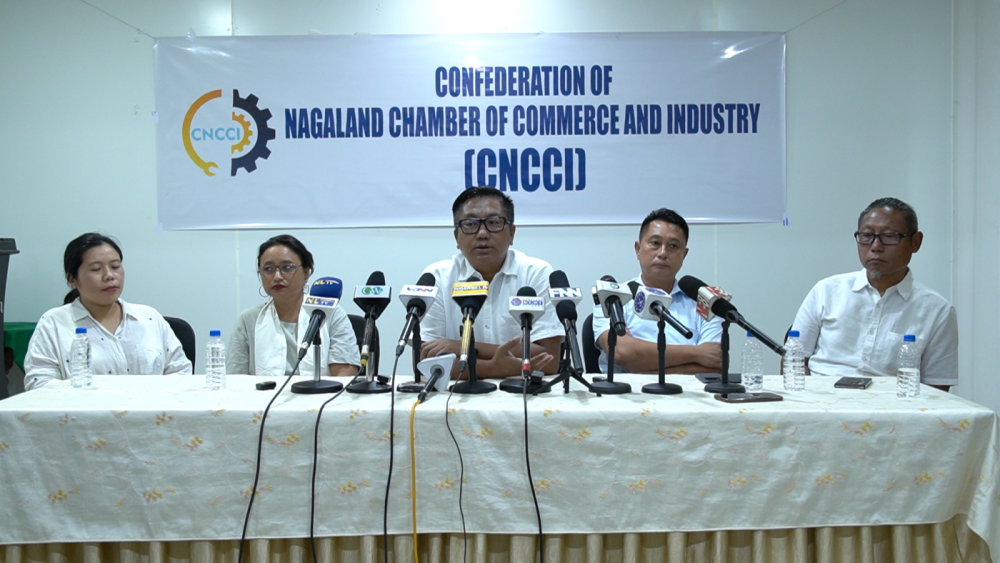
CNCCI Chairperson Dr Khekugha Muru and other executives at the press conference in Dimapur on June 15. (Morung Photo)
• Says there’s no blanket ban
• Notification misunderstood
Morung Express News
Dimapur | June 15
According to the Confederation of Nagaland Chambers of Commerce and Industry (CNCCI), there is no blanket ban on paan masala in Nagaland. The CNCCI addressed a press conference in Dimapur, on June 15, trying to clear the fog over the June 4 directive by the State Food Safety Authority banning “food products containing Tobacco and Nicotine as ingredients, including Gutkha and Pan Masala with tobacco/nicotine.”
The confusingly structured directive had generated confusion and panic among consumers and traders alike, while retailers in some places were victimised falling prey to arbitrary raids from civil society organisations. Shop-keepers even stopped selling cigarettes following the directive. Citing the confusion, the DUCCF urged the public and enforcement agencies to distinguish between different legislative acts to prevent market panic and arbitrary enforcement.
CNCCI Chairperson Dr Khekugha Muru told the press conference that much of the ongoing confusion stemmed from a misunderstanding of June 4 notification. He explained that the Food Safety Act, administered by the FSSAI, and the tobacco-related COTPA Act are entirely different legislations.
“I want to convey to the public of Nagaland, including consumers, non-consumers, watchdogs, advocacy groups, and NGOs, the distinction between the relevant acts,” Muru said. He said that the primary source of confusion was the clause stating that any food product containing nicotine and tobacco is banned. He clarified that paan masala as a product category falls under the purview of the Food Safety Authority and carries an FSSAI license. Following a 2016 Supreme Court ruling, major brands stopped manufacturing gutka and transitioned to producing paan masala, which is manufactured without tobacco or nicotine. “Popular brands sold in Nagaland… are tobacco-free, nicotine-free, and possess valid FSSAI licenses,” he added.
Muru held that “knee-jerk” reactions from civil society organizations and government agencies have led to arbitrary raids and the unauthorised destruction of commercial stocks. He urged civic groups and student bodies not to take the law into their own hands but to report suspected illegalities to competent authorities, such as the police, district administration, or Food Safety Officers.
CNCCI Treasurer Kevin Yepthomi attributed the confusion to a lack of clear-cut government directive and the spread of fake notifications on social media. Yepthomi noted that this panic has led to artificial shortages and severe price gouging, with products normally retailing for 10 rupees being sold for up to 50 rupees. “The department should clear this,” Yepthomi said, while adding that the Food Safety Authority should have issued precise guidelines to prevent public panic and losses to traders.
The trade body also issued a stern warning against prevailing “syndicates and monopolies” in the state's paan masala and tobacco trade. Chairperson Muru stated that the CNCCI would not allow manufacturing companies to operate exclusive trade rings by conniving with select local distributors. He alleged that these syndicates actively block local Naga entrepreneurs from securing direct dealerships, driving up prices.
He added that the CNCCI will independently test samples of popular brands to verify if they comply with FSSAI standards. Responding to queries regarding syndicates allegedly backed by underground groups, Muru affirmed that such operations are illegal. He stated that the CNCCI is prepared to take legal recourse and will not permit syndicates to disrupt the state's commercial landscape.
The trade body however refused to take names of the traders, who collude and form illicit trade syndicates.