Morung Express News
Kohima | March 25
The second phase of the Eight Session of the 14th Nagaland Legislative Assembly begins on Thursday, with the presentation of the State Budget for 2026–27 taking centre stage amid growing fiscal pressures and policy trade-offs.
The Budget comes at a time when the State may have to contend with changes in fiscal transfers following the 16th Finance Commission (FC), particularly the possibility of reduced post-devolution grants.
This is expected to place additional strain on Nagaland’s already narrow fiscal space, where committed expenditures such as especially salaries, pensions and administrative costs.
Budget under pressure
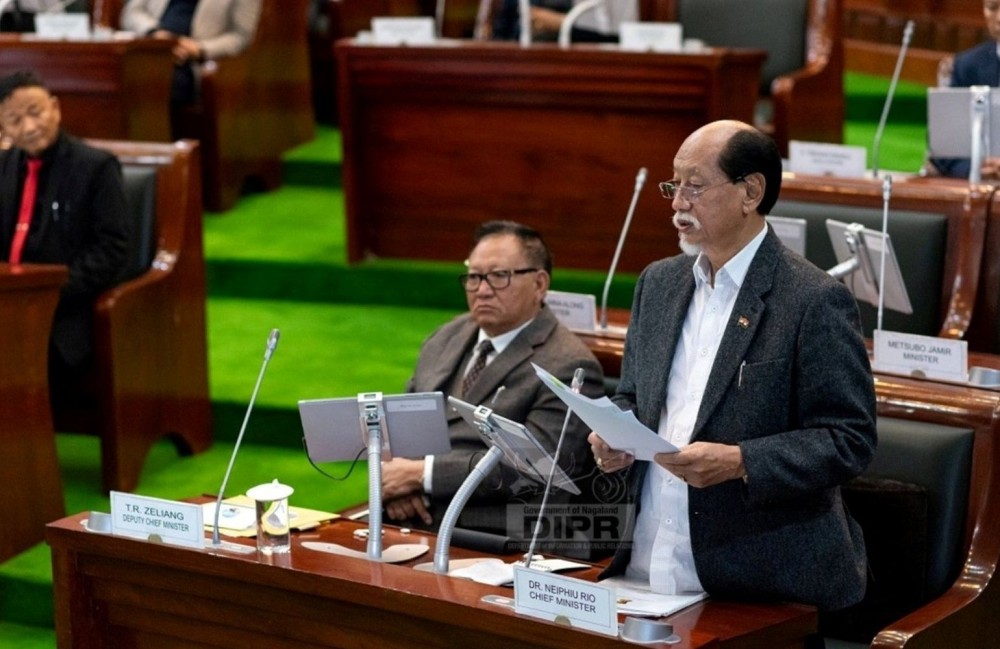
Chief Minister Dr Neiphiu Rio, who also holds the Finance portfolio, is expected to outline a calibrated fiscal roadmap, balancing developmental priorities with resource constraints. The Budget may indicate tighter expenditure prioritisation, selective sectoral allocations, and renewed emphasis on improving internal revenue mobilisation.
In this context, debates are likely to extend beyond allocations to structural questions of fiscal sustainability.
Among the recurring issues that may resurface is whether the State should revisit aspects of the Nagaland Liquor Total Prohibition (NLTP) Act—at least partially—as a means to augment revenues, a politically sensitive but persistent theme in budget deliberations.
Other key agenda of opening day’s includes the tabling of Comptroller and Auditor General (CAG) reports, review of expenditure trends, and multiple supplementary demands for grants.
FNTA and MCC shadow
Although not listed in the formal business, the proposed Frontier Nagaland Territorial Authority (FNTA) Bill is likely to figure prominently in discussions on matters of urgent public importance, given its continuing political relevance and implications for regional aspirations and governance arrangements.
The session is further set against the backdrop of the Koridang bye-election scheduled for April 9, with the Model Code of Conduct (MCC) currently in force.
While the MCC does not restrict routine legislative business such as the Budget and single-constituency centric, it may limit the scope for new policy announcements or fiscal commitments.
At the same time, its presence could influence political positioning within the House, including whether it is invoked as a constraint or contested as a convenient explanation for policy inaction.
The brief two-day sitting ending March 27 is poised to capture the intersection of fiscal strain and political dynamics, shaping the State’s financial course ahead.
Phase I of the Eight session comprised five sittings held from March 2 to 12.