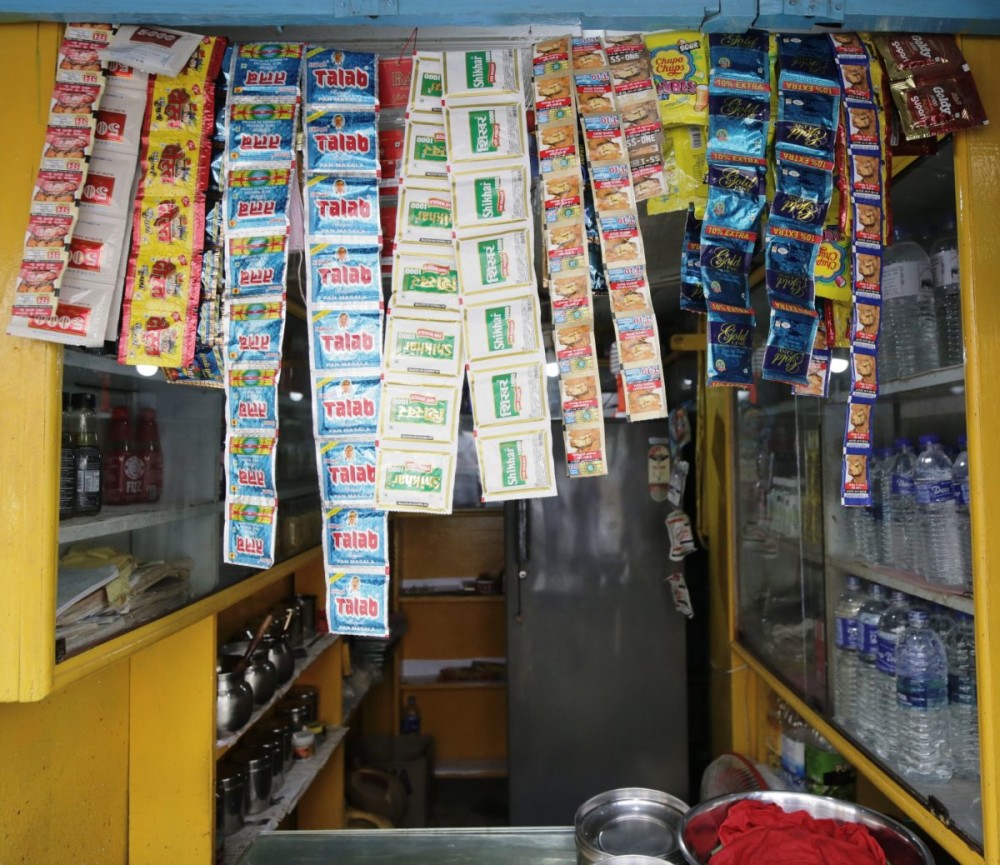
Tobacco products, including pan masala and gutka on display for sale in a shop in Dimapur. (Morung file Photo)
Dimapur, June 13 (MExN): The Dimapur Chamber of Commerce and Industry (DCCI) and the Chümoukedima Chamber of Commerce and Industry (CCCI) on Saturday urged the state government to grant the business community a reasonable grace period to dispose of or return existing stocks of tobacco products, including pan masala and gutka, following an abrupt ban imposed without prior notice on June 2, 2026.
In a joint representation, the two chambers said wholesalers, distributors, stockists and retailers had legally procured the affected products after payment of all applicable taxes, including GST, with no prior indication of an impending ban. “As a result, substantial capital remains locked in existing inventories across the state, causing significant financial distress to the trade community,” said DCCI President Akashe Zhimomi and CCCI President James Kin in the statement.
While supporting the State Government’s efforts to address public health concerns arising from the consumption of tobacco and related products, the two chambers observed that the business community should be provided a reasonable and time-bound window period to either return the products to the manufacturers or dispose of existing stocks in a lawful manner. “Such a measure would help mitigate the significant financial losses currently being faced by traders and retailers.”
Seeking clarity regarding the notification's provision of a one-year ban, the two chambers said, “While the objective of protecting public health is commendable, questions naturally arise as to why the ban has been imposed for only one year.” It questioned, “Will the Government permit the sale of these products after the expiry of the ban period? Can the desired public health outcomes be achieved within a single year? If the products are considered harmful to public health, would a longer-term or permanent policy not be more appropriate?”
The chambers also raised concern over the likely emergence of black marketing and illegal supply networks during the prohibition period, which could undermine the ban’s intended purpose and create additional enforcement challenges.
Therefore, while reaffirming their support for measures aimed at safeguarding public health, the two bodies “respectfully request the Government of Nagaland to consider granting the business community a reasonable grace period to liquidate, return or otherwise lawfully dispose of existing stocks.”