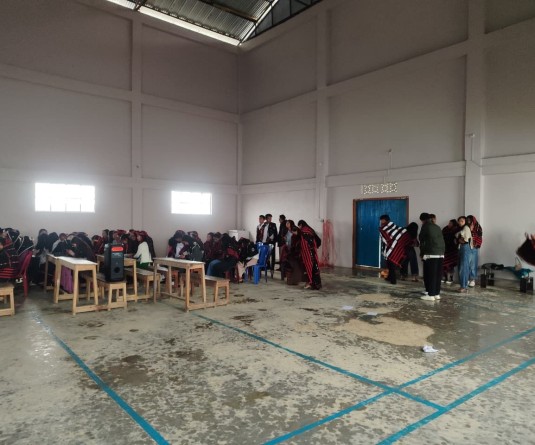
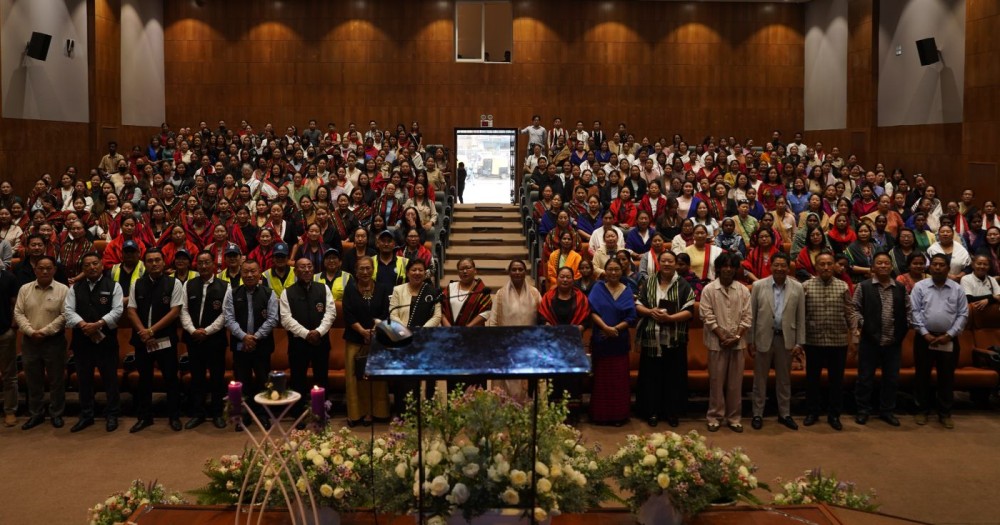
The gathering during the launch of the Dimapur Women for City Impact held at Town Hall, Dimapur on March 28.
Calls for unity against crime and social challenges
Morung Express News
Dimapur | March 28
A citywide women-led movement, “Dimapur Women for City Impact,” was formally inaugurated at Town Hall, Dimapur on Saturday with a call for unity, collaboration and collective responsibility to address pressing social challenges and transform the city.
Addressing the inaugural programme as the special guest, Commissioner of Police Dimapur, Aotula T Imchen, IPS, described the initiative as the beginning of a “significant movement” rooted in a shared love for the city. Emphasising ground realities, she pointed out that crime against women and children, drug addiction, and unemployment continue to affect families, creating insecurity and hopelessness.
While acknowledging the efforts of churches, civil society organisations, NGOs and government agencies, Imchen noted that many continue to function in isolation. “Our silos are getting bigger,” she said, stressing that women—“the backbone of every major movement”—must lead efforts to bridge these divides.
She urged the movement not to become “just another organisation,” but a unifying platform that connects stakeholders across communities, tribes, institutions and sectors. Drawing from the Biblical story of Esther, she encouraged women to rise with courage and purpose, stating that the initiative is not about perfection but about being present and engaged in society.
Calling for concrete action, Imchen outlined three key steps—“pray, partner and step forward.” She appealed to citizens to pray for the city’s peace and prosperity, collaborate across organisations, and actively take responsibility for change. “Every life matters, every voice matters, and each one has the power to make an impact,” she said, expressing hope that Dimapur would become a city where dignity, safety and peace are felt by all.
In her welcome address, Akokla Longchar, Member of the Nagaland State Commission for Women (NSCW), highlighted the significance of the gathering, describing it as a long-awaited moment reflecting unity and shared commitment. She noted the diverse participation—from civil society and NGOs to churches, youth bodies and government departments—as a strong indication of collective intent.
Providing an overview of the initiative, Khontele Seb, Coordinator of City Initiative Northeast India (CI NEI), clarified that the programme is part of a larger international “City to City” movement, aimed at fostering collaboration rather than creating another organisation.
“Our goal is connecting dots,” Seb said, explaining that while numerous groups in Dimapur are doing commendable work, their impact remains limited due to lack of coordination. The movement seeks to bring these groups together to “dream, envision and work collectively” for the city’s transformation.
She underscored that the initiative is inclusive, encouraging participation from both women and men, and is rooted in shared responsibility for the city’s well-being. Referencing the “Esther Challenge,” Seb said it symbolises courage, faith and collective action, urging people to stand for their community without fear.
Highlighting key concerns, Seb said the movement will prioritise creating safe spaces for women and girls, raising awareness about issues such as domestic violence, and encouraging openness rather than silence. She stressed the need for stronger collaboration between churches and civil society, noting that lack of coordination often weakens otherwise impactful efforts.
Outlining future plans, she said a core team has been formed and will hold regular meetings and prayer gatherings, while also working at the grassroots level to build stronger community relationships across colonies. The movement aims to address city issues step-by-step through sustained collaboration.
With a collective call to “rise, unite and transform together,” the initiative seeks to build a safer, more inclusive and thriving Dimapur.