M Lokeswara Rao IFS
Principal Chief Conservator of Forests and Head of Forest Force (Retd)
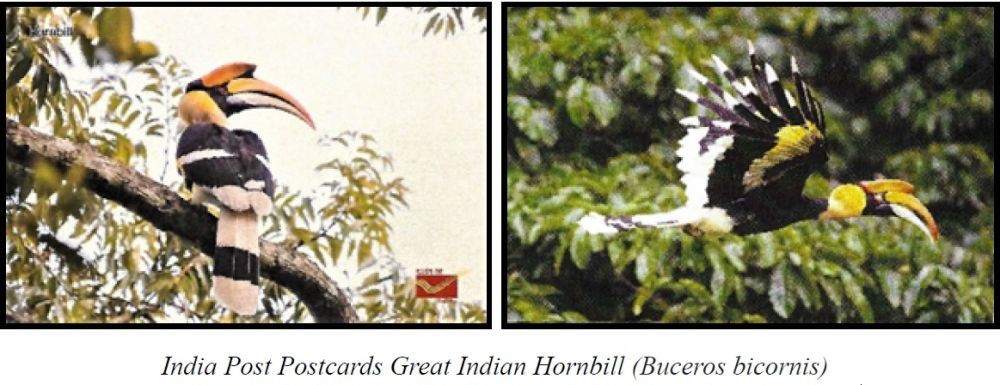
In the rugged, mist-shrouded hills of Nagaland, the distinct black-and-white tail feather of the Great Indian Hornbill (Buceros bicornis) holds a status far beyond mere ornament. Across the diverse tribes of the Naga people—including the Angami, Ao, Sumi, Lotha, and Konyak—the hornbill feather stands as a supreme symbol of honour, social prestige, martial distinction, and spiritual harmony with nature. In the forests of Nagaland, the Great Hornbill - Aka to some tribes, Buceros bicornis to science - is more than a bird. It is a spiritual being, a moral test, and a cultural totem. For Naga peoples who had no written script before the American missionaries arrived, the hornbill carried history in its feather. That history can still be read today in headgear, shawls, wood carvings, and in the Hornbill Festival at Kisama. India Post issued postcards of Great Indian Hornbill (Buceros bicornis).
Before Christianity came to the Naga Hills in the 18th century, Nagas were animists who worshipped certain creatures as spiritual beings, and the hornbill was chief among them. The historical veneration of the hornbill is deeply rooted in Naga oral traditions and mythologies. Naga folklore frequently depicts the hornbill as a bird of majestic nobility, loyalty, and vigilance. Its grand physical presence and unique breeding habits—where the male diligently guards and feeds the female and chicks sealed inside a tree hollow—earned it a reputation as a guardian and model of devotion.
In daily life, the bird marked time and fate. Some tribes invoke blessings “as flocks of hornbills,” its sight during harvest is taken as prosperity, and its beauty is used as a metaphor to describe Naga women. In Naga society, the use of hornbill feathers is not merely decorative but carries profound cultural weight. In ancestral belief systems, the hornbill was regarded as a bridge between the physical and spiritual realms. Wearing its feather was not merely decorative; it was believed to bestow upon the wearer the bird’s noble attributes: courage, grace, keen perception, and royal dignity.
On the 4th Anniversary of Nagaland as a State, First Nagaland Commemorative in 1967, India Post issued an ultramarine stamp titled “Nehru and Nagaland”. It shows Nehru wearing a plume hat of Hornbill feathers, holding a spear, walking ahead of a group of Nagas in traditional clothes with head gear with hornbill feathers.
The bird lives in stories that every tribe tells differently. The Sumi story of inseparable love: Two lovers, Kivigho and Kahuli (also told as Kiviko/Kivigho and Khauli), go to the forest. Kivigho climbs a tree to pluck fruit for his beloved and cannot climb down. Slowly he transforms into a Great Hornbill. A feather falls on the lap of the heartbroken Kahuli, who treasures it all her life in memory of her lost love. Because hornbills are monogamous and mate for life, the feather became for Sumi Nagas a symbol of “never ending love” and indissoluble fidelity.
The Liangmai Nagas and orphan-boy variants: In another version, a boy named Talungding is mistreated by his stepmother, wishes to become a hornbill to be free and is granted the wish. Years later he circles his old village and drops a feather to his kin, but when his cruel stepmother demands one, he tells her to close her eyes and open her mouth - the feather splits her throat and divine justice is done. Ao Naga death rituals, where mourning culminates on the sixth day with a bath in the river, are believed to be modelled on hornbill behaviour, and the soul itself is said to take the shape of a hornbill after death. In Ao and other retellings, wars lasting hundreds of years, like the one between Nokrang and Longkhum villages, are said to have started over the hornbill.
Early ethnographers like J.H. Hutton and J.P. Mills recorded how different ways of donning the feather had distinct meanings. Hutton wrote to Henry Balfour, curator of the Pitt Rivers Museum, that Rengma men “nearly always seem to wear hornbill feathers in threes, though sometimes in twos,” while Angami old veterans wore horned and hair-fringed hats instead of the plain hornbill feathers worn by younger warriors. Anthropologist Abraham Lotha, in “Hornbill Spirit: Nagas Living Their Nationalism”, compares the everyday lives of the Nagas with that of the hornbill - free spirited, determined and brave, but constrained by complex socio-political situations. Issued in 1983, this commemorative stamp features the Great Hornbill to celebrate the 100th anniversary of the Bombay Natural History Society and highlight its ecological importance as a seed disperser, the First Day Cover (FDC) illustrates the tree with a nest of the Hornbill.
1. Historical Significance of the Hornbill Feather: In traditional Naga society, hornbill feathers were important elements of ceremonial headgear. They were often worn by men during festivals, dances, and community celebrations. In some communities, particular ornaments were traditionally associated with a person's achievements, honour, or social standing. Historically, the right to wear certain types of elaborate headgear could depend on customary rules and achievements recognised by the community. The feathers therefore served as more than decoration. They could communicate information about the wearer's place in society. Historical museum collections document these traditions among communities such as the Angami, Ao, Konyak, and other Naga groups.
This India Post Special Cover depicts a Konyak Naga warrior of Nagaland in traditional attire, reflecting the rich cultural heritage of the Konyak tribe. The warrior is shown carrying a dao (traditional Naga machete), an important symbol of courage, status, and daily life among the Nagas.The figure wears a traditional headgear adorned with a hornbill feather, a highly respected ornament symbolizing valour and prestige in Naga society. Around his neck is a distinctive brass-head necklace, associated with the tribe's historic headhunting tradition. Before the practice was abandoned in the twentieth century, successful warriors wore such ornaments as marks of achievement and social standing
2. Symbolism and Cultural Meaning: The hornbill is admired for its majestic appearance, distinctive beak, and graceful movements. In Naga cultural traditions, it is associated with beauty, courage, dignity, and pride. The meanings of hornbill feathers differ among tribes. Historical accounts record that particular feather arrangements could represent specific achievements or social standing. For example, some historical Angami traditions associated feathers with warrior status, while certain Ao traditions connected them with the performance of important community ceremonies. These meanings should be understood in their historical context and not treated as universal rules for all Naga people. In 2022, India Post issued a special cover commemorating the Sekrenyi Festival of the Angami Nagas. The cachet on the special cover depicts an Angami Naga in traditional attire with a hornbill-feathered headgear and a traditional Naga back basket. The pictorial cancellation features an Angami warrior wearing ceremonial dress and carrying a spear, symbolizing the rich cultural heritage and warrior traditions of the Angami community.
3. Hornbill Feathers in Traditional Dress: Traditional Naga attire is famous for its colours, patterns, and craftsmanship. Depending on the community, ceremonial headgear may combine bamboo, cane, cloth, dyed animal hair, beads, boar tusk ornaments, and feathers. Among the Ao Nagas, a traditional headgear known as Temko is documented as being made with hornbill feathers. Some women's traditional hairstyles and ornaments have also incorporated feathers. These examples demonstrate how the hornbill became part of the wider tradition of Naga clothing and ornamentation.
India Post in 1981 under Tribes of India Series Naga tribes featured Khiamniungan Nagas in the Tribes definitive series. The stamp depicts Khiamniungan Nagas wearing headgear with one hornbill feather and with spear and in traditional attire.
4. The Hornbill in Naga Folklore and Oral Tradition: Naga oral traditions include folk songs, folktales, dances, and stories passed down through generations. The hornbill appears in this cultural heritage as a bird of beauty and significance. In some folk traditions, the bird is associated with love, longing, and relationships. Stories about the hornbill also reflect the close relationship between Naga communities and the natural environment. These narratives are important because they preserve cultural values and local knowledge that might otherwise be lost. The meanings and stories vary between languages and communities, making oral history an important source for understanding the diversity of Naga culture.
Structure and Ceremonial Etiquette of Hornbill Feather
The iconic feather used in ceremonial regalia is the central tail feather of the hornbill, characterized by a striking white base, a bold black band across the middle, and a white tip.
|
The placement and number of feathers on a headpiece followed strict customary protocol. A single feather denoted a proven young warrior or respected village elder, while multiple feathers arranged in a fan-like crown were reserved for legendary war chiefs or eminent leaders. Impersonating this attire without having earned the right carried severe customary penalties.
The Feather as Rank, Bravery and Moral Test, in Naga society, the use of hornbill feathers is not merely decorative but carries profound cultural weight.
In 2022, India Post issued a special cover dedicated to the Hornbill Feather, an iconic symbol of the Naga tribes of Nagaland. The cover highlights the cultural significance of the hornbill feather, traditionally worn in Naga ceremonial headgear as a mark of bravery, prestige, and social status. Widely associated with the rich heritage of Nagaland, the hornbill feather remains an enduring symbol of Naga identity and traditional craftsmanship
The core rule was this: Only successful head hunters were allowed to wear headgears with a hornbill feather in them, as it was believed that the honour of donning the feather had to be earned. Wearing a hornbill feather on the head gear implied honour for a Naga warrior during the headhunting days. The hunt itself was a moral examination. According to Naga legends, the virtuosity of a Naga hunter is determined by the way a hornbill falls. If a hornbill falls on its tail first, thus bending and damaging the prized patterned tail feathers, it means the hunter did not deserve to wear the feathers. If it falls with feathers intact, for example on its beak, the hunter is considered worthy. A parallel belief held that if a hornbill feather is worn by someone who is not worthy or not a true warrior, the feathers will pull down or fall off. In this way the feather was a living certificate of bravery, of skill, of social sanction. It was incorporated into elaborate headdresses, shawls and ceremonial costumes of tribes such as the Angami, Ao, Konyak and Sumi, reserved for festivals, rituals and rites of passage.
India Post issued a postcard depicting an Ao Naga boy in traditional attire during the Moatsü Festival. He is shown standing before a traditional village hut, carrying a spear and wearing an elaborate headgear adorned with five hornbill feathers, symbolizing valour, prestige, and the rich cultural heritage of the Ao Nagas. The postcard vividly portrays the festive traditions and indigenous identity of one of Nagaland's major Naga communities.
Another postcard depicts the Ao couple in traditional attire. The Ao Tribe, one of the prominent Naga tribes of Nagaland, India, is known for its rich cultural traditions, including intricate handicrafts, folk songs, and dances. The Aos were among the first Naga communities to embrace Christianity, which significantly influenced their social life and identity. Known for the Moatsu Festival, the Ao’s celebrate their agricultural heritage and community spirit with great fervour.
The Hornbill Feather as a Mark of Martial Distinction: Historically, before the advent of British colonial rule and the gradual cessation of headhunting practices in the late 19th and early 20th centuries, the hornbill feather served as an earned military decoration.
Pre-Colonial Era: Martial Privilege (Ancestral Period - 19th Century) Hornbill feathers could strictly be worn only by warriors who had proven their valour in battle or successfully protected their village against enemy raids. Each feather affixed to a headgear (tsungkotep or tribal crown) represented specific acts of bravery or enemy takes.
Feasts of Merit: Social Rank (Traditional Customary Law) Villagers who hosted “Feasts of Merit”—generous communal feasts requiring vast wealth and agricultural surplus—earned the right to wear specific insignia, including headpieces embellished with hornbill feathers, signalling high social status and community service.
Colonial & Post-Independence Era: Cultural Shift(Mid-20th Century Onward)As warfare ceased and Christianity spread across the region, the feather transitioned from a strictly martial badge to a symbol of cultural identity, tribal leadership, and heritage preserved during ceremonial gatherings.
Modern Era: Conservation & Artificial Alternatives(2000s – Present)With the establishment of the annual Hornbill Festival in 2000 and growing wildlife conservation awareness, Nagas transitioned toward eco-friendly artificial feathers and preserved ancestral heirlooms to protect the endangered bird.
Echoes of the Hills: Hornbill Festival
The Festival of Festivals of Nagaland: Highlights and Cultural Splendour of the Hornbill Festival: The Hornbill Festival is the premier cultural festival of Nagaland and one of India's most significant celebrations of indigenous heritage. Conceived by the Government of Nagaland and inaugurated in December 2000, the festival was established as a common platform to bring together the state's diverse Naga tribes, each of which traditionally celebrated its own agricultural festivals at different times of the year. Held annually from 1 to 10 December at the Kisama Heritage Village near Kohima, the festival coincides with Nagaland Statehood Day, commemorating the creation of Nagaland as the sixteenth state of India on 1 December 1963.Often referred to as the “Festival of Festivals,” the Hornbill Festival has evolved into a major cultural event that promotes tribal unity, preserves traditional knowledge, and showcases the rich cultural heritage of Nagaland to visitors from across India and around the world.
Before the establishment of the Hornbill Festival, the various Naga tribes observed their own distinctive seasonal festivals. The Angami celebrated Sekrenyi, the Ao marked Moatsü, and the Chakhesang observed Tsükhenye, among many others. While these festivals remain important expressions of tribal identity, they were traditionally conducted independently within individual communities.
Recognizing the need for a collective cultural platform, the Government of Nagaland launched the Hornbill Festival with several key objectives: Promoting Inter-Tribal Harmony, Preserving Traditional Heritage, Enhancing Tourism and Economic Development and Commemorating Statehood. The festival derives its name from the Great Indian Hornbill, a bird held in high esteem throughout Naga society. Prominently featured in folklore, songs, myths, and traditional regalia, the hornbill symbolizes strength, nobility, vigilance, and loyalty. Its distinctive appearance has inspired ceremonial ornaments and motifs across numerous Naga tribes. In 1999 India Post issued a stamp illustrating Angami-Ornament necklace conch shell and beads.
The Hornbill Festival serves as a living repository of Naga cultural heritage. Historically, Naga history, customs, and knowledge were transmitted primarily through oral traditions rather than written texts. Consequently, the festival functions as an active cultural archive, preserving traditional architecture, craftsmanship, performing arts, and community practices for future generations. Equally important, the festival acts as a bridge between tradition and modernity. It provides young Nagas with an opportunity to reconnect with their cultural roots while simultaneously embracing contemporary forms of artistic expression, including rock music, fashion, and modern performing arts. In doing so, the festival demonstrates the dynamic and evolving nature of Naga identity.
On 1 December 2013, the Department of Posts issued the commemorative ₹5 stamp”50 Years of Nagaland” during the inauguration of the State's Golden Jubilee Celebrations and the Hornbill Festival at Kisama. The stamp depicts the State Emblem of Nagaland, a Mithun, and a stylized Hornbill with outstretched wings, along with the inscription “Hornbill Festival.” The First Day Cover features a hornbill beside a traditional Naga morung against the backdrop of Nagaland's hills, while the pictorial cancellation shows two crossed Naga spears symbolizing the state's martial heritage.
On 6 December 2016, India Post released a special cover of the Hornbill Festival at Kisama. The cachet highlighted the cultural richness of Nagaland through traditional Naga motifs and the iconic hornbill, celebrating the vibrant customs, dances, music, handicrafts, and traditions showcased during the Festival of Festivals and special cover with pictorial cancellation of Hornbill. On 1 December 2022, India Post issued another special cover to mark the opening of the 23rd Hornbill Festival at Kisama, the cachet on special cover depicts different Naga tribes with traditional attire and head gear with Hornbill feather. The cover commemorated Nagaland's premier cultural event and celebrated the diverse traditions, cuisine, music, dances, crafts, and heritage of the Naga tribes while promoting the festival as a major cultural and tourism attraction. Together, these philatelic issues highlight the Hornbill Festival's role as a symbol of Naga identity, cultural unity, and heritage preservation.
The 2010 India Post Special Cover on the Queen's Baton Relay for the XIX Commonwealth Games, Delhi 2010 was one of a series of special covers issued across different cities to showcase the cultural heritage of the states through which the Baton Relay passed. The Queen's Baton Relay was a major promotional event for the Commonwealth Games held in New Delhi in October 2010. For the Nagaland-themed Baton Relay Special Cover, the design prominently depicts Naga tribal communities in their traditional attire. The artwork features Naga men wearing distinctive ceremonial headgear adorned with hornbill feathers, a symbol of courage, prestige, and warrior tradition in Naga culture. Traditional ornaments, colourful shawls, spears, and daos (broad-bladed Naga machetes) are also shown, reflecting the rich martial heritage and cultural identity of the Naga people. The slogan “Nagaland - Land of Festivals” is an important feature of that Queen's Baton Relay 2010 Special Cover.
India Post released a postcard titled “Hornbill Festival, Nagaland” depicting members of various Naga tribal communities in their traditional attire participating in the state's premier cultural festival. The scene portrays men adorned with elaborate headgear decorated with hornbill feathers, symbolizing valor, prestige, and cultural identity. The postcard captures the vibrant atmosphere of the festival, with tribal performers dancing and singing traditional folk songs while playing indigenous musical instruments. Through this colorful representation, the postcard celebrates the rich cultural heritage, artistic traditions, and ethnic diversity of Nagaland.
Major Attractions of the Festival: The Morung Experience: Traditional Architecture and Community Life: One of the most distinctive features of the Hornbill Festival is the collection of Morungs situated within the Kisama Heritage Village. Traditionally, a Morung functioned as a tribal youth dormitory and community institution, serving as a center for education, socialization, military training, and cultural transmission. During the festival, each participating tribe maintains its own Morung, showcasing unique architectural styles and cultural symbols. Decorated with intricate wood carvings, ceremonial motifs, and traditional artifacts, these structures offer visitors valuable insights into the lifestyles and traditions of different Naga communities. Interactions with tribal elders and artisans further enrich the experience, allowing visitors to gain first-hand knowledge of customary practices and indigenous craftsmanship.
Music, Dance, and Oral Traditions: The festival's central arena comes alive each day with traditional performances that celebrate the artistic diversity of Nagaland's seventeen major tribes.
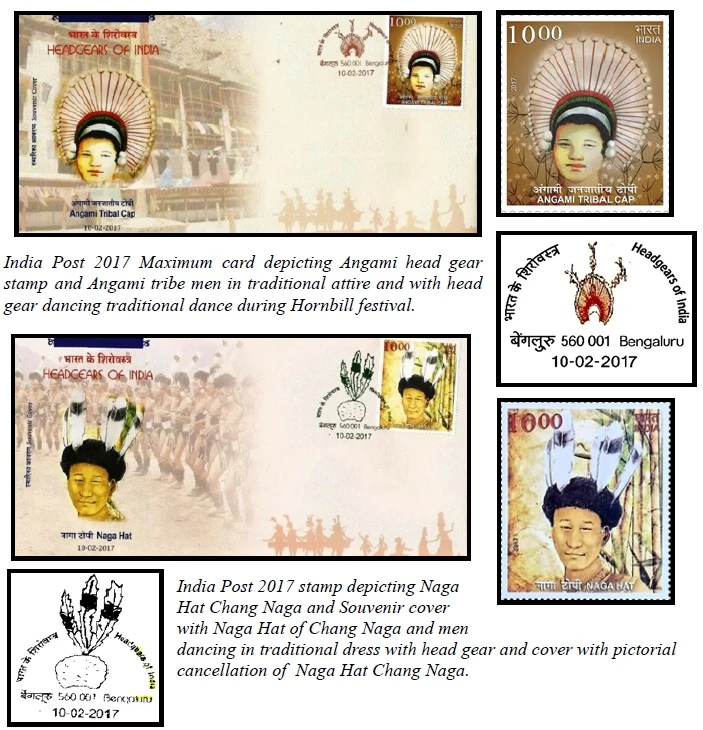
In the India Post “Headgears of India” commemorative stamp series issued on 10 February 2017, three stamps and souvenir covers were associated with the traditional headgear culture of Nagaland, Hornbill Warrior Cap. Angami Tribe Cap and Naga Hat head gear of Chang.
Hornbill Warrior Cap: The Hornbill Warrior Cap symbolizes bravery, prestige, and martial achievement among the Naga tribes. Hornbill feathers are highly prized and traditionally serve as markers of honor, much like military decorations. The number of hornbill feathers adorning the headgear reflects the wearer's accomplishments and social standing within the community.
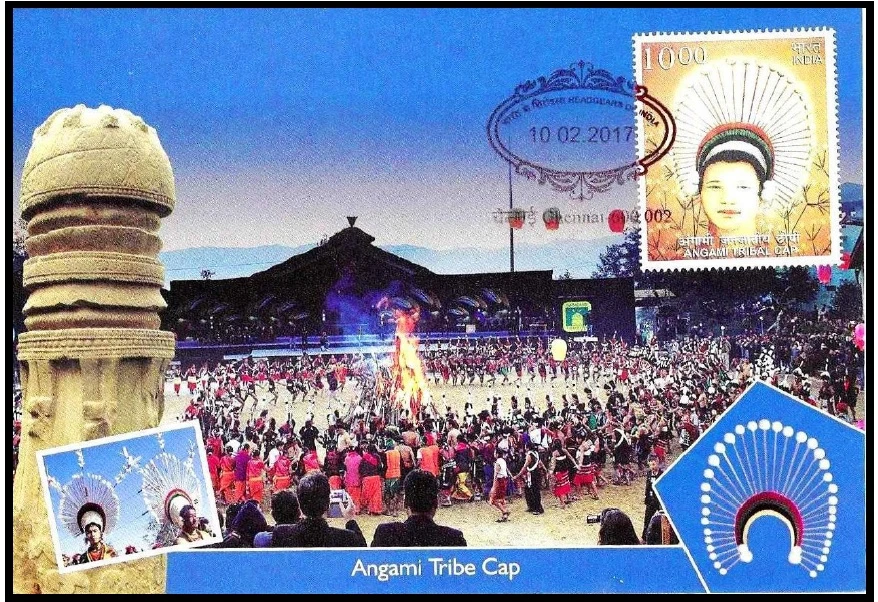
Angami Tribe Cap: The traditional Angami Naga headgear is a distinctive structure crafted from bamboo strips and white cotton cords, surmounted by hornbill feathers. Historically, only warriors who had demonstrated exceptional courage and valor were entitled to wear this ceremonial cap, making it a symbol of status and achievement in Angami society.
Naga Hat of Chang Naga: The Naga Hat depicted on the stamp represents the traditional helmet-like headgear of the Chang Naga warriors. Woven from cane, it is ornamented with hornbill tail feathers, tufts of goat or bear hair, and wild boar tusks. The chin strap, decorated with tiger claws, was reserved for successful head-hunters, reflecting the warrior traditions that once formed an important part of Naga culture.
These three stamps from the Headgears of India issue released on 10 February 2017 showcase the rich cultural heritage of Nagaland and highlight the importance of traditional headgear as symbols of valor, identity, achievement, and social distinction among the Naga
Folk Dances and Warrior Chants: Each tribe presents distinctive dance forms and India Post 2017 Maximum card depicting Angami head gear stamp and Angami tribe men in traditional attire and with head gear dancing traditional dance during Hornbill festival.
These range from energetic warrior dances commemorating courage and victory to graceful harvest dances celebrating prosperity and community life.
Traditional Musical Instruments: Performances incorporate a variety of indigenous instruments, including bamboo flutes, horns, log drums, and the Tati, a single-stringed instrument crafted from a dried gourd. The rhythmic sounds of these instruments create an authentic cultural atmosphere and demonstrate the richness of Naga musical traditions.
Traditional Attire and Regalia: Participants wear elaborate traditional costumes that reflect tribal identity and social heritage. These include handwoven shawls featuring distinctive tribal motifs, ceremonial headgear inspired by hornbill feathers, brass ornaments, beadwork, and colourful accessories. The attire not only enhances the visual appeal of performances but also serves as an important expression of cultural identity.
Indigenous Sports and Traditional Competitions: Traditional sporting events constitute another major attraction of the festival, highlighting physical endurance, skill, and community participation. Naga Wrestling: Naga wrestling is among the most popular indigenous sports of the region. Competitors grip one another's waist belts and attempt to force their opponent to touch the ground with any part of the body above the knee. The sport requires strength, balance, and tactical skill and remains deeply rooted in Naga tradition.
Greasy Pole Climbing: This event challenges participants to climb a tall bamboo pole coated with oil or grease in order to retrieve a prize suspended at its summit. The competition emphasizes teamwork, perseverance, and physical agility. Naga King Chilli-Eating Contest: One of the festival's most exciting attractions is the King Chilli-Eating Contest, featuring the renowned Bhut Jolokia, or Ghost Pepper, among the hottest chilli peppers in the world. Participants compete to demonstrate their endurance and tolerance for extreme heat, much to the fascination of spectators.
Gastronomy, Handlooms, and Contemporary Cultural Events: Beyond its cultural performances, the Hornbill Festival offers visitors an opportunity to explore the culinary and artistic traditions of Nagaland. Traditional Cuisine: Food stalls throughout the festival serve a wide variety of authentic Naga dishes, including smoked pork prepared with bamboo shoots or axone (fermented soybean), rice cakes, local herbs, and traditional beverages such as Zutho, a fermented rice brew. These culinary offerings provide valuable insights into the food culture of the region.
Handlooms and Handicrafts: An extensive exhibition of traditional crafts showcases the exceptional skills of Naga artisans. Visitors can explore handwoven shawls, bamboo and cane products, beadwork, wood carvings, and traditional jewellery. These displays highlight the creativity and craftsmanship that have long been central to Naga society.
Hornbill Music Festival and Night Bazaar: As evening falls, cultural activities extend beyond Kisama to nearby Kohima. The city hosts vibrant night markets featuring local cuisine, handicrafts, and entertainment. Simultaneously, the Hornbill Music Festival attracts musicians and audiences from across the country, presenting rock, pop, folk, and fusion performances that blend indigenous influences with contemporary musical styles. The Hornbill Festival represents far more than a cultural celebration; it is a powerful expression of Naga identity, unity, and resilience. By bringing together the diverse tribes of Nagaland on a common platform, the festival strengthens social cohesion while preserving invaluable cultural traditions. At the same time, it promotes tourism, supports local economies, and encourages cultural exchange between Nagaland and the wider world.
As a vibrant synthesis of heritage and modernity, the Hornbill Festival continues to play a crucial role in safeguarding the cultural legacy of the Naga people while ensuring its relevance for future generations. It remains one of India's most remarkable cultural festivals and a compelling symbol of the rich indigenous heritage of Northeast India.
Conservation of the Hornbill: Despite their immense importance in the folk life of the Nagas, the hornbills are an endangered species in the state due to their widespread hunting inspired by legends. The cultural importance of the hornbill is closely connected to the need to protect the bird and its natural habitat. Hornbills depend on forests for food, nesting sites, and shelter. Habitat loss and hunting have threatened hornbill populations in parts of their range. Today, authentic hornbill feathers are preserved as treasured family heirlooms, while synthetic, wooden, bamboo, and paper replicas are widely used during festivals and cultural performances. This shift reflects a balance between preserving Naga traditions and protecting the species that inspired them.
As hornbill populations declined due to habitat loss and historical hunting, Naga communities embraced conservation initiatives led by local institutions, wildlife organizations, and the government. Community participation has been central to these efforts, making hornbill conservation one of Nagaland's notable environmental successes.
Traditional attire remains a powerful symbol of Naga identity, especially during festivals, weddings, and cultural events. By using inherited ornaments and sustainable alternatives, communities continue to celebrate their heritage while ensuring the survival of the hornbill for future generations.
The Naga tribe traditionally used hornbill feather in their distinctive headgear. Recognizing the decline in hornbill numbers, tribal leaders, conservation groups, and community members developed innovative alternatives made from fiberglass and other materials that closely resemble hornbill beaks. This shift significantly reduced the demand for hornbill hunting and became a model of community-led conservation.
Community-based nest protection has emerged as an effective conservation strategy for hornbills. During the breeding season, local villagers guard nesting trees and prevent hunting near nest sites, improving breeding success and supporting population recovery. A notable example is the Hornbill Nest Adoption Programme (HNAP) in Arunachal Pradesh, particularly around Pakke Tiger Reserve in East Kameng district. Under this initiative, villagers protect nesting trees, monitor nests annually, receive conservation incentives, and participate in awareness programmes for younger generations. The success of HNAP demonstrates that wildlife conservation is most effective when local communities play an active role. Similar community-led nest protection programmes could be adopted in Nagaland to strengthen hornbill conservation while fostering local stewardship of biodiversity.
Environmental education programs in schools and villages have helped create awareness about the ecological importance of hornbills. Festivals, cultural events, and conservation campaigns increasingly highlight the need to protect both wildlife and traditional heritage. Ecotourism has also provided new opportunities. Birdwatchers and nature enthusiasts visit Nagaland to observe hornbills in their natural habitat, creating economic incentives for local communities to conserve forests rather than exploit them.
What began as an animist reverence - where a boy could become a bird and a feather could hold a lifetime of love - became a code of warrior honour, then a ritual memory, and now a conscious cultural choice Hornbill Festival. The hornbill feather, once earned with a spear and a test of how the bird fell, is today earned by remembering. It still signifies what it always did in Naga culture: prestige, honour, love that does not end, and respect for a forest that gives and watches in return.