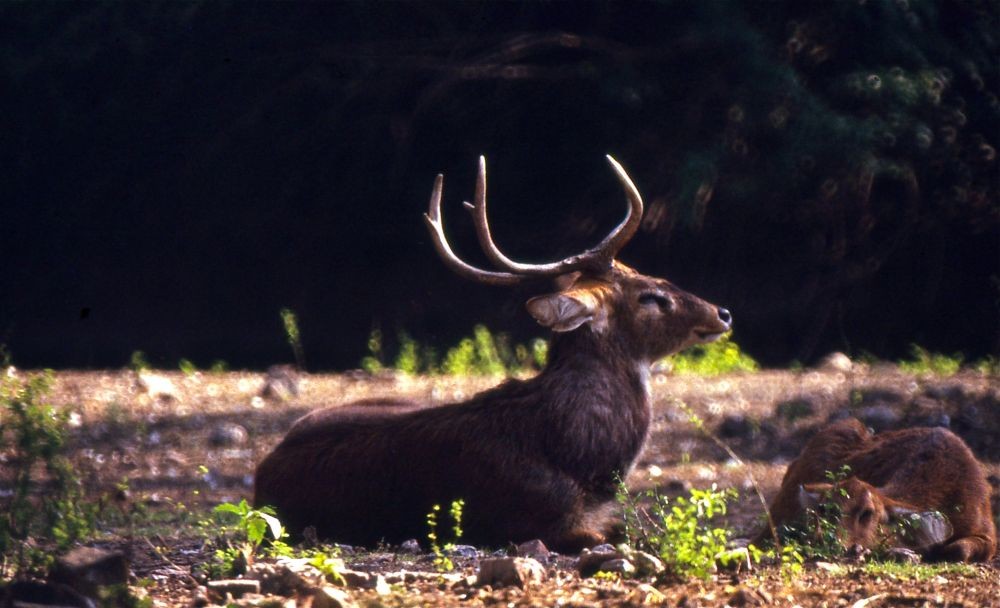
Brow-antlered deer - Bernard Dupont
Jem Khaute
As dawn arrives, a mist settles over the waters of Loktak Lake; a graceful figure emerges: the Sangai moves in delicate steps across the swaying ‘phumdi’ its careful movement resembling a quiet dance upon the water. This is the Sangai (Rucervus eldii eldii), Manipur’s beloved dancing deer and state animal. Found naturally only in Manipur, this remarkable creature has become a symbol of the state's rich biodiversity and cultural heritage, with its survival deeply tied to the fragile ecosystem of Keibul Lamjao National Park.
Keibul Lamjao lies in the southern part of Loktak Lake. Its most important feature is the phumdi, a floating mass of soil, decaying plant matter and living vegetation woven together. Some parts are thick enough to support the deer, while others remain wet and soft. The park also contains shallow water, open pools, reeds, grasses and small raised areas. The deer’s split hooves and elongated lower legs help it move across this soft, marshy ground. As it steps from one patch to another, its body seems to sway, giving the impression that it is dancing. This graceful movement gives it the name ‘Dancing deer', while its distinctive antlers explain the name ‘Brow-antlered deer'. The phumdi provides food, shelter, and space for breeding, making Loktak Lake essential to the deer’s survival.
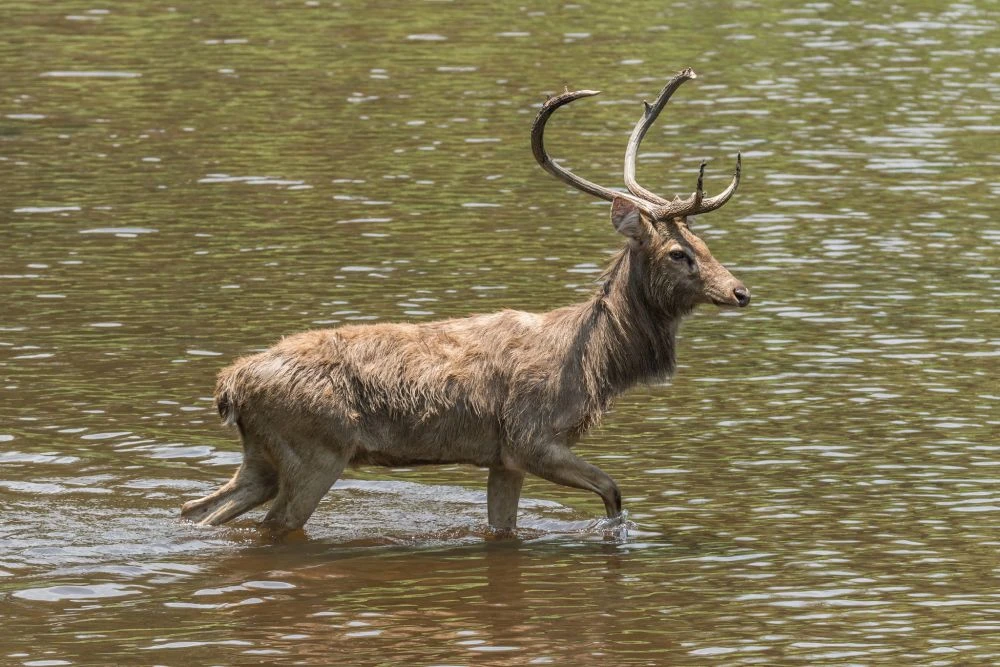
The Sangai is a subspecies of Eld’s deer. It is medium-sized, with a reddish-brown coat that becomes darker in colder months, particularly in males. Males have long antlers whose first branch, called the brow tine, rises near the forehead before curving forward and outward. This unusual shape gives the deer its name. Females do not carry antlers. The Sangai feeds on grasses, aquatic plants, herbs and young shoots.
The dancing deer is more than a rare animal to the people of Manipur. It is deeply respected and forms an important part of the state’s cultural identity. In local belief and folklore, it represents the close relationship between human beings and nature. The name ‘Sangai’ is often explained as “The one who looks at you”. Its distinctive movement has become closely woven into Manipur’s cultural identity, earning it the beloved name ‘Dancing Deer’. The deer is a part of the state’s living cultural heritage and appears in stories, songs, art and public celebrations, and its image has become a symbol of pride for Manipur.
Once feared to have disappeared from the wild, it was rediscovered in the early 1950s. Keibul Lamjao was later notified as a national park in 1977. The Sangai is listed as endangered and receives the highest level of protection under India’s Wildlife (Protection) Act. Despite this protection, the deer faces serious threats. Changes in Loktak Lake’s water level affect the phumdis. The Ithai Barrage has altered the lake’s natural water flow, reducing the seasonal drop in water levels that allows the phumdis to rest on the lake bed and absorb nutrients. Pollution from household waste, detergents and agricultural run-off also affects water quality. Fishing, resource collection, encroachment and other human activities add pressure to the habitat. A small, isolated population also faces risks from inbreeding and low genetic diversity, reducing its ability to adapt to disease or environmental changes.
Protecting the Sangai means protecting the floating meadows, its biodiversity and the communities connected to the lake. Conservation requires scientific monitoring, habitat restoration, pollution control and continued support from local communities. The Sangai’s future cannot be secured by protecting the deer alone; the ecosystem that sustains it must also remain healthy. As long as the phumdis continue to support life, there is hope that the Sangai will keep dancing across the lake.