KPC Advisor, Kopelo Krome seen on his typewriter as a young journalist.

Vishü Rita Krocha
Kohima | January 18
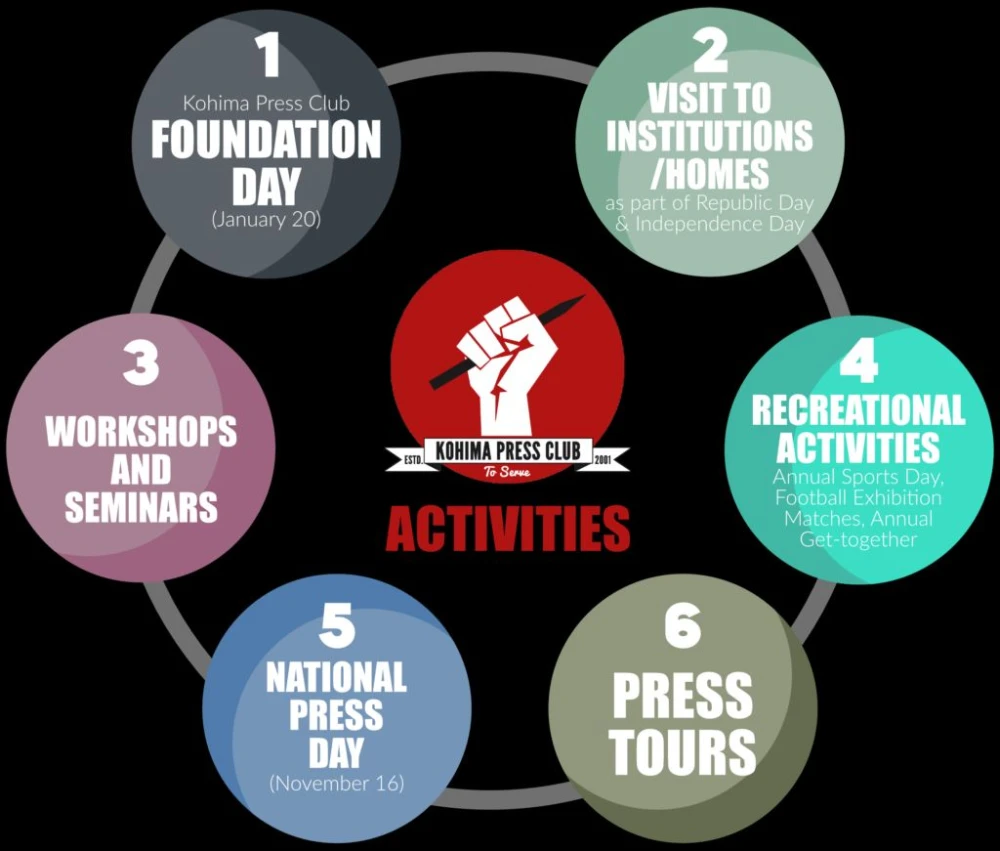
Born amidst the turbulent period of the Indo-Naga conflict, the formation of Kohima Press Club (KPC) in the year 2001, heralded a new chapter in the media landscape of Nagaland.
“Towards evening, we would gather at a small space given to us by the Post & Telegraph Office in Kohima and also made good use of the Nagaland Page Office to file our stories through telephone and fax,” Kopelo Krome, Advisor KPC had recalled during the 15th Anniversary of the Kohima Press Club.
Krome earlier served as a President for the tenure 2012-2014. He also recollected the times when they would be “cautioned or warned over the telephone.”
“The calls came as a dictation/threat,” he had highlighted.
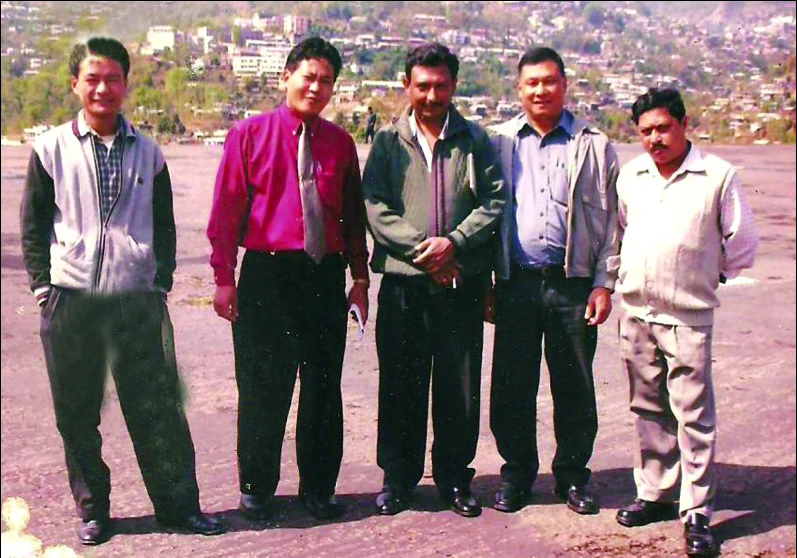
However, in this context, the first drafting committee of the KPC Constitution was formed under the chairmanship of Gideon L Sumi and with Kopelo Krome as Secretary, and Atul Sarma, Xavier Rutsa and Mhalezolie Kire as Members.
Then, began a trailblazing journey of the KPC that would eventually be marked by several historic and significant events over 25 years of its existence.
During the course of this period in 2019, Alice Yhoshü created history by becoming the first woman president of KPC, a position she holds till date having been re-elected for the second consecutive tenure, and under whose leadership, KPC would be celebrating its 25th Anniversary on January 20 under the theme, “Traversing 25 years of Storytelling: Inspiring the Future.”
As a staunch defender of the rights and welfare of journalists, Alice Yhoshü also introduced several groundbreaking initiatives including the annual KPC Impact Journalism Award, which is the only award in Nagaland that is given to journalists in recognition of their outstanding professional work initiated in the year 2020.
The Kohima Press Club-Nagaland Building and Other Construction Workers Welfare Board (KPC-NBOCWWB) Media Fellowship, the only fellowship programme in the state for Nagaland-based journalists, was also implemented during her time as president.

Northeast Media Conclave
‘Reimagining Truth: Northeast Journalism for a Changing World’
To celebrate the legacy of consistently nurturing the principles of the Fourth Estate by promoting ethical standards, professional fellowship, media education, and critical public-interest dialogue over the last 25 years, the KPC is also hosting a first-of-its-kind Northeast Media Conclave as it enters its 25th Anniversary Foundation Day in preparation of the next chapter of responsible storytelling in Nagaland and the Northeast region.
With the media landscape in the Northeast rapidly evolving, the concept note states that the region continues to face unique challenges of political transitions, ethnic tensions, misinformation, developmental gaps, and emerging conflicts wherein journalists must adapt to these realities while upholding the highest standards of ethics, accuracy, and responsibility.
The Media Conclave is being envisioned towards equipping storytellers with renewed purpose and skills while celebrating 25 years of the KPC’s commitment to journalistic integrity.
Towards this end, the Chief Minister of Nagaland, Neiphiu Rio also commended the Club for its sustained commitment to journalistic integrity and for bringing together media professionals from across the States to engage in regional dialogue through the Northeast Media Conclave.
“Such platforms facilitate meaningful deliberation on emerging challenges confronting the media particularly in the context of rapid technological change, misinformation and complex socio-political realities, while upholding the highest standards of ethics, accuracy and responsibility,” Dr Rio stated.
In this age where misinformation is rapidly increasing in an ever-expanding digital world, Dr Aküm Longchari, Publisher of The Morung Express remarked that, “KPC’s proven leadership is essential in consolidating the Naga media’s responsible stand on the principles of truth and ethical journalism.”
Extending solidarity to the KPC on completing 25 years of unwavering commitment and long-lasting public service to effect positive change through uplifting the voices of communities and affirming the values and rights of a Free Press, Dr Longchari also added that, “emboldened by its motto ‘To Serve’, the KPC, in the course of its journey, has amplified ‘voices’ that created spaces for journalists’ well-being and professional development.”
KPC: A beacon of journalistic integrity, dialogue and fellowship
“As the oldest press club in Nagaland, KPC has stood as a beacon of journalistic integrity, dialogue, and fellowship, that has nurtured many writers, reporters, and thinkers who have shaped the public discourse of our state,” Geoffrey Yaden, Editor-in-Chief of Nagaland Post expressed in his message to the Club.
Stating that over the past quarter century, KPC has been more than just a gathering place for journalists, he said that, “it has evolved into a vibrant platform where writers, academicians, politicians, and community leaders have come together to deliberate on issues of pressing importance.”
In doing so, he further felt that “the Club has enriched not only the profession of journalism but also the intellectual and civic life of Nagaland” while adding that, “its renowned openness has ensured that every journalist, whether seasoned or new to the craft, feels welcomed and valued, as though among family.”
He also stated respect for the many veteran journalists whose dedication and vision laid the foundation for KPC’s growth, and articulated that, “their contributions, often made under challenging circumstances, continue to inspire the media today.” Highlighting that the KPC has always embodied the principle, that journalism is not merely about reporting events but about fostering understanding, accountability, and progress,” he exuded hope that it would “continue to be a place where ideas flourish, where young journalists find mentorship, and where society at large draws inspiration to grow intellectually and morally.”
“In an era of rapid change and complex challenges, the role of such institutions is more vital than ever,” he added.