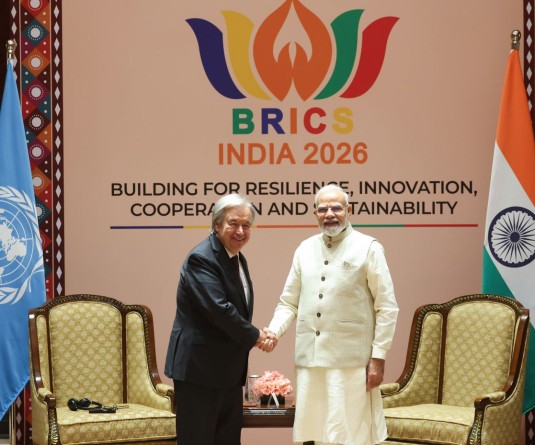
United Nations (UN) Secretary-General Antonio Guterres during a meeting with the UN India Team on the sidelines of the 18th BRICS Summit in New Delhi on September 11, 2026. (Photo: IANS/X/@UNinIndia)
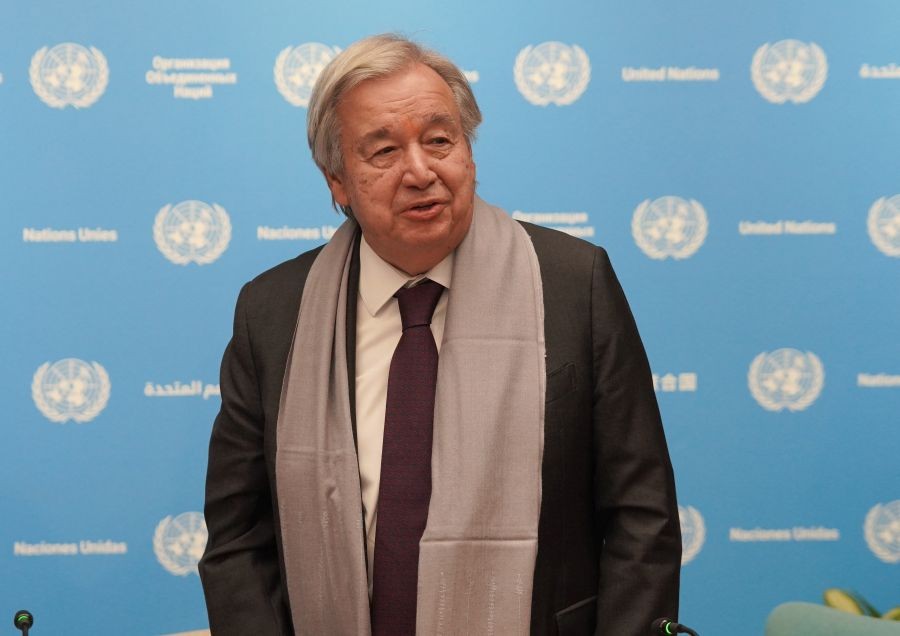
United Nations, September 13 (IANS): The irreversible rise of multipolarity reflected at the BRICS summit has made reform of the Security Council and multilateral institutions essential, Secretary-General Antonio Guterres said.
Multipolarity can help bring "balance to global systems and institutions" and spur development, "but this requires reforming multilateral institutions -- including the UN Security Council and the Bretton Woods system (of international financial institutions) -- to reflect the world of today", he said during the 11-nation BRICS summit in New Delhi.
To illustrate the change that has overtaken the world since 1945, when the UN and the international financial institutions like the International Monetary Fund and the World Bank were built on the moribund post-World War II geopolitical architecture, he spoke of the Equal Earth map endorsed by the General Assembly this month.
"The previous version -- the Mercator projection -- had long presented a distorted picture of the world -- enlarging some regions and diminishing others", he said.
"The new map reflects the world more accurately as it is", he said.
"Our institutional structures must do the same," he declared.
The Western countries ballooned disproportionately on the Mercator maps, which shrunk countries of the Global South.
For Guterres, who is heading into his final quarter as the UN head, the BRICS Summit gives what may be the last platform to articulate in front of Prime Minister Narendra Modi, and Presidents Xi Jinping of China and Vladimir Putin the major planks of the agenda he has pursued in the last decade.
The three leaders who will not be at the General Assembly's high-level meeting this month, as well as the other leaders, collectively represent more than half of humanity.
"As we move irreversibly to a multipolar world, all countries must work to strengthen and safeguard a multilateral system that delivers for all", Guterres said.
"As your summit's theme rightly frames it, we must build for resilience, innovation, cooperation and sustainability", he said.
He suggested four pillars of action for them to follow, which he said are "essential for shaping inclusive global growth".
These are finance, technology (including AI), climate justice, and peace.
"Multilateral Development Banks must become bigger, better and bolder, with a new business model to mobilise massive private investment and expand concessional funding", and debt relief mechanisms must be developed, he said.
While artificial intelligence could "compress decades of development into years", he said, "its power sits with a few companies, in a few countries".
"Unchecked", he warned, "the divide will widen every other divide -- in income, in opportunity, in security, and in sovereignty".
The BRICS nations "bring talent, ideas and scale", but many may lack computing power and data.
Calling for renewed action against global warming, Guterres said the "supersized El Nino will only exacerbate the scorching heat, devastating glacier melt, raging wildfires, and devastating floods the world is now facing as a preview of climate change.
He said that climate justice requires developed countries to keep their promises of $300 billion US dollars a year to help developing nations deal with climate change.
The fourth pillar of Guterres's suggestions is peace.
He referred to the raging conflicts from the Gulf and Ukraine to Sudan, and said, "The world needs peace".
He stressed the need for "international navigational rights and freedoms" and respect for the territorial integrity of nations.