DC Kohima, B Henok Buchem, NCS along with officials and stakeholders during the launching programme of the ‘Jan Bhagidari Abhiyan – Sabser Door, Sabse Pehle’ IEC Campaign for Kohima district held at DC’s Conference Hall, Kohima on May 22. (DIPR Photo)
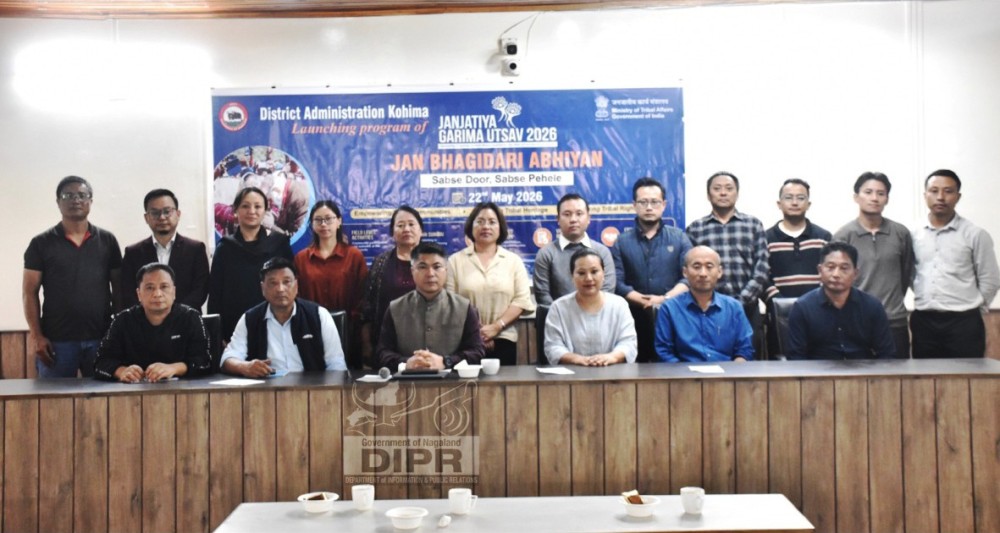
Kohima, May 22 (MExN): The ‘Jan Bhagidari Abhiyan – Sabse Door, Sabse Pehle’ IEC Campaign for Kohima district was launched at the Deputy Commissioner’s Conference Hall, Kohima on May 22 with the objective of strengthening awareness and outreach on various government welfare schemes and ensuring last-mile delivery of services.
The campaign, inspired by the Prime Minister’s vision for Viksit Bharat, seeks to empower tribal communities, preserve tribal heritage and ensure tribal rights through grassroots participation and coordinated departmental efforts. Activities under the campaign include Jan Sunwai, awareness programmes, village immersion, entitlement resolution and community outreach initiatives.
Launching the campaign, Deputy Commissioner Kohima, B Henok Buchem, said the initiative reflects the government’s commitment to inclusive governance and ensuring that development reaches people residing in remote and underserved areas.
“The theme ‘Sabse Door, Sabse Pehle’ signifies that communities living in the farthest areas should become the foremost priority of governance and public service delivery,” he said.
Buchem said Nagaland’s geographical terrain and socio-cultural diversity present both opportunities and challenges in governance and service delivery. He stated that the campaign aims to strengthen the connection between the administration and the people by bringing government services closer to the grassroots and ensuring that no citizen is left behind.
Highlighting the importance of public participation, he said, “Development becomes meaningful only when citizens become active stakeholders in the process.” He added that the campaign is not only about implementation of schemes, but also about “building trust, listening to public grievances and encouraging community participation for the welfare of society.”
The Deputy Commissioner informed that various departments would conduct awareness activities, outreach programmes, service delivery camps and interactions with local communities during the campaign period. He said efforts would also be made to ensure that eligible beneficiaries are connected with welfare schemes and essential services in a transparent and accessible manner.
Buchem also acknowledged the role of village councils, churches, youth organisations, women groups and civil society organisations in supporting developmental initiatives and maintaining social harmony in the district. He appreciated the efforts of officers, field functionaries, frontline workers and volunteers involved in the campaign and called for collective efforts to ensure that development reaches every village and household across the district.
Speaking at the programme, Divisional Forest Officer Kohima, Dr Sevono Seletsu, said the campaign was launched to ensure that government services and welfare schemes reach even the furthest sections of society through active public participation and convergence of departments.
She stated that according to the 2011 Census, India has a tribal population of over 10.5 crore, with states such as Mizoram, Nagaland and Lakshadweep having some of the highest tribal population percentages in the country.
Dr Seletsu said the government has introduced various schemes and initiatives for the welfare and upliftment of tribal communities, including Particularly Vulnerable Tribal Groups (PVTGs), of which five have been identified in Nagaland.
“The main objective of the campaign is to create awareness on the various schemes and services available for the people and to ensure that benefits reach eligible beneficiaries at the grassroots level,” she said.
Calling for coordinated efforts among departments, she urged officials to revisit implementation strategies and work towards achieving “100 percent coverage under various welfare schemes and services.”
The programme was chaired by EAC Kezocha, Zerutso Kesiezie, and attended by officials, departmental representatives and stakeholders.
.jpg)