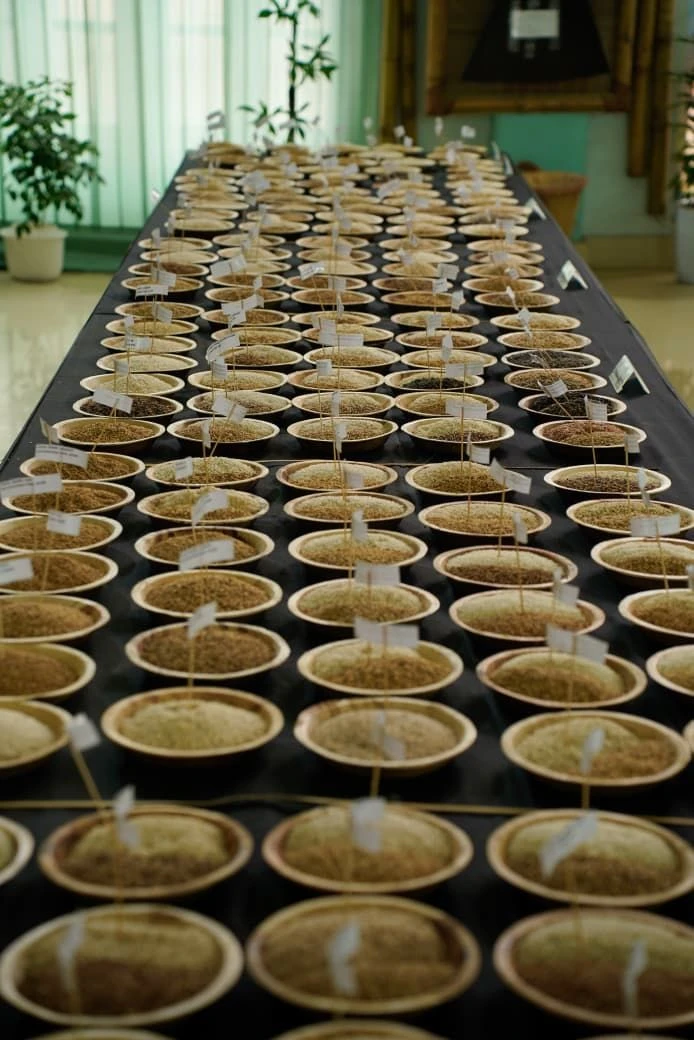
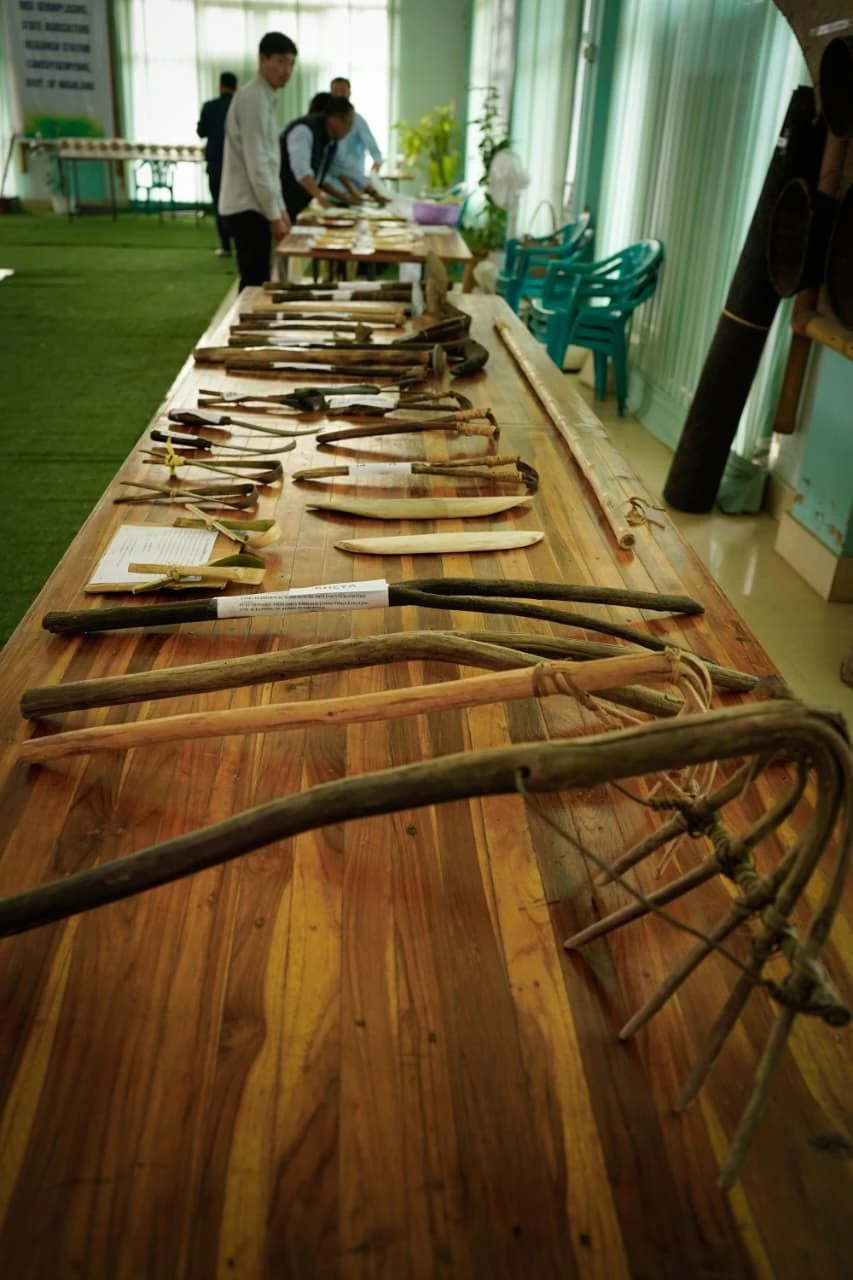
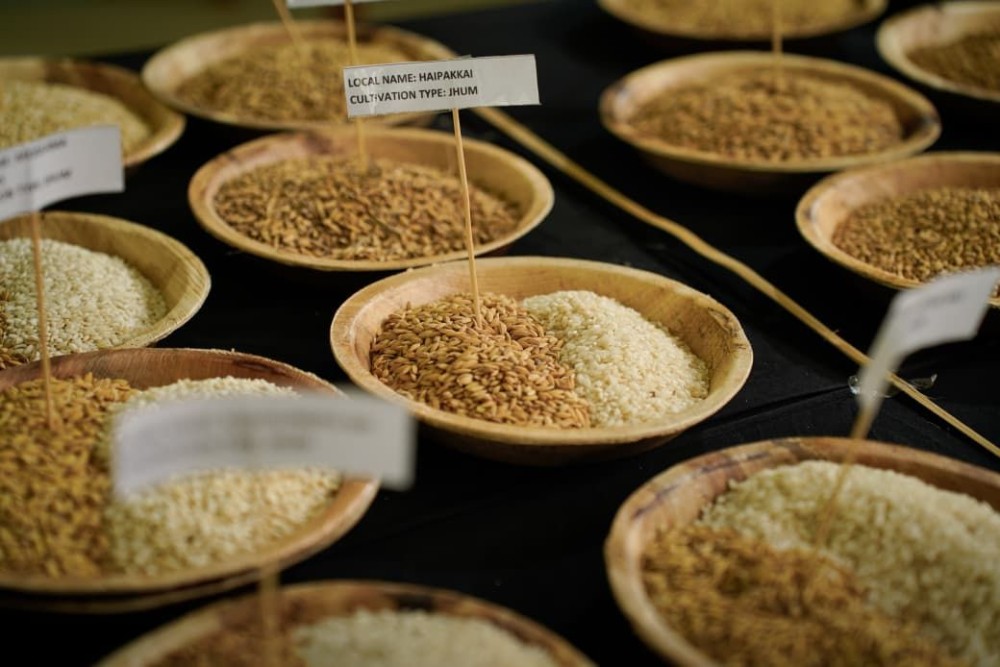
Varieties of rice on display during the ‘NE Festival of Rice: Grains of Heritage’ at the Agri Expo, 4th Mile, Chümoukedima on February 26.
Morung Express News
Chümoukedima | February 26
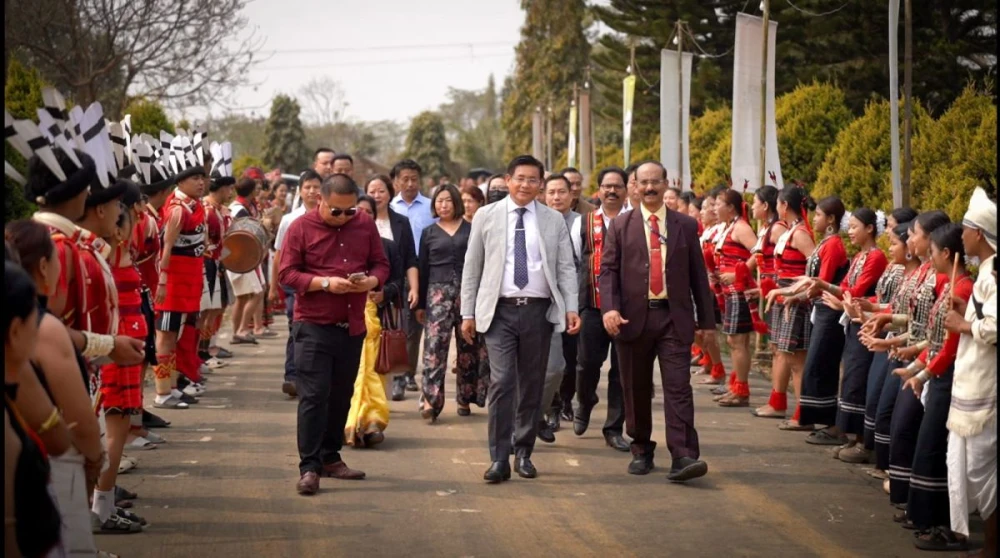
For the diverse communities of the north-eastern region of India, rice represents more than a dietary commodity; it lives at the heart of the people’s cultural heritage and collective identity. This distinction formed the central theme of the inaugural North East Festival of Rice: Grains of Heritage, which started February 26, at the Agri Expo, 4th Mile, Chümoukedima.
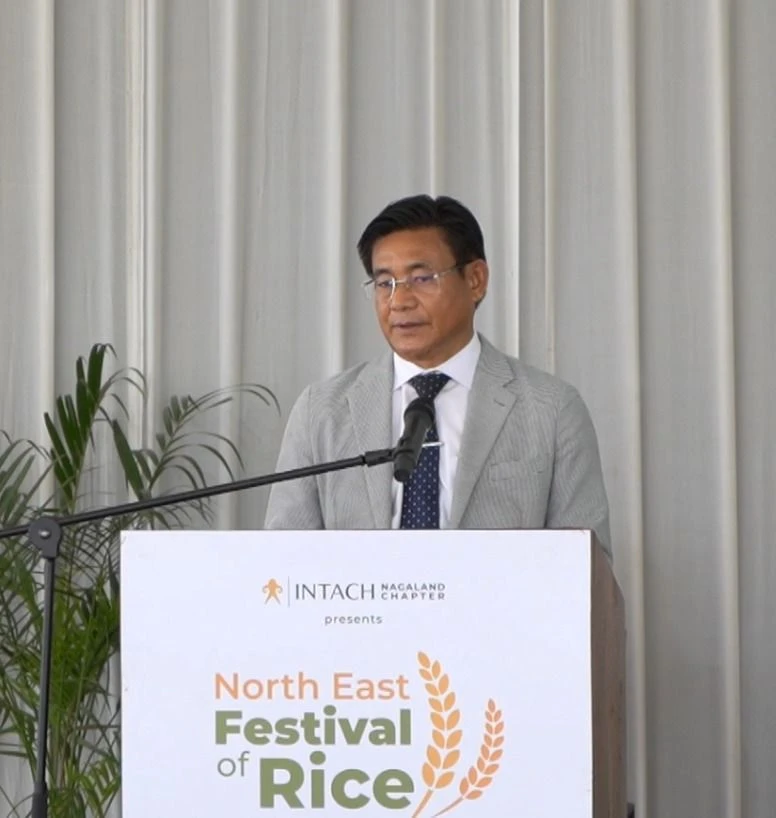
Organised by the INTACH Nagaland Chapter, the event drew researchers, government officials, and farmers from across the north-eastern states. Mhathung Yanthan, MLA and Advisor for Agriculture, delivered the inaugural address, highlighting the deep connection between the region’s population and the crop.
“This festival is historic… because it places rice at the center of our collective consciousness,” Yanthan said. “For the people of the north-east, rice is not just an agricultural commodity; rice is life, rice is culture, rice is identity for all of us.”
Yanthan noted that rice accompanies the people of the region from birth to death, anchoring festivals, rituals, and oral histories. He pointed to the region’s status as a global biodiversity hotspot, stating that Nagaland alone possesses more than 200 identified landraces. Farmers have conserved these heirloom varieties through community seed systems, adapting them over centuries to specific micro-climates.
Addressing the agricultural sector, the Advisor spoke on the impact of climate change, citing challenges such as erratic rainfall, floods, and droughts. He suggested that solutions to these environmental shifts often reside in traditional rice varieties known for flood tolerance and drought resistance. However, he also called for scientific intervention to adapt certain traditional germplasms to modern economic needs.
“While we talk about preserving traditional germplasms, some of those may not be relevant at this time,” Yanthan said. “For example, some varieties take more than 10 months from sowing to harvest.
That is too long for management, involving high costs and risks. These are the varieties that need to be improved or changed to be short-duration and high-yielding.”
The Advisor linked rice cultivation to the broader rural economy, noting that it supports an ecosystem of artisans, weavers, and traders. He urged students and youth to engage with the agricultural sector to become future scientists and policy makers. Yanthan also announced that the state has framed a new Agriculture Policy 2026 to guide these developments. The policy has still to get Cabinet approval.
The festival was organised with support from the Department of Agriculture, ICAR (Meghalaya and Nagaland), and the North East Zone Cultural Centre.