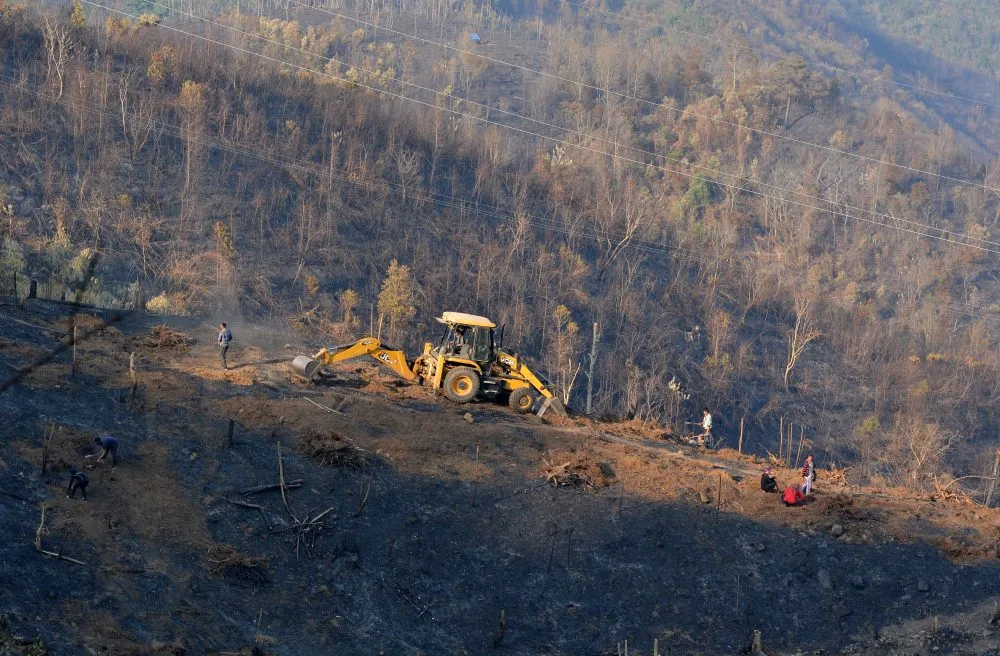
Jhum, or shifting cultivation, is a traditional farming system that supports mixed cropping and preserves indigenous agricultural practices. While its ecological sustainability remains debated, the Nagaland Government has recently identified it as a major cause of forest-cover loss in the State. (Morung File Photo: For Representational Purpose only)
State’s submission to NGT cites rising growing stock and a decline in forest-fire detections
Moa Jamir
Dimapur | November 23
The Nagaland Government has identified shifting cultivation and the expansion of monoculture cash crops on private and community lands as major causes of forest-cover loss in the State, even as it has cited a nearly 20% increase in growing stock between 2021 and 2023 as an indicator of improvement in its forest resources.
The State’s position is outlined in an affidavit filed before the National Green Tribunal (NGT) in Original Application No. 555/2024, which arose from a report titled “India lost 2.33 million hectares of tree cover since 2000: Global Forest Watch”, published in The Indian Express on April 13, 2024.
The NGT had taken suo motu cognisance of the report and, in May 2024, sought an assessment of forest cover across India, with specific reference to the North-East. In its order dated September 15, 2026, the Tribunal had noted that the State Government sought four weeks to file its reply.
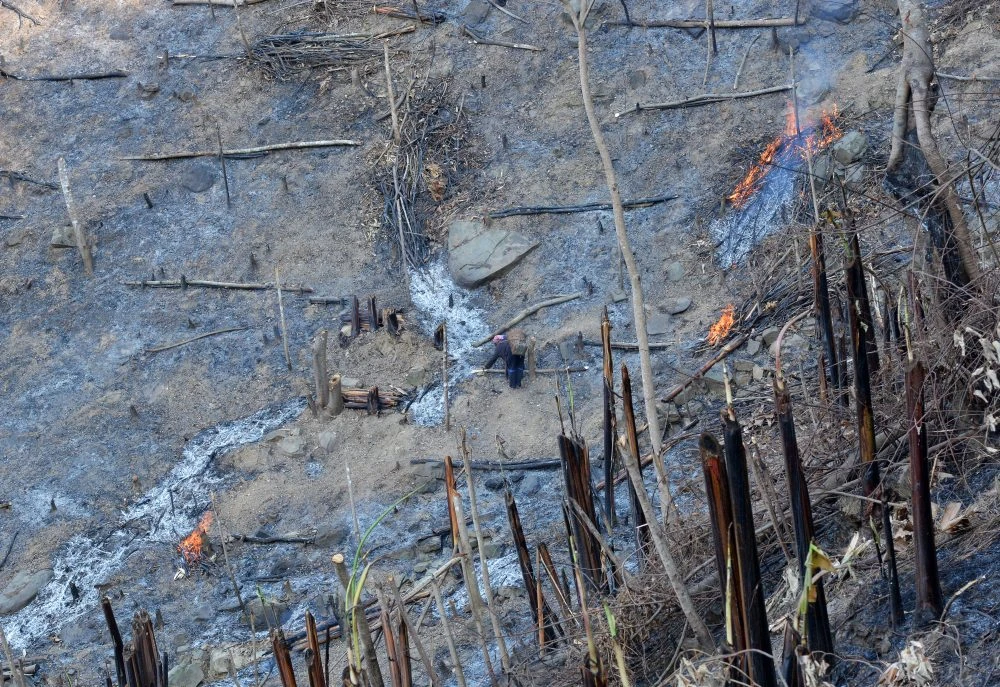
In its affidavit, filed by the Secretary of the Department of Environment, Forest and Climate Change, the State identified the “age-old customary practices of shifting cultivation” and the “expansion of monoculture cash crop cultivation” on private and community lands as major causes of forest-cover loss.
“The major causes responsible for loss of Forest cover in the State includes the age old customary practices of shifting cultivation and expansion of monoculture cash crop cultivation in the private and community land which consist of almost 95% of the forestland which is privately owned,” it added.
However, the affidavit, filed on October 28 and made publicly accessible on the Tribunal’s website on November 20, noted that ownership rights protected under Article 371(A) of the Constitution.
It highlighted that most government programmes are implemented through communities, underscoring the role of community participation in forest conservation and management.
Undertaking measures
Meanwhile, the State submitted that it has been undertaking measures to address forest-cover loss and encroachment, including projects to improve jhum practices through alternative livelihood options, control forest fires and strengthen patrolling in protected areas.
A State Action Plan had been prepared in line with the National Fire Action Plan, it said.
The affidavit cited the Japan International Cooperation Agency-assisted Nagaland Forest Management Project, under which 79,000 hectares have been covered through plantation and conservation activities.
It also referred to the German development bank KfW-funded Forest and Biodiversity Management in the Himalaya, Nagaland project, stating that 30,000 hectares of community forest land had been conserved and protected.
The Department further stated that technologies such as Geographic Information Systems, Management Information Systems, drone surveying and PDA-based mapping were being used extensively in its programmes.
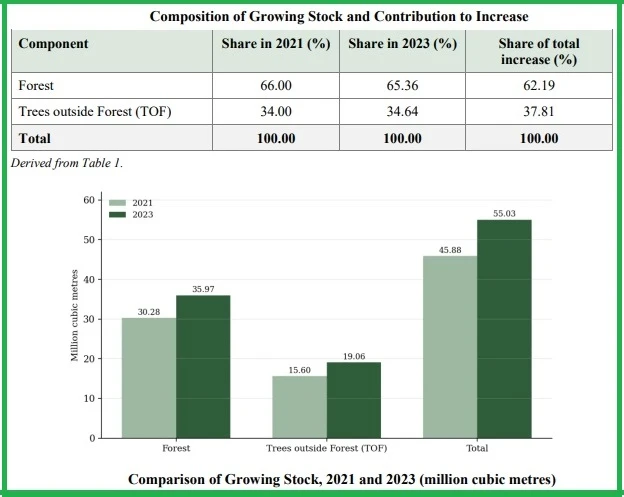
Citing the India State of Forest Report (ISFR) 2023, the State said Nagaland’s growing stock had increased by 19.94% since 2021. The accompanying assessment puts the total growing stock at 55.03 million cubic metres in 2023, up from 45.88 million cubic metres in 2021.
The increase comprised 18.79% in growing stock within forests and 22.18% in trees outside forests (TOF). The latter includes trees on private and community lands, homesteads, farmlands, plantations and other areas outside the Recorded Forest Area.
Growing stock, which measures the volume of standing wood in cubic metres, is an indicator of the quantity and productive condition of tree resources.
Forest-fire detections decline
The affidavit also cited an analysis of the Forest Survey of India’s Fire Alert System, which recorded a decline in annual fire detections from 6,625 in 2021 to 2,669 in 2026, a reduction of 59.7%. The 2026 figures cover the period up to September.
The accompanying report, covering January 2021 to September 2026, examined 26,532 satellite-based detections from the MODIS and VIIRS sensors. It recorded an overall downward trend, although the decline was not consistent year on year: detections increased marginally in 2023 and rose by 22.3% in 2025 before falling in 2026.
The report also noted a shift in the timing of peak fire activity. March was the peak month in each year from 2021 to 2025, while February accounted for 47.7% of detections in 2026.
It cautioned, however, that differences in data coverage and the ageing of the MODIS sensors affect comparisons across years. Data for July to October were unavailable for 2023 and 2024, while a substantial period was missing from the 2025 archive. When comparisons were restricted to periods with more consistent data coverage, the downward trend was smaller and not statistically significant.
The report also clarified that satellite detections indicate observations of active fires and do not represent the number of individual fire incidents or the area burnt. Mon, Peren and Phek together accounted for 41.6% of detections during the period, while Peren recorded the highest density relative to its area.
The State’s identification of monoculture cash-crop expansion as a driver of forest-cover loss comes alongside its promotion of commercial cultivation, including oil palm and coffee, and the more recent Agarwood Conservation and Promotion Policy.
Under the Forest Survey of India’s definition used for the ISFR, qualifying plantations and tree crops may also be included in forest-cover estimates if they meet the prescribed area and canopy-density criteria.