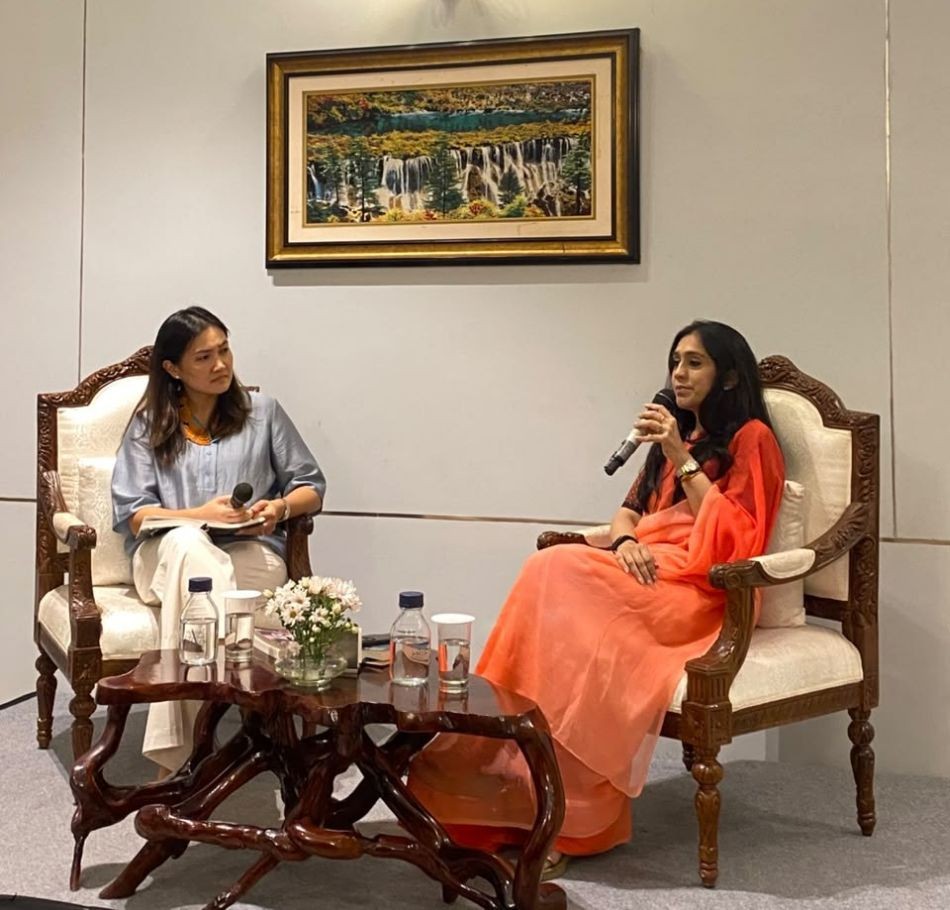
Author Apra Kuchhal in conversation with Viketuno Rio during The Write Circle session held at Zone Niathu by The Park, Chümoukedima on September 28. (Morung Photo)
India’s first transgender bodybuilding champion
Morung Express News
Chümoukedima | September 29
The latest edition of The Write Circle focused on ‘Aryan Pasha – The Untold Story of India’s First Transgender Bodybuilding Champion,’ written by Apra Kuchhal. Described by Ehsaas Woman of Dimapur Viketuno Rio as “a deeply human story of courage and resilience”, the book was at the centre of conversation between Kuchhal and Rio on September 28 at Zone Niathu by the Park.
The event was hosted by the Prabha Khaitan Foundation with the support of Oil India Limited and in association with hospitality partner Zone Niathu by the Park.
Apra Kuchhal is an entrepreneur, educator, mentor and advocate of social entrepreneurship. She is the founder of We Care, an initiative dedicated to empowering underprivileged women, youth and children through education, skill development and mentoring.
Kuchhal traced her interest in stories to her childhood in Jaipur, where she grew up in a joint family before it became a nuclear one. She recalled a home shaped by strong women, family traditions, books and conversations.
Attending an all-girls school, she said, also instilled in her a desire to be curious and observant. Writing had been part of her life from an early age, from contributing to school magazines to writing small pieces for newspapers.
But becoming an author, she suggested, was less a planned destination than an unexpected extension of that curiosity. “These are the stories that choose you, you do not choose a story to write,” she said. “I think this story has chosen me.” Meeting Aryan initially had nothing to do with writing a book. Their conversations grew over time, eventually leading Kuchhal to document his life.
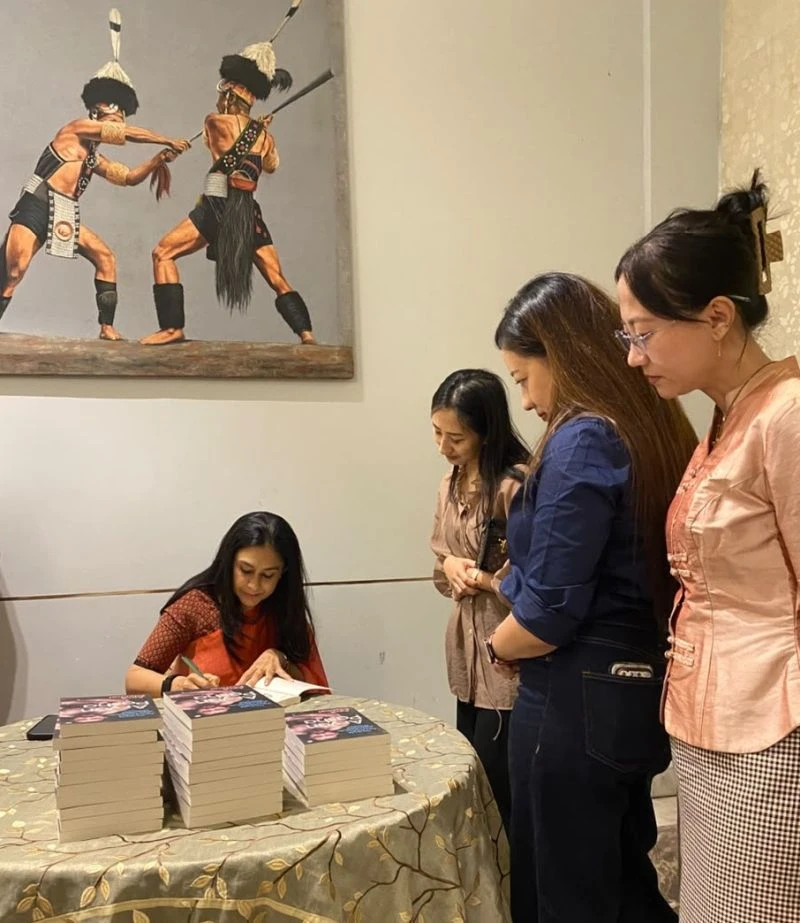
She described herself as a “reporter” rather than an editor, saying her role was to report Aryan’s life without imposing her own interpretation on it.
What drew her to the story, she said, was ultimately not only his identity as a trans man or a bodybuilder, but his courage, determination and resilience as a human being.
The decision to make the story a biography was equally deliberate. Kuchhal said a book could allow parents, educators and readers to return to Aryan’s experiences, draw strength from them and confront realities that society often chooses not to acknowledge.
Unlike a newspaper headline or a short social media reel, she said, a biography could preserve the complexity of a life and allow readers to understand the person behind the headline.
The process also demanded trust. Kuchhal expressed gratitude to Aryan for allowing her access to difficult and deeply personal parts of his life. She spoke to people across his life, family members, friends, coaches and others, and found that despite their different perspectives, they repeatedly described him as strong and clear about what he wanted.
She reflected on how easily people can become consumed by minor frustrations in everyday life, while Aryan had confronted questions of identity and fought to live as the person he knew himself to be.
The three-time TEDx speaker also highlighted his refusal to hide anything from the book. “All of us want to put our best foot forward,” she said, but Aryan did not want to conceal difficult or uncomfortable parts of his story. For him, even a single line that could inspire someone would make the telling worthwhile.
Kuchhal’s own understanding of transgender lives was shaped partly by childhood experiences with her grandparents in Haryana, where she encountered members of the Kinnar community during family occasions. Her grandmother helped her overcome her early fear of the unfamiliar, teaching her to approach people with understanding rather than apprehension.
The experience of writing Aryan’s story, she said, changed her too. It made her more resilient and patient, and taught her to notice and appreciate small things rather than spend time complaining or being consumed by everyday frustrations.
Asked what she would want readers to take from the book, Kuchhal offered one word, ‘sensitivity.’
For her, Aryan’s story is at its core an invitation to look beyond labels, listen more closely and recognise the courage that can exist in another person’s journey.
The session continued with an interaction with audience members, exploring how conversations around gender identity, acceptance and sensitivity could begin within Nagaland’s predominantly Christian social context.
Earlier, Ehsaas Woman of Dimapur Abokali Jimomi delivered the welcome note, while highlighting the Prabha Khaitan Foundation’s work in promoting literature, culture and meaningful dialogue.