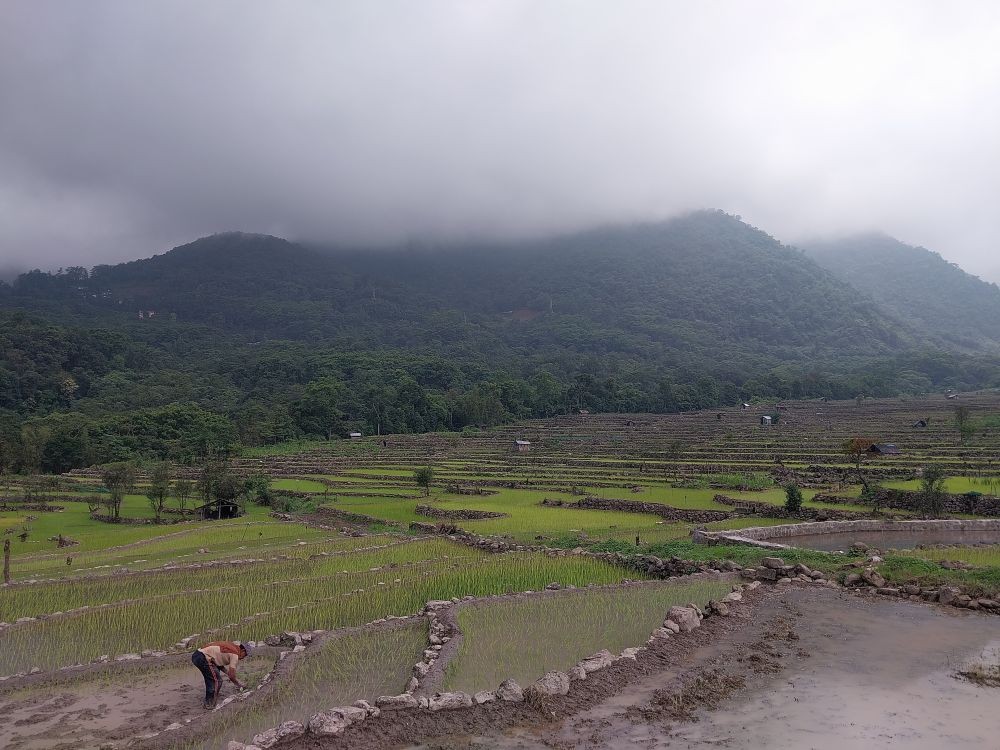
Nagaland witnessing increasing climate variability: Report. (Morung File Photo)
Dimapur, July 23 (MExN): Nagaland is witnessing increasingly variable weather patterns, with changing rainfall distribution, rising temperatures in some areas and more frequent extreme weather events posing growing challenges to agriculture, infrastructure and disaster management, according to the Meteorological Report of Nagaland 2025.
The report, published by the Directorate of Soil and Water Conservation, provides an overview of climatic trends across the state and their implications for different sectors.
It said weather conditions vary considerably across Nagaland, with some districts receiving abundant monsoon rainfall while others remain comparatively dry.
Among the state's meteorological observatories, Sechü recorded the highest annual rainfall at 2,901.2 mm, while Meluri received the lowest annual rainfall.
Dimapur emerged as the hottest station, with temperatures touching 34 degrees Celsius during June and July, whereas higher-altitude districts experienced comparatively cooler conditions throughout the year.
The report said the southwest monsoon continued to be the principal source of rainfall, with July to September receiving the highest precipitation across most districts.
Bhandari recorded 1,507.2 mm of rainfall spread over 99 rainy days, with September being the wettest month. Historical data also indicate significant fluctuations in rainfall over the past decade, reflecting increasing climate variability across the state.
According to the report, changing weather patterns have direct implications for agriculture, water resources, infrastructure and disaster management. Reliable meteorological data help farmers plan cropping seasons, enable authorities to prepare for floods and landslides, and support long-term water management and conservation efforts.
The report also highlighted the growing impact of climate-related disasters during 2024-25. Windstorms, cloudbursts, flash floods and landslides resulted in loss of lives, damaged roads, disrupted water supply systems, affected livestock and poultry, and caused damage to government schools and irrigation infrastructure.
These incidents underscore the increasing vulnerability of public infrastructure and rural livelihoods to extreme weather events, it said.
The report stressed the need for improved disaster preparedness, stronger early warning systems, climate-resilient infrastructure and sustainable resource management as extreme weather events become more frequent.
Describing the publication as more than a compilation of weather statistics, the report said understanding local climate trends is essential for strengthening resilience to climate change and supporting informed planning, environmental conservation and livelihood protection across Nagaland.