New species of stingless bee discovered in Nagaland
Meribeni T Kikon
Wokha | July 23
Nearly four years of painstaking fieldwork, laboratory analysis and scientific collaboration have culminated in a landmark discovery by a Nagaland University-led research team, which has identified and described a new species of stingless bee from Wokha district.
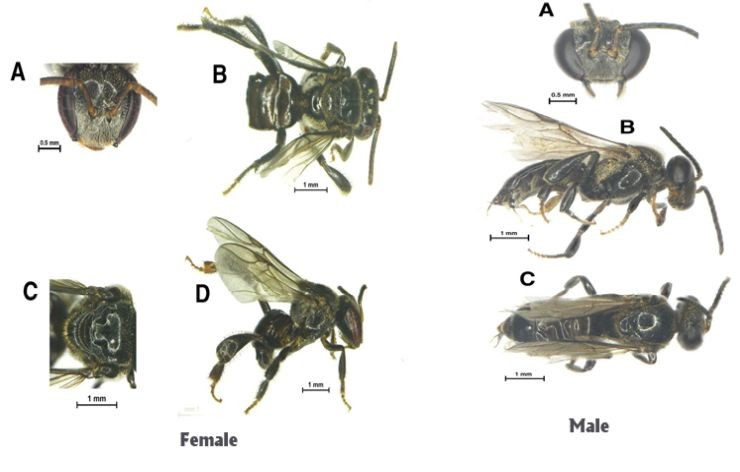
The newly discovered species, Tetragonula yikhumensis, named after Yikhum village where the first nest was collected, has been formally described as a species new to science. The discovery adds to India’s known biodiversity and underscores Nagaland’s importance as one of the country’s richest yet least explored regions for insect diversity.
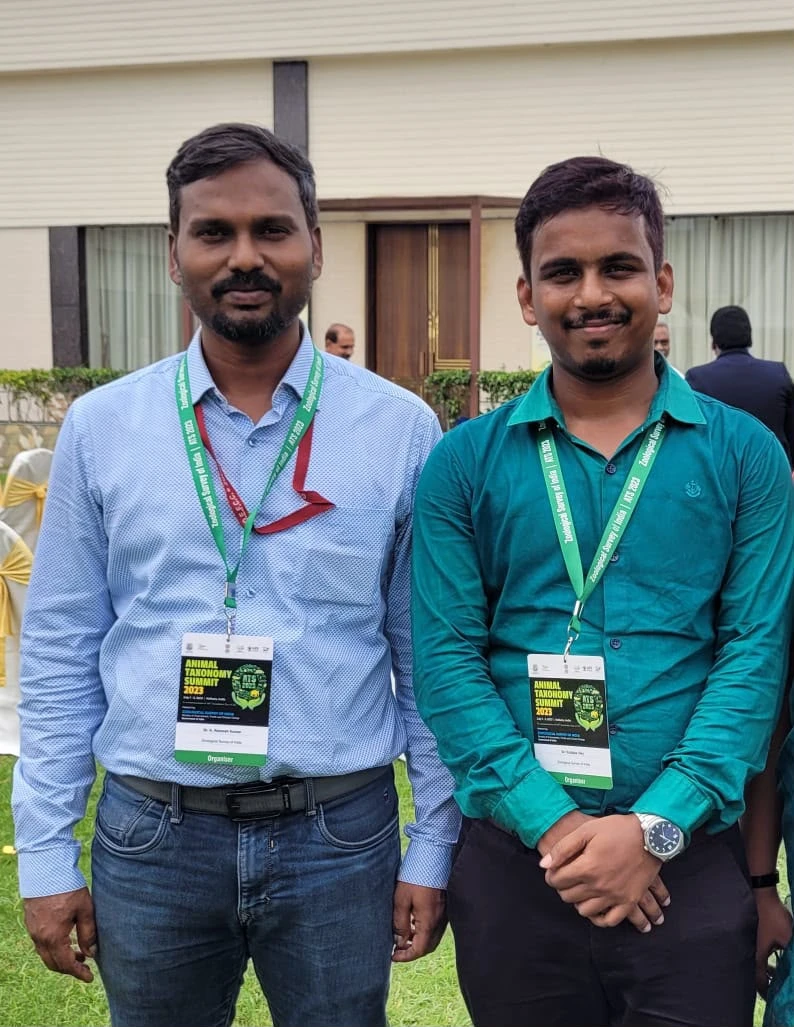
The research team comprises Noyingbeni M Odyuo, Research Scholar, Department of Zoology, Nagaland University (NU); Prof Bendang Ao and Prof Ranjit Kumar, Professors, Department of Zoology, NU, who supervised and guided the research; Dr Ramesh Kumar, Scientist-D, Hymenoptera Section, Zoological Survey of India (ZSI), Kolkata; and Sudipto Dey, Senior Zoological Assistant, Zoological Survey of India, Kolkata.
Combining NU’s expertise in field biology and integrative taxonomy with the taxonomic expertise of the Zoological Survey of India, the team confirmed Tetragonula yikhumensis, a species new to science from Wokha district.

Speaking exclusively with The Morung Express, Noyingbeni Odyuo said that discovering a species that has never before been described by science is a rare privilege for any researcher. “It is a reminder that our forests still hold many secrets waiting to be discovered. I am proud that this discovery has placed Nagaland on the global scientific map and contributed to global biodiversity,” she said.
Bee-driven discovery
For Odyuo, the path to stingless bee research started unexpectedly. Her interest began when Dr Chiangmong Khiamniungan, Assistant Professor, NLSIU Bangalore, whom she calls a major inspiration, offered her stingless bee honey during a visit to his home while she had a sore throat.
“The unique taste immediately fascinated me. That simple encounter sparked a deep curiosity about these remarkable bees and their importance,” she says.
As she learned more, she realised how little was known about stingless bee diversity in Northeast India. Driven by this insight, she left her job to pursue a Ph.D. on the taxonomy, molecular diversity, and nutritional analysis of stingless bees in Wokha district. She notes that Wokha’s rich forests, abundant feral bee populations, and long tradition of stingless bee keeping made it an ideal natural laboratory for her research.
The research team first collected specimens in November 2022. Upon examination, they noticed morphological traits that did not match any known Indian species of the genus Tetragonula.
“That made us suspect we had found something new,” Odyuo recalled. However, she emphasized that scientific taxonomy demands absolute certainty before describing a new species.
Over the following years, the team surveyed Wokha district and collected specimens from 12 locations. Each specimen was carefully examined to confirm that the distinguishing traits were consistent and not due to individual variation. After detailed morphological and molecular analyses, the researchers confidently described Tetragonula yikhumensis as a species new to science.
Though the first specimen was collected in November 2022, the full journey from discovery to publication took nearly four years.
The perilous search
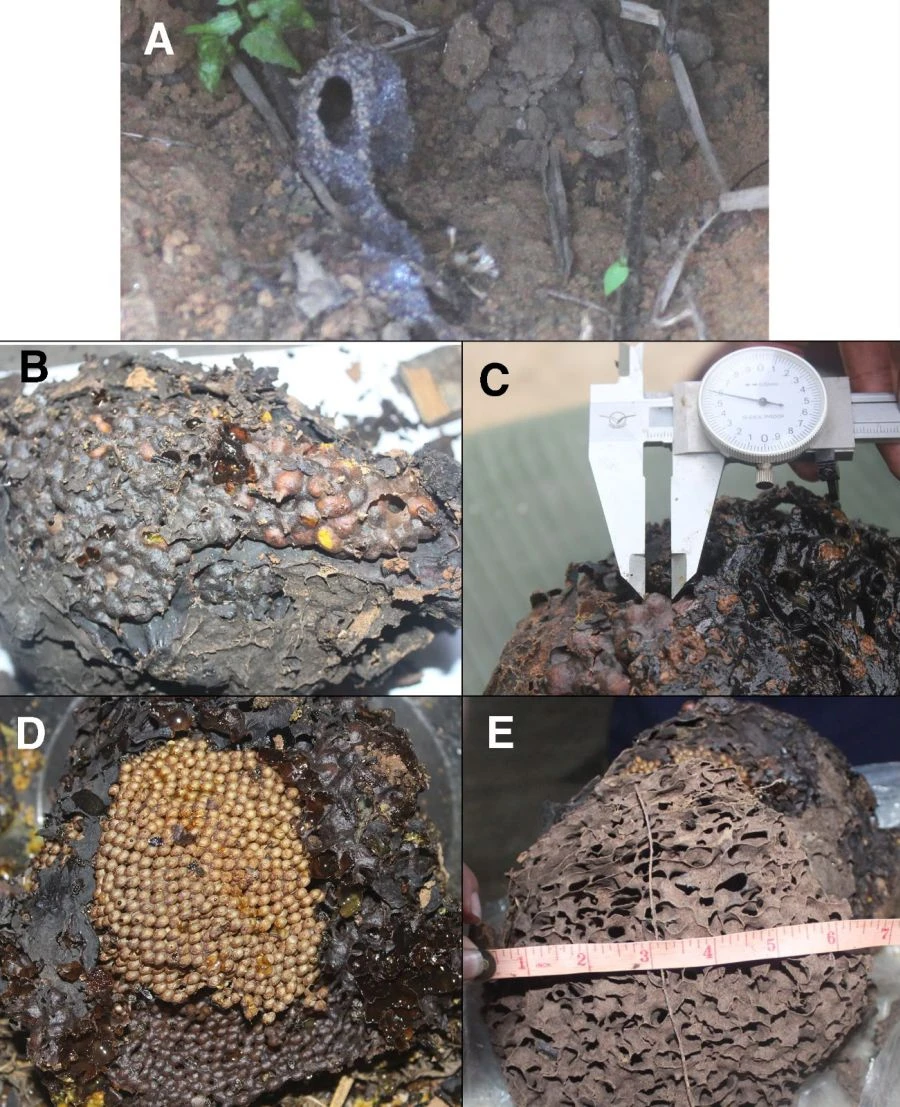
The study involved extensive field surveys across Wokha district to locate stingless bee colonies. The team documented tree-nesting and underground colonies, collected specimens from multiple populations and carefully labelled each sample for laboratory analysis. They also recorded nest architecture, nesting behaviour, and colony characteristics, offering key insights into the species' biology and ecology.
Fieldwork was physically demanding, often requiring hours of trekking through dense forests, climbing steep hills, crossing streams, and navigating remote areas in difficult weather.
“The biggest challenge was finding the colonies,” said Odyuo. “Stingless bees nest inside tree cavities or underground, making them hard to spot. Many colonies were deep in the forest, requiring long treks over tough terrain, crossing rivers, and even sliding down mountains.”
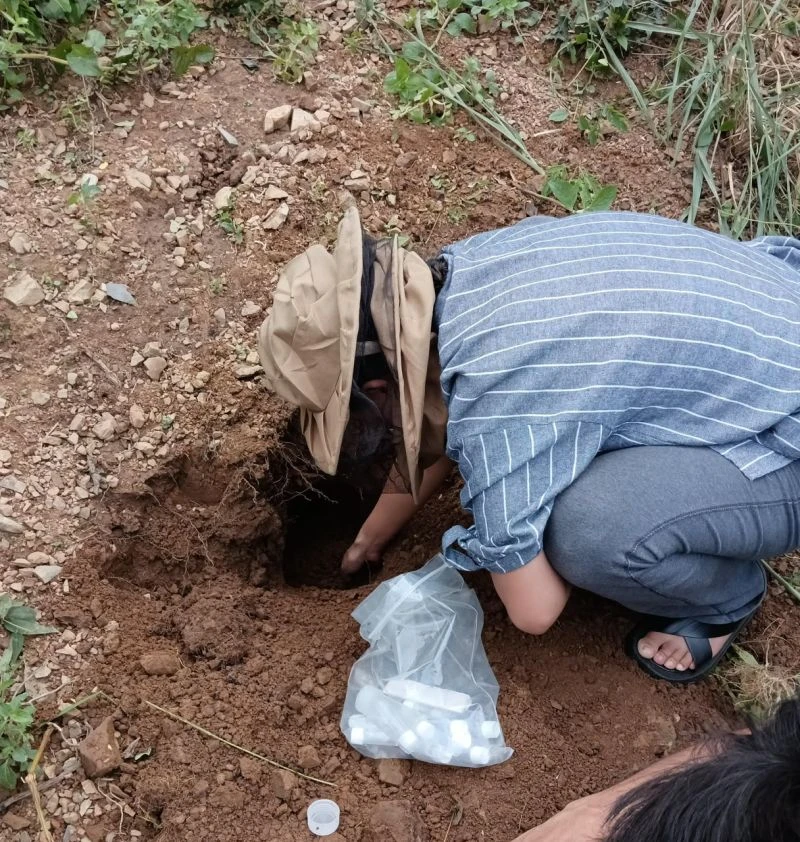
Once located, specimens had to be collected with minimal disturbance. Excavating underground nests demanded great patience, brood chambers and food pots were exposed carefully to collect only necessary samples while ensuring the colony's survival.
She recalled memorable moments when team members lost their way in the forest while searching for feral colonies. “Those experiences reminded us of both the challenges and the excitement of field research.”
Discovery takes a village
Odyuo emphasised that the discovery was made possible with the support of many people. She thanked her brother, cousins, friends, and well-wishers who joined the research team on demanding forest and mountain expeditions. She also acknowledged Dr Lobeno Mozhui, Assistant Professor at Nagaland University, for her invaluable support, and Chumthungo Murry, who donated a stingless bee colony for the study.
She expressed deep gratitude to her mother, Mhombeni Odyuo, and her aunt, Loreni Mozhui, who climbed hills alongside the researchers, carrying food and supplies throughout the fieldwork. “Their strength, sacrifice and unconditional support gave us the courage to continue even when the work became physically demanding,” she said.

Reflecting on the journey, she added, “Scientific discoveries are rarely the work of one person alone. Behind every specimen and data point are countless footsteps, helping hands, and acts of kindness. This discovery belongs not only to the authors but to everyone who believed in our work and stood by us throughout this remarkable journey.”
Odyuo emphasised that collaboration between Nagaland University (NU) and the Zoological Survey of India was essential to the study’s scientific accuracy. NU provided laboratory facilities, research infrastructure, and academic support.
She also credited her supervisor, Prof. Bendang Ao, who joined field surveys despite his busy schedule. “Choosing your supervisor matters more than choosing your topic,” she said. “A good supervisor turns an ordinary topic into meaningful research. Prof. Ao proved that to me.”
Why Wokha?
Odyuo said Wokha district was chosen for its rich forest cover, diverse habitats and communities with a tradition of protecting and rearing stingless bees. Despite this ecological wealth, she noted that very little scientific research had been conducted there, making it an ideal site for the study.
The new species was named Tetragonula yikhumensis after Yikhum village, where the first nest was collected.
The researchers found that the species has a distinct combination of body proportions, facial structures, colouration, and male genitalia, features that set it apart from all other known Indian Tetragonula species. These traits were consistent across specimens from all 12 sampling sites and were further validated through molecular analysis.
Scientific confirmation
To confirm the bee as a new species, the team used an integrative taxonomic approach combining classical morphology with molecular biology. Specimens were examined under a Leica stereomicroscope, measured in detail, and compared with published descriptions of all known Indian Tetragonula species. DNA barcoding and phylogenetic analyses supported the findings. “The combined evidence confirmed Tetragonula yikhumensis is new to science,” said Odyuo.
She noted the discovery enriches India’s biodiversity and highlights Nagaland as a key biological hub, while underscoring that many insect species in Northeast India remain scientifically unexplored.
Stingless bees are vital tropical pollinators, supporting forests, wild plants, and crops. “They pollinate fruits, vegetables, spices and horticultural crops. Because of their small size, they can pollinate flowers that larger bees often cannot access, improving both crop yield and quality while ensuring the continued existence of many plant species,” Odyuo explained.

She emphasized that conserving stingless bees is critical for biodiversity, food security, and ecosystem health. “If stingless bee populations decline, many plant species and crops will also be affected. Conserving stingless bees means protecting biodiversity, agriculture, forests and ultimately our own future.”
Conservation and future research
Odyuo highlights that sustainable meliponiculture (stingless bee keeping) offers rural communities significant opportunities. The honey is highly valued for its medicinal properties, and the practice can generate extra income while promoting forest conservation.
The research team plans to continue studying the taxonomy, molecular diversity, ecology, and conservation of stingless bees across Northeast India, as well as exploring the nutritional and medicinal value of their honey.
Odyuo believes Nagaland holds many undiscovered insect species. As part of a global biodiversity hotspot, much of its insect life remains unexplored. Based on field surveys, she is confident that many undescribed species of stingless bees and other insects are yet to be found.
She encourages young researchers to stay curious and not underestimate local biodiversity. “Great discoveries can happen in our own villages and forests,” she says, urging dedication and patience.
She also appeals to the public to protect forests, plant native flowers, reduce pesticide use, and support sustainable beekeeping. “Even small actions help conserve pollinators. By protecting stingless bees, we protect our forests, agriculture, and the biodiversity future generations will depend on.”