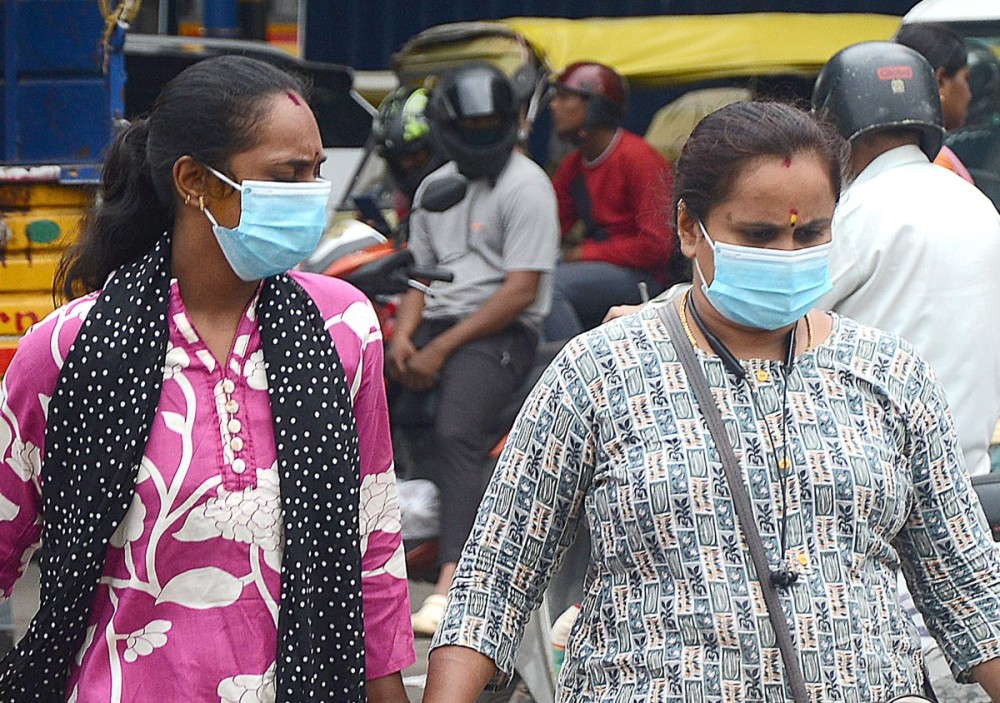
Bengaluru: People wear face masks as a precautionary measure against the coronavirus pandemic, in Bengaluru on Tuesday, May 27, 2025. (Photo: IANS)
New Delhi, April 2 (IANS) A team of researchers has shown that people with long COVID are likely to be at an increased risk of developing cardiovascular disease.
The research from Karolinska Institutet in Sweden, published in the journal eClinicalMedicine, found that the risk of conditions such as cardiac arrhythmias and coronary artery disease is higher even among those who were not hospitalised during the acute infection.
“We found that cardiac arrhythmias and coronary artery disease were more common among both women and men with long COVID. In women, there was also an increased risk of heart failure and peripheral vascular disease,” said Pia Lindberg from the Department of Medicine, Solna, Karolinska Institutet.
However, no clear association was found between long COVID and stroke.
According to the study, long COVID has become an increasingly significant health problem worldwide, and a growing number of studies suggest that the condition can lead to secondary cardiovascular diseases.
In the current study, the researchers investigated how often major cardiovascular events occur in these individuals compared with those without the diagnosis.
From over 1.2 million people aged between 18 and 65, around 9,000 had been diagnosed with long COVID, corresponding to 0.7 per cent. Two-thirds of them were women.
During the follow-up period of around four years, people with long COVID were more likely to suffer from cardiovascular disease.
About 18.2 per cent of women and 20.6 per cent of men experienced some form of cardiovascular event, compared with 8.4 per cent of women and 11.1 per cent of men in the group without long COVID.
“Women with long COVID had just over twice the risk of receiving a cardiovascular diagnosis compared with women without long COVID. Men had approximately a third higher risk,” the study showed.
As many people with long COVID never required hospitalisation during their acute infection, there is a risk that secondary conditions may be missed, said Lindberg.
“Results show that long COVID can be a risk factor for cardiovascular disease, even in younger people who were previously healthy. This underlines the need for structured follow-up that takes gender differences into account,” the study author said.


.jpg)