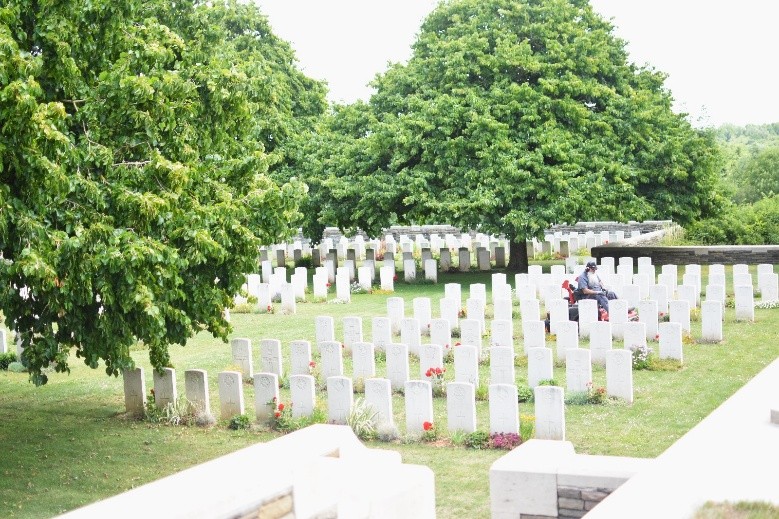
La Chapellete British and Indian Cemetery, Located on the Outskirts of Peronne, 30 kilometresNorth of Paris.
Dr Jan Ezung Nienu and Dr Elilo Ezung
In our first article published by Morung Express on August 9, 2024, we included information on both the Nagas and the Northeast Labour Corps of the First World War. We felt that we should write a follow-up article to keep their memories alive and this time also to honor our Naga Labour Corps, along with including pictures of their tombstones.
It is to be noted that the Naga Labour Corps members were enlisted from present-day Nagaland. We acknowledge that other Naga communities from Manipur State were part of the Manipur Labour Corps – a distinction shaped by the political and geographical landscape. In this article, we specifically focused on the Naga Labour Corps from Nagaland with photographs of their tombstones as a visual remembrance.
While I was researching for Shanjamo Jungi: The First Naga Educated in the United States of America,I was told a touching story by the late Mr. MotsuoKikon of YikhumVillage. Mr. Motsuo Kikon spoke of a Lotha gentleman called Thezamo Lotha from Pangti Village who participated in the French-Thava (French War/ First World War) and never returned. According to Kikon, the death of Thezamo left a deep wound among the Lotha Labour Corps, and to express their grief, one of his friends from Pangti Village composed a sorrowful Lotha song that echoed among the troops during their time at war,far away from home—a heart-wrenching tribute sung to a fallen brother and comrade.
PangtikhyingroeThezamo(Thezamo, young man of Pangti Village)
Etsu thava lo rocho(We came to fight in the French War)
HetoYipa Vanato(Why are you sleeping like this?)
Nraphantietsoyutsosi(Please get up and eat your meal)
Ete elhi lo wotavkalo(Let us go and fulfill our duty)
This beautiful and sorrowful song was sung to me by the late Mr. Wosumo Kikon of Yikhum Village. He was 103 years young when I met and interviewed him in June of 2016 at Yikhum Village.
Thezamo’s friends sang the song repeatedly with so much pain and with sheer sorrow because they were heartbroken. Seeing this, the British officers threatened the Lothas and ordered them to stop singing because the song left the Lothas with low morale and broken hearts. A ban on singing the song was enforced, and those who disobeyed were to be fined Rs. 500. Since Rs. 500 was a significant sum of money at that time, Thezamo’s comrades fell quiet, carrying their grief in silence.
In Lotha Naga culture, when a loved one passes away, there is grieving and crying to express endearment and love, but the grief of Thezamo’s friends was forcefully suppressed. However, there is no doubt that they continued to sing in their hearts to keep his memory alive as they processed their own sorrow in silence over the loss of their dear friend.
This story triggered a deep curiosity to research the Naga Labour Corps of the First World War,who sacrificed so much yet are relatively unknown or talked about. Dr. Elilo Ezung and I decided to visit the Commonwealth War Graves Commission in France to see for ourselves, to walk the grounds they once walked, and to locate the graves of our Naga Labour Corps members who never returned home. We documented our findings to share with our Naga community. We hope this document will create an investigative mind in the hearts of some of our young researchers.
As you read the names of the members of the Naga Labour Corps, you will notice that many of the names have been misspelled. Some of the names we could clearly identify, but some we could not. We went by the knowledge that they were categorized as belonging to either the Naga Labour Company or Naga Labour Corps.
St. Sever Cemetery and Extension at Rouen, France
On July 5, 2023, we visited St. Sever Cemetery Extension at Rouen, which lies in the northern French region. We also found some tombstones belonging to our Sema Naga Labour Corps. We wished we had a Sema Naga shawl with us to honor each of them to show our gratitude, love, and respect. We touched the tombstones of all the Nagas we found,lifting our hands and praying with shaky, cracked voices and tears running down our cheeks. At times, we were unable to pray as words would not come out of our mouths. As you can imagine, we were overwhelmed with floods of visions of what they must have endured. We felt blessed to have been there to see their final resting places. We talked to each of them on behalf of their family and our Naga community, thanking them for their sacrifices and wishing for them to rest in peace.
Although the Common wealth War Graves Cemetery website listed the names of two Naga Labour Corps members buried in this cemetery, we did not find their tomb stones. To show our love and respect, their names are as follows:
Chong Shen Tonglu, Labourer 1811.(37th Indian Labour Corps[Naga Coy]).Died 13 July 1918.
Etsowo, Labourer 1082. (36th Indian Labour Corps [Naga Coy]).Died 17 August 1917.
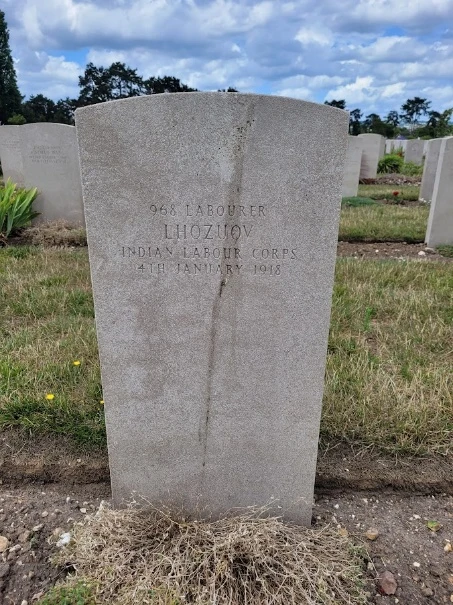
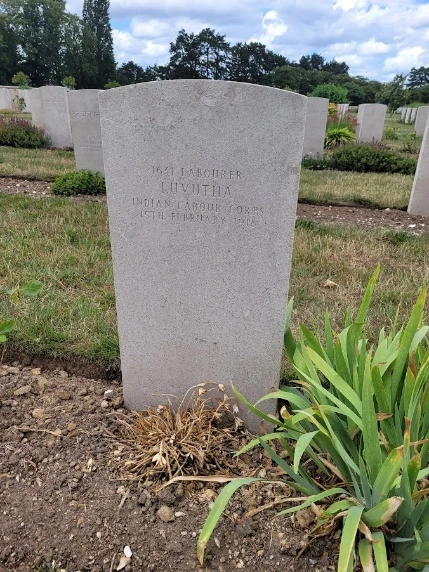
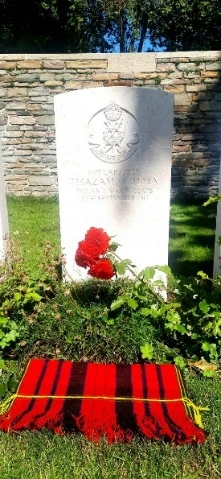
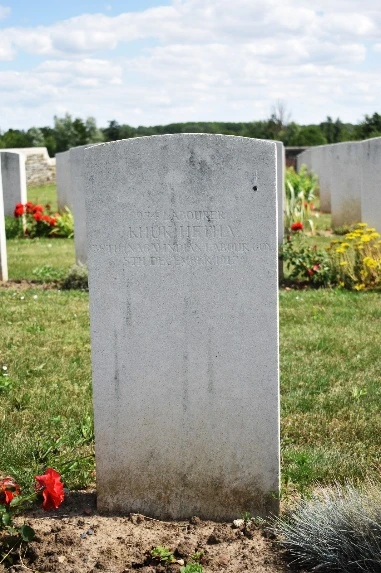
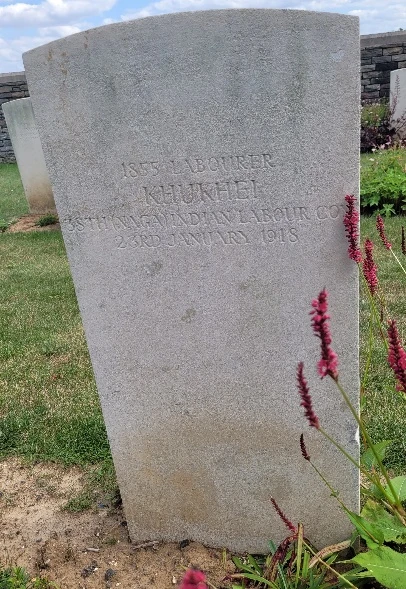
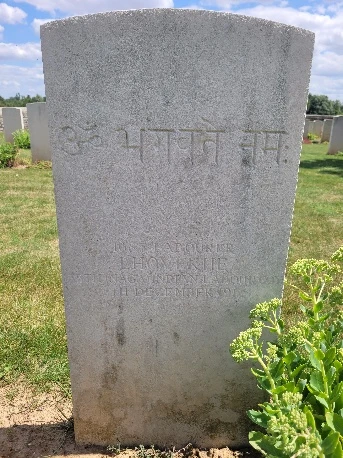
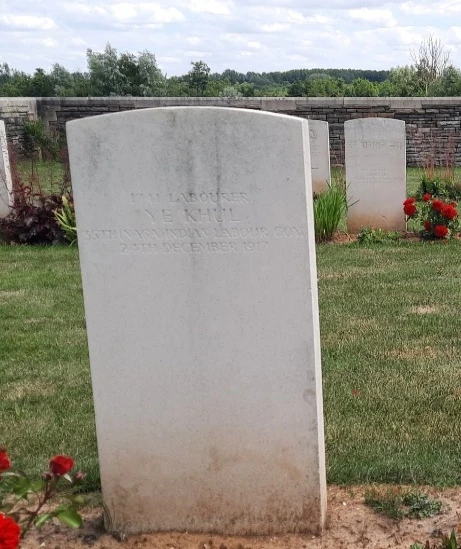
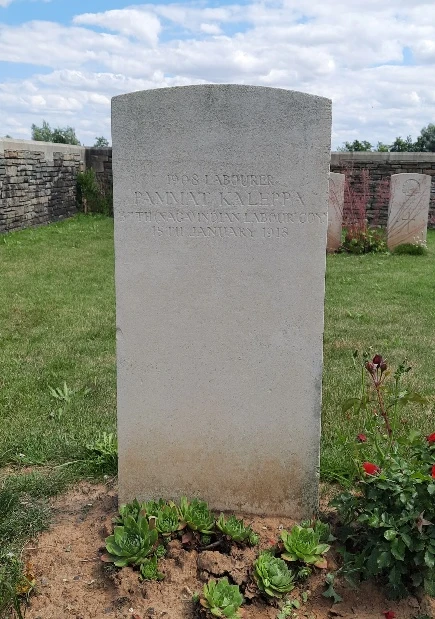
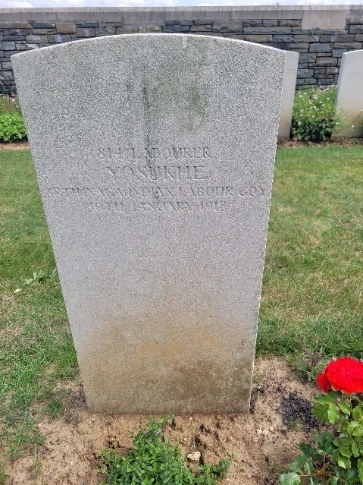
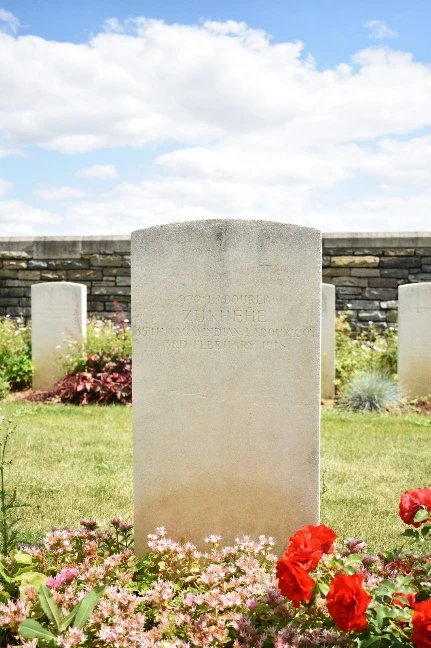
La Chapellete British and Indian Cemetery, Located on the Outskirts of Peronne, about 130 kilometres North of Paris
On July 6, 2023, we visited the La Chapellete British and Indian Cemetery,where we located several Naga tombstones. This is where we found the tombstone of Zurenthung Lotha from Sanis Village. We were honored to have found his tombstone, and we placed an Opvurm shawl to show our respect and prayed together with a mix of emotions of joy and thanksgiving. We wished we had a Longpensuor Phanrupshawl (shawls worn by Lotha men), but we only had with us the Opvuram shawl worn by Lotha women. We were aware that it was culturally inappropriate to present a Lotha man with a Lotha shawl worn by women, but it was done with our heartfelt gratitude to show our love and respect on behalf of his family and from our Lotha Naga community.
Picture missing for the following:
Yenko Alika, Labourer 1479.(35th Naga Labour Corps). Died 7 February 1917.
Khoir Kahmo, Labourer 1079.(36th Naga Labour Corps). Died 16 November 1917.
The CWGC (Commonwealth War Grave Commission)mentioned the names of the following Nagas who were also buried in this same cemetery, but we did not find their tombstones. We included their names to give our love, respect, and honor.
Ron Mamgar. (35th Naga Coy, Indian Labour Corps).Died 6 September 1917.
Bagbirtamang, Labourer 4007.(35th Indian Labour Corps [Naga Coy]).Died 18 December 1917.
Raliwir, Labourer 1060.(36th Indian Labour Corps[Naga Coy]).Died 28 January 1918.
Unicorn Cemetery at Vendhuile (23 Kilometres from Saint Quentin, 150 Kilometres from Paris)
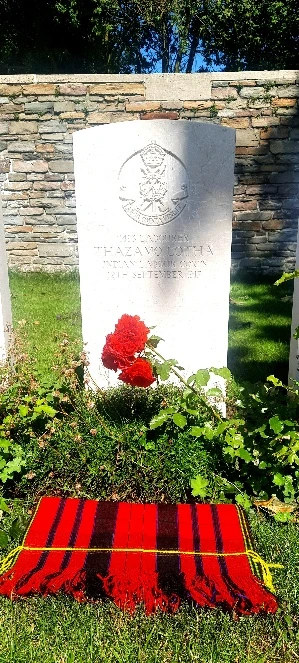
On the seventh of July in 2023, we visited the Unicorn Cemetery at Vendhuile. We located the tombstone of Thezamo Lotha. He was the only Naga laid to rest in this cemetery.
This small cemetery had four tombstones belonging to the Indian Labour Corps at the back of the plot, with Thezamo Lotha’s being among them. We were so blessed and overwhelmed to see his tombstone. Again, we wished we had a Longpensuor Phanrupshawl (shawl worn by Lotha men) with us to place on his tombstone. But all we had was the Opvuram (shawl worn by Lotha women); hence, despite being aware that it was not culturally appropriate, we nostalgically placed the shawl on his tombstone to pay our respects and prayed together on behalf of his family and our Lotha Naga community. He was the only Naga whose tombstone was found in this location.
Neuve-Chapelle Indian Memorial (located in Richebourg, 28 Kilometres from Lille, a City that Borders Belgium)
On the ninth of July, our next visit was to the Neuve-Chapelle Indian Memorial, where 4700 Indian soldiers and Naga labourers are commemorated. Their names are inscribed on panels 39, 40, and 41. Some of the names of the Naga Labourers are listed below. Their names were often misspelled, as you will see.
Lokhete, Labourer 953. (Indian Labour Corps). Died 3 June 1917.
Chemdeba, Service 1627. Died 21 July 1917.
Chhinga, Labourer 981. (Indian Labour Corps). Died 8 May 1918.
Changsi, Labourer 1406. (Indian Labour Corps). Died 3 May 1917.
Kallu, Labourer 403. (35th Naga Coy, [Attd. 71st United Provinces Coy]). Died 19 December 1917.
Lachhi, Labourer 893. (35th Indian Labour Corps[Naga Coy]). Died 29 December 1917.
Khuzulho, Labourer 973. (35th Indian Labour Corps[Naga Coy]). Died December 1917.
Yezevi, Labourer 1242. (Indian Labour Corps). Died 1 January 1918.
Shena, Follower 1188. (Indian Labour Corps). Died 25 May 1917.
Yolongsa, Labourer 1409. (Indian Labour Corps). Died 7 December 1917.
Tongjathang, Labourer 1643. (Indian Labour Corps). Died 16 July 1917.
Chongsana, Labourer 1341.(Indian Labour Corps), Died 14 June 1917.
As indicated in our first article, on our trip we were not able to visit two other cemeteries where Nagas are buried. One is the Ayette Indian and Chinese Cemetery, which has 86 tombstones, out of which two are Nagas. The cemetery is located approximately 173 kilometres from Paris in Pas-de-Calais in the South of France. Although we did not visit this cemetery, we would like to mention the names of Nagas who are buried there:
Paruwati, Labourer 2257. (37th Indian Labour Corps[Naga Coy]). Died 15 December 1917.
Shekhu, Labourer 596. (38th Indian Labour Corps [Naga Coy]). Died 18 January 1918.
The other cemetery we were unable to visit was Mazarquez Cemetery Extension at Marseilles, where the following Nagas lie buried:
Mate Kuhoi Sema Naga, Mate 878. (35th Indian Labour Corps [Naga Coy]). Died 25 December 1917.
Khuchezu, Labourer 988. (Indian Labour Corps). Died 14 February 1918.
Khunushu,Labourer 504. (21st Indian Labour Corps [Naga Coy]). Died 15 July 1917.
Keilho, Labourer 899. (Naga Labour Corps). Died 7 July 1917.
Luchezu,Labourer 353. (Indian Labour Corps). Died 5 July 1917.
Lhozuse, Labourer 680. (Indian Labour Corps). Died 11 July 1917.
It was truly a great privilege for us to be able to see the resting places of our Naga heroes. We could only imagine what they must have endured as we thought of how much they suffered as a result of the lack of food and clothes, as well as missing their loved ones and their homeland amidst the brutal war in a strange land. Their sacrifice touched our hearts deeply. We felt that not all the fallen Naga Labour Corps members were accurately documented, as in every war, with missing information being a common problem.
Some of the remaining Naga Labour Corps members returned home. Inspired by their observations and experiences in France, some of them,along with other local leaders,decided to start a socio-political awareness group and formed the “Naga Club” in 1918, the first political platform established to regain our independent living as it was before the British invasion of the Naga Hills.We also heard stories where some of the Naga Labour Corps members remained in France.
Exactly a hundred years after their departure to France, the World War I Naga Labour Corps Memorial Monolith was unveiled in 2017 in Kohima to mark the role and sacrifice of the Naga Labour Corps.
Around this same time, the building of a memorial park surrounding the monument was also announced. It will be a great honor to inscribe the names of these brave men on a memorial wall to remind the next generation of Nagas of our heroes. We humbly remind Dr. Rio, Chief Minister, Government Nagaland,to complete the proposed memorial park in honor of the veterans of the First World War. We also suggest that Naga Labour Corps Memorial Day be observed in Nagaland to give due honor to our Naga heroes who deserve to be honored and remembered. The Nagas played a vital role during the First World War.
Although we were unable to locate and include photos of all the tombstones of the Naga Labour Corps members, their names have been included in this article. It is important to recognize their names and honor their legacy. Most of the tombstones installed by the Commonwealth War Graves Commission look the same. You can look up our last article in the archives of the Morung Express (published on Friday 9 August 2024): “A Visit to France: Honouring Nagas and NE Labour Corps of the First World War.” We hope that more Naga researchers will continue the work and keep their memories alive. Their sacrifices should never be forgotten. As we honor their legacy, may we continue to seek out their stories, speak their names, and ensure that the Naga Labour Corps members are remembered as brave heroes who stood tall in the face of history.
Both my paternal and maternal grandfathers were recruited by the British and participated in the First World War. Their names are Phanrhumo Ezung (paternal grandpa) and Pvuchio Murry (maternal grandpa), both from Yonchucho Village of Wokha District. They were some of the lucky ones to return home.
If you are a descendant of the Naga veterans of the First World War and have stories that were passed on to you through oral tradition, we would like to hear from you. Please email your stories to us. If we gather enough information, we would like to publish it in honor of our First World War veterans to keep their memories alive and also to leave behind their stories as a gift to the next generation of Nagas and to the world.
Jan Ezung Nienu is an educator/author living in California in the United States. You can contact her atjannienu2005@gmail.com.
Elilo Ezung recently received her PhD from the University of Edinburgh, Scotland.Y ou can contact her at eliezung@gmail.com.