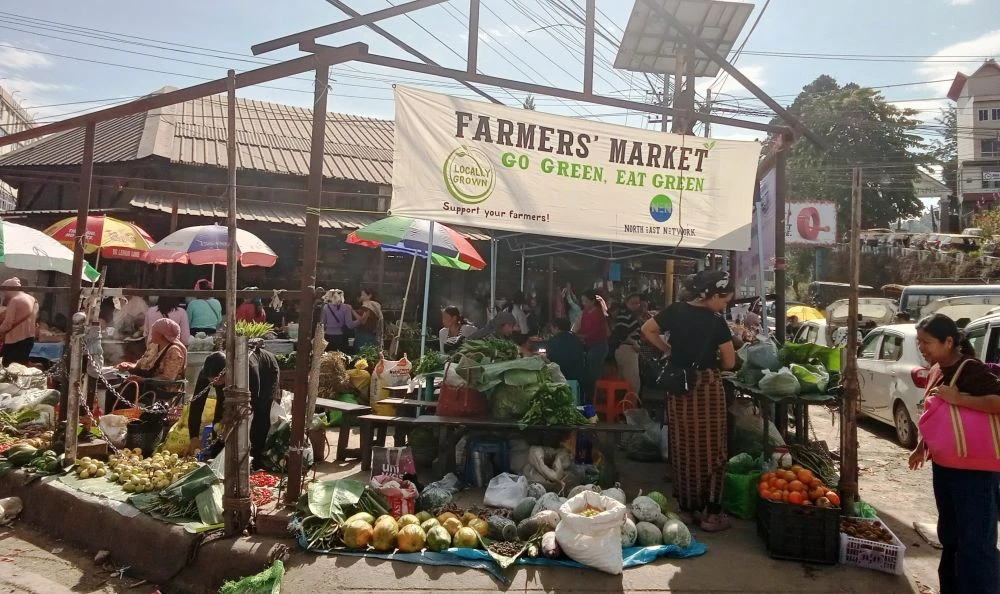
SEWA Nagaland, Kohima District, in collaboration with NEN organised a Farmers’ Market-cum-Home-Based Workers’ Sales Day at Bamboo Market, Kohima on October 27.
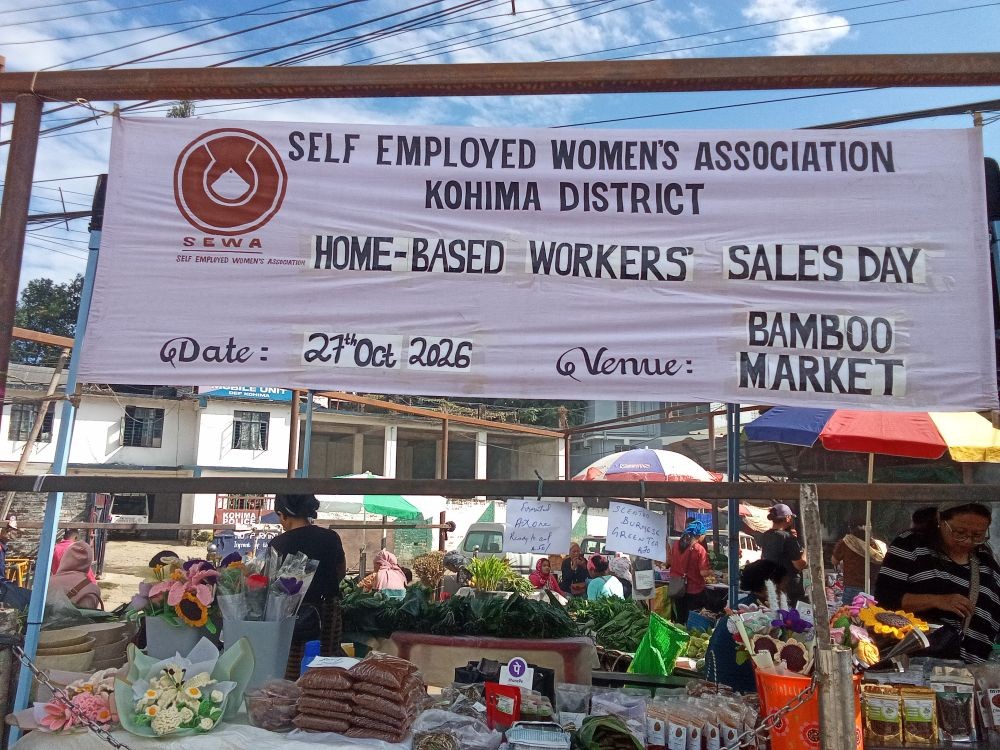
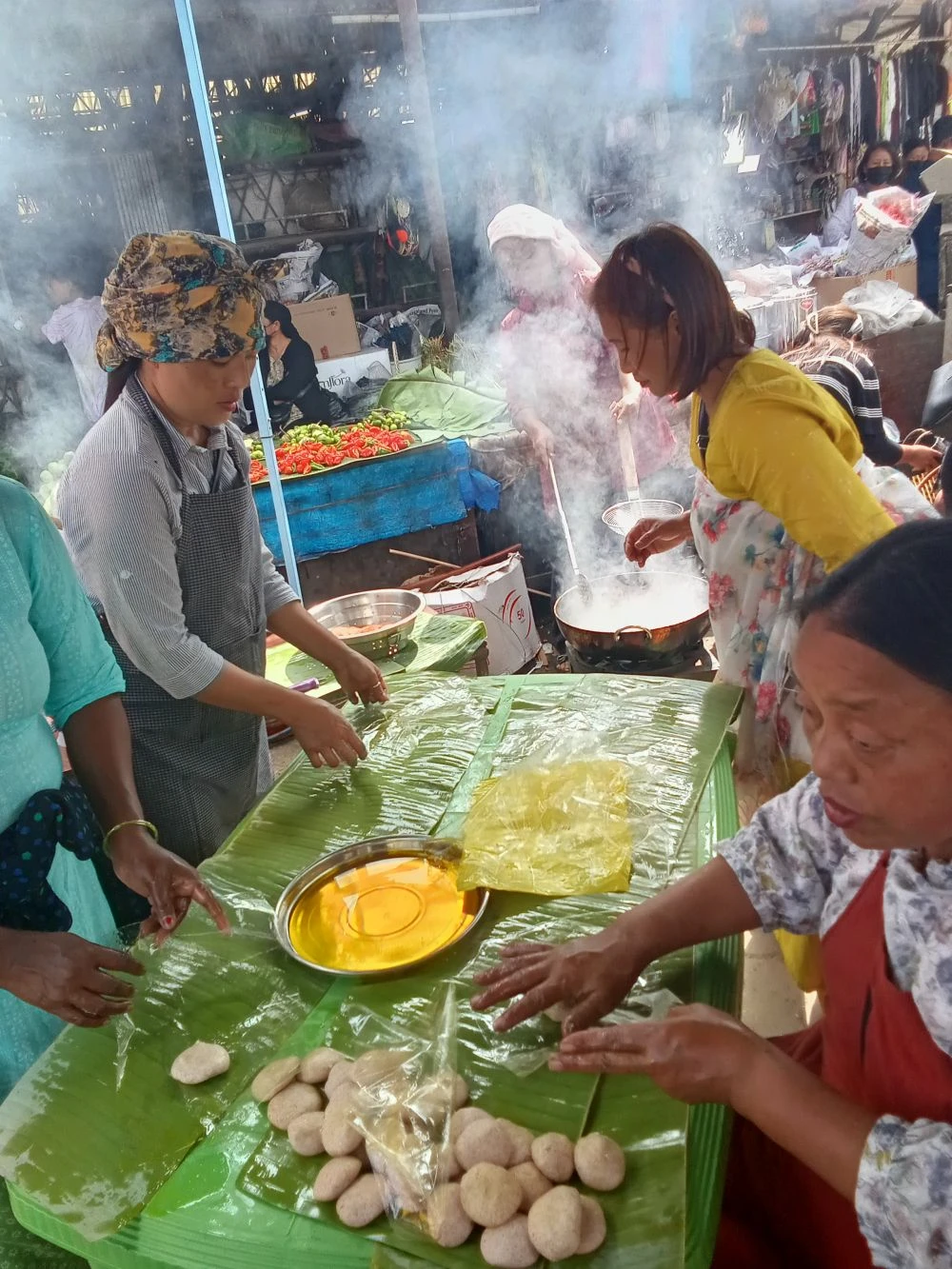
Kohima, October 27 (MExN): The Self-Employed Women’s Association (SEWA) Nagaland, Kohima District, in collaboration with the North East Network (NEN), organised a Farmers’ Market-cum-Home-Based Workers’ Sales Day at Bamboo Market, Kohima on Tuesday, with members from 11 units participating in the event.
The participants brought a variety of homemade food products, pickles, organic vegetables, traditional food items and other locally made products to the market, according to a release.
P Naam Konyak, General Secretary, SEWA Nagaland, said the initiative aimed to encourage farmers, promote the work of home-based workers, create market opportunities for local producers and recognise the invaluable contributions of people whose labour often remains unseen and undervalued.
“Home-based workers play a crucial role in supporting their families and sustaining local economies. From preparing homemade pickles and traditional food products to weaving, embroidery and creating indigenous crafts, these workers transform their skills, creativity and hard work into sources of income,” Konyak said in the release.
Despite their significant contributions, many home-based workers remain invisible in the formal economy, with their labour often considered merely an extension of household responsibilities rather than valuable economic work, the release said. They frequently face challenges such as limited market access, low earnings, a lack of recognition and inadequate social security.
“Supporting home-based workers means strengthening families, promoting women’s economic independence and preserving traditional knowledge passed down through generations,” Konyak said.
Highlighting the role of farmers, the release said they are the backbone of the food system and, beyond food production, traditional farmers also play a vital role in preserving indigenous seeds, maintaining local crop varieties and protecting agricultural knowledge inherited from their ancestors.
In Nagaland, traditional farming practices are deeply connected to indigenous culture, community life and environmental knowledge, and the preservation of indigenous seeds helps maintain agricultural diversity and safeguards valuable resources for future generations, it said.
Noting that farmers continue to face economic hardship, limited market access and social discrimination, the release said rural and traditional farmers are sometimes unfairly perceived as uneducated or belonging to a lower social status because of their occupation or appearance.
“There is nothing lowly about farming; there is dignity in the hands that cultivate the soil and feed the nation. Farmers deserve respect, fair prices, better market opportunities and recognition for the knowledge and labour they contribute to society,” it said.
The market day provided a platform for members from 11 SEWA units to display and sell their products directly to consumers, helping bridge the gap between local producers and urban markets and enabling small-scale farmers and home-based workers to reach customers without depending entirely on intermediaries, the release said.
Direct market access can improve income opportunities, strengthen local entrepreneurship and encourage people to continue their traditional occupations, it added.
The event also underscored the importance of preserving indigenous knowledge and traditional skills, with the release noting that traditional farming, indigenous seeds, local food preparation, weaving and handicrafts are more than economic activities as they are part of the cultural heritage of communities.
“A farmer working in the field and a woman preparing products at home may have different occupations, but both contribute to the economy and the well-being of society. Their work deserves equal dignity and respect,” it said.
It said supporting these workers requires more than appreciation and calls for fair prices, accessible markets, skill development, financial inclusion, social protection and policies that recognise their contributions.
Through such initiatives, SEWA Nagaland and its collaborating organisations seek to encourage self-employment, strengthen local livelihoods and create greater visibility for farmers and home-based workers, the release added.
Consumers can contribute by purchasing locally made products, choosing organic and traditionally grown produce where available, and recognising the effort behind every item they buy, it said.