Gir Somnath: The Indian Air Force’s Surya Kiran Aerobatic Team performs aerial manoeuvres during the Somnath Amrut Mahotsav at the Somnath Temple, one of the twelve Jyotirlingas, in Gir Somnath, Gujarat on Monday, May 11, 2026. (Photo: IANS/PMO)
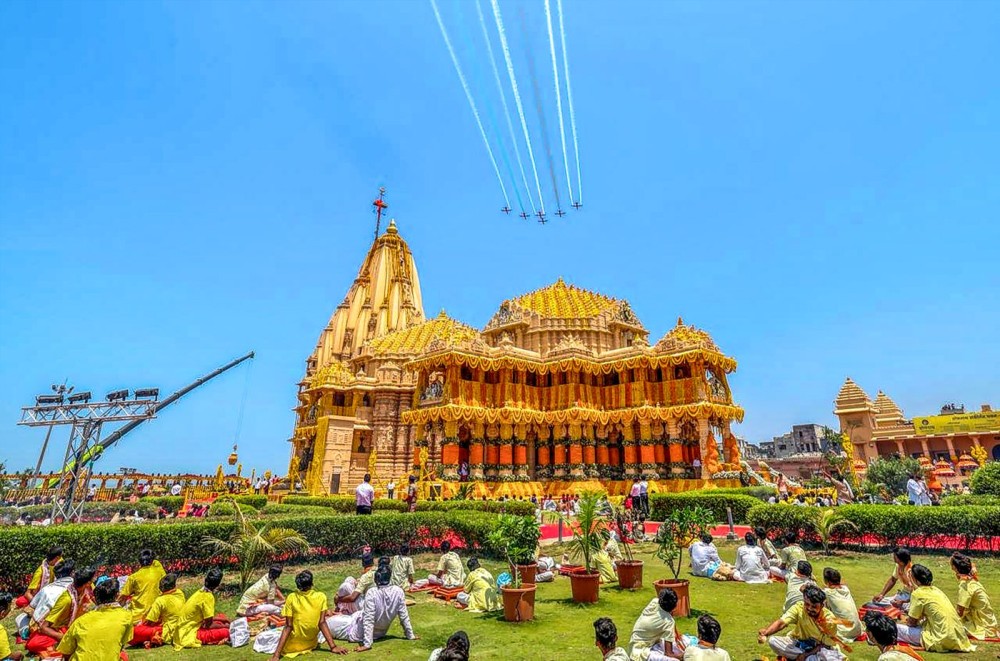
New Delhi, May 11 (IANS) Prime Minister Narendra Modi on Monday led a historic ceremony at the Somnath Temple in Gujarat, marking 75 years since its reconstruction and restoration.
The “Somnath Amrut Mahotsav” commemorates the 1951 reconsecration of the shrine by India’s first President, Dr Rajendra Prasad, and reflects on a thousand years since the temple’s first recorded invasion in 1026 CE.
The Somnath Temple, revered as the first of the twelve Jyotirlingas dedicated to Lord Shiva, has long stood as a symbol of resilience.
Once ravaged by repeated assaults beginning in the 11th century, its story is one of destruction and renewal, with figures like King Kumarapala and Ahilyabai Holkar leading earlier reconstructions.
The modern structure was envisioned by Sardar Vallabhbhai Patel as a beacon of national resurgence, and today it rises proudly at Prabhas Patan with its 150-foot shikhar and 27-foot flag mast.
Somnath, meaning “Lord of the Soma” or “moon”, has roots stretching back to the Indus Valley Civilisation between 2000 and 1200 BCE.
After being abandoned, the site was reoccupied around 400 BCE and continued into the historical era.
Known also as Prabhasa, or “place of splendour”, it is listed in several Hindu texts as one of the most sacred pilgrimage sites of Lord Shiva.
The Shiva Purana’s Jnanasamhita places Somnath at the top of the twelve Jyotirlingas, with other references found in the Skanda Purana and Shatarudra Samhita.
Its turbulent history includes the 1026 CE raid by Mahmud of Ghazni, as documented by the Persian historian Al-Biruni, who recorded the invasions during his time in India.
In January 2026, the “Somnath Swabhiman Parv” marked 1,000 years since the first attack, transforming remembrance into a celebration of civilisational endurance.
PM Modi’s address reframed the temple’s history, not as a tale of ruin, but as a millennium-long journey of reconstruction, linking Somnath’s survival to India’s indomitable spirit.
His leadership as Chairman of the Shri Somnath Trust has also modernised the region, with improved connectivity through the Vande Bharat Express and the reopening of Keshod Airport, fuelling a surge in spiritual tourism.
Digital engagement mirrored this resurgence, with Google searches for “Somnath” reaching a two-decade high and social media impressions crossing 1.37 billion by 2025.
The temple now draws nearly 10 million pilgrims annually, while initiatives under the “Vikas Bhi, Virasat Bhi” approach blend heritage with community welfare, ranging from vocational training and mobile computer education to environmental projects such as a Miyawaki forest.
Women, making up nearly 30 per cent of the workforce, play a vital role in its administration.
With the Somnath celebrations, PM Modi has reaffirmed a powerful narrative: invaders have faded into history, but Somnath endures as a living emblem of victory, of memory over erasure, of faith over fanaticism.
Today, it stands not only as a sacred shrine but also as a confident symbol of India’s spiritual continuity and civilisational pride.
Somnath symbolises India’s indestructible spirit, says PM Modi
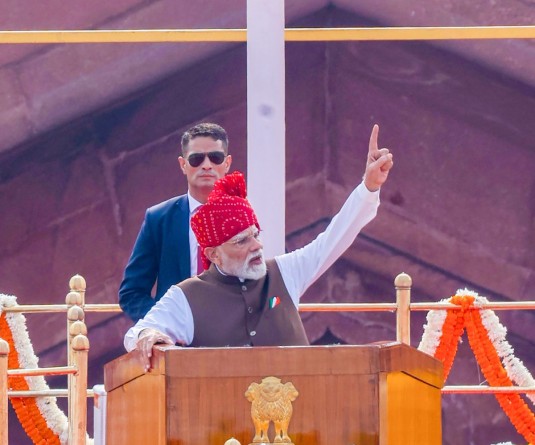
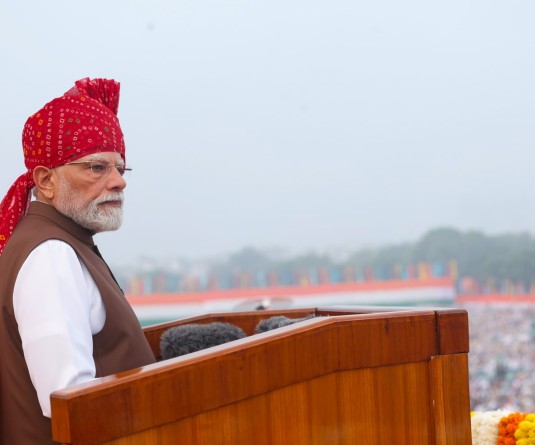
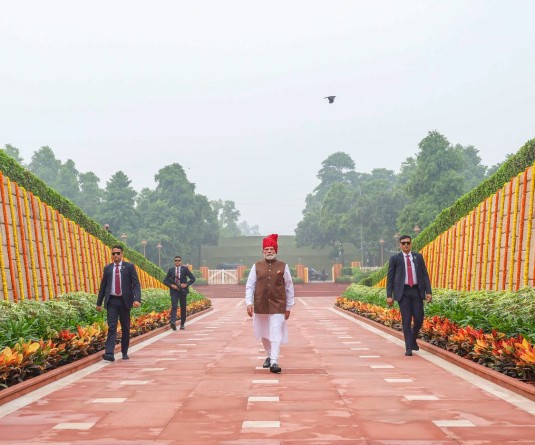
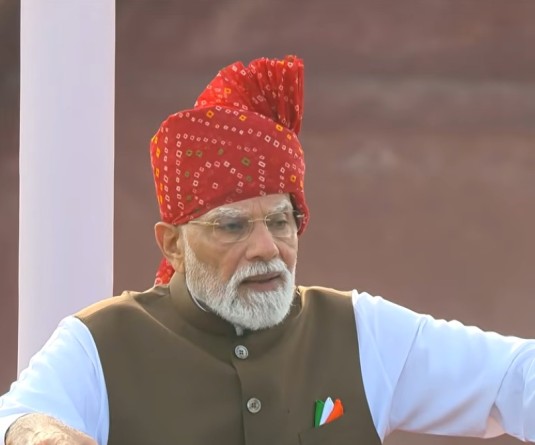
Prime Minister Narendra Modi on Monday described the Somnath Temple as a symbol of India’s “indestructible spirit” and “civilisational consciousness” while addressing the 'Somnath Amrut Mahotsav' celebrations in Gujarat’s Prabhas Patan.
Speaking after participating in various religious ceremonies at the Somnath Temple, PM Modi said the temple represented the country’s ability to rise repeatedly despite destruction and invasions over centuries.
“Today, the region of Prabhas Patan has been filled with a special thrill,” the Prime Minister said while opening his address with chants of “Jai Somnath” and “Har Har Mahadev”.
He further added, “This divine presence of Mahadev, this beauty, the showering of flowers from the earth and the sky, the radiance of saffron flags, the magnificent presentations of art, music and dance, the chanting of Vedic mantras, the continuous recitation of the Shiva Panchakshari in the sanctum sanctorum, and along with all this, the roar of the sea waves... it feels as though the entire creation is speaking together: Jai Somnath! Jai-Jai Somnath!”
The Prime Minister said the event marked 75 years of the consecration of Lord Mahadev at the reconstructed temple and reflected a "thousand-year journey of immortality”.
“As a devoted worshipper of Dada Somnath, I have come here many times and bowed before Him countless times. But as I was coming here today, this journey through time was giving me a deeply pleasant feeling," he said.
PM Modi referred to repeated attacks on the temple by invaders, including Mahmud of Ghazni and Alauddin Khilji, saying the Somnath Temple had always risen again despite destruction.
“Looters attempted to erase the glory of the Somnath temple. They treated Somnath as merely a physical structure and repeatedly attacked it. Time and again, this temple and structure were destroyed, and each time it rose again, because those who tried to destroy it never understood the ideological strength of our nation," he said.
The Prime Minister said India’s spiritual traditions viewed the “soul as immortal”, adding that “Shiva is the soul of all”.
He paid tribute to several historical figures associated with the reconstruction and preservation of Somnath over different periods, including Raja Bhoj, Raja Bhimdev I, Raja Kumarapala, Ahilyabai Holkar, the Gaekwads of Vadodara and Jam Sahib Maharaja Digvijaysinh Jadeja.
PM Modi also remembered thinkers, scholars and saints connected with Shaiva traditions in Prabhas Patan and said their legacy continued to inspire future generations.
Calling pilgrimage centres “sources of economic progress”, the Prime Minister said: "The government had expanded infrastructure around major religious destinations through projects including the Char Dham highway, the Kartarpur Corridor and the Buddhist circuit."
Referring specifically to Somnath, he said that facilities for devotees had expanded significantly in recent years.
“Today, there is the Sea Viewing Path, which further enhances Somnath’s glory. There is a Tourist Facilitation Centre and an exhibition gallery. The old Somnath town is being rejuvenated,” he said.
PM Modi said the Somnath Amrut Mahotsav represented “a resolve to build such an India that remains connected to its roots while also being ready to reach the pinnacle of modernity”.
“This temple of Somnath teaches us that truth can be suppressed, but not erased. Faith can be challenged, but it cannot be defeated,” he added.