Exhibition cum sale at 1st Edition of Taro Festival at Pongo village in Longleng.
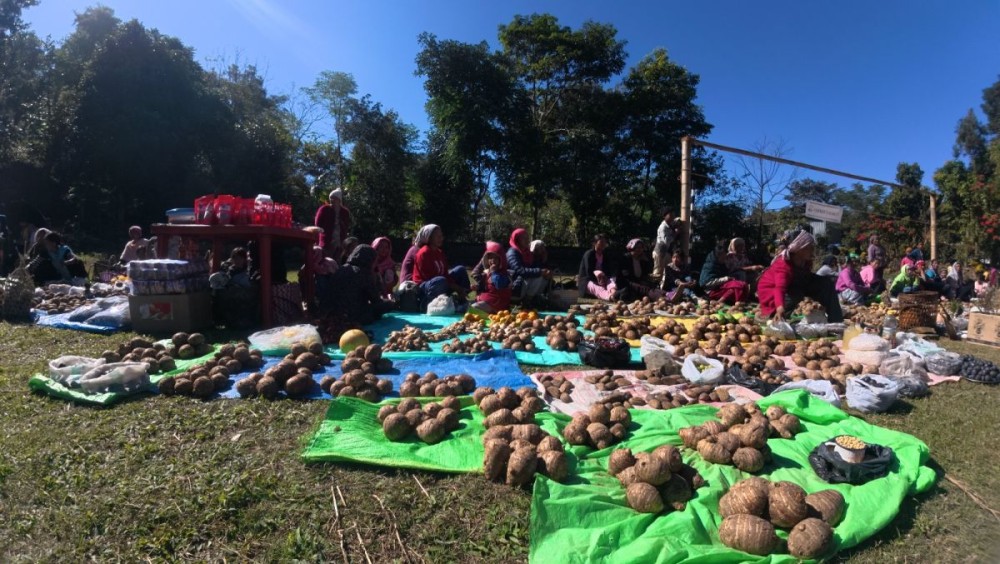
Kohima, December 11 (MExN): Pongo Village in Longleng district witnessed a historic moment with the launch of the 1st edition of Taro Festival as part of the 26th Hornbill Festival 2025 in collaboration with the Department of Horticulture from December 5 to 6.
Entirely community led, the festival brought together elders, youth, and especially women, united by a shared mission to promote one of the region’s most undervalued yet climate resilient crops, Taro.
Pongo Village is home to more than 10 varieties of taro, and is particularly known for a special local variety called Khedoong, which is appreciated for its unique texture, flavour, versatility, and long shelf life.
With the theme “Rooted in Culture: A Journey of Heritage,” the festival highlighted the deep cultural significance that taro has held in the daily lives of the villagers since time immemorial.
Gracing the inaugural programme, MLA A Pongshi Phom, encouraged the community, especially the youth, to explore opportunities in farming and agro tourism.
Village Head GB P Khangyong, reflected on the theme and took the audience back to a time when Taro sustained families through scarcity. Khangyong recalled his own childhood when Taro was the only food available during difficult times, saying, “Our forefathers survived famine because of Taro, and this story has now become an important folklore of our village.”
The festival grounds came alive with agricultural stalls, mostly set up by SHGs and Local agri-based Entrepreneurs.
One participant shared, “There is not a single part of the Taro plant that is wasted. From leaves to corms, everything is eaten or used as animal feed. There is no break in its cycle of providing food.”
Another artisan explained how Taro leaves and corms are also used while crafting the village’s traditional black clay pots, demonstrating the crop’s cultural versatility.
Festival Convenor Along H Phom said “The Taro Festival was a farmers’ festival. We prioritised farmers’ knowledge at the forefront, and a major share of the festival earnings went directly back to them. Our aim is to help farmers see Taro as a cash crop with economic potential.”
Phom added that the festival seeks modern interventions such as market linkage, value addition, and scientific support, while also preserving and documenting Indigenous Technical Knowledge (ITK).
Empowering farmers through knowledge
Day two featured a technical session conducted by KVK ICAR, Longleng, with District Agriculture Officer Maongsangla as special guest.
She emphasised the nutritional value of Taro and its relevance in today’s climate challenged world.
Scientist and experts from various ICAR regional centres led sessions on taro enhancement, value addition, farmers’ rights, and varietal production. The training was attended by local farmers.
Festival Secretary Aye Keikung noted “The first edition was successful even though we started with a small budget and a lot of courage. With a clear vision from the committee, we made it happen. We look forward to bigger and better editions in the years to come, for the crop that has sustained our people for centuries.”