Fourth Sunday of Advent - December 21, 2025
Meyu Changkiri
As the Fourth Sunday of Advent approaches, people across the world prepare for Christmas in many ways. For some, it is a season of decorations and gatherings; for others, a time for reflection, cleaning drives, and quiet anticipation. Beneath these visible activities lies a deeper question that speaks across cultures and beliefs: What draws us toward hope, compassion, and renewal at this time of year?
The Christmas story offers a simple yet profound response: love. Not a distant or abstract love, but a love that comes close - entering ordinary life, sharing human struggles, and offering presence rather than distance.
In a world where power often separates itself from difficulty and authority keeps its distance from pain, this message remains striking. The Christmas narrative does not speak of one who observes suffering from afar, but of a love that steps into it. It affirms something many recognise from experience: real love does not withdraw when life becomes complicated; it moves nearer.
This kind of love is not merely an idea to admire or a sentiment reserved for a festive season. It is a lived reality - often quiet, frequently unnoticed, yet deeply shaping. Over time, I have come to recognise this love not only through sacred texts, but also through ordinary experiences where care, integrity, and kindness appeared at just the right moment.
Love That Comes Close in Waiting and Delay
One of the hardest places to recognise love is during seasons of waiting. Delay can feel like neglect, and unanswered situations often raise doubts about whether anyone is paying attention. Yet many discover, often only in hindsight, that waiting can also be a space where unseen work is taking place.
There was a time when passport services for the entire North East of India were handled only in Guwahati. When I needed to renew my passport, I had to make several trips, each requiring time, expense, and effort. Despite repeated attempts, nothing seemed to move forward.
There were suggestions that the process could be “managed” through shortcuts. I chose not to pursue that route. Eventually, the delay meant cancelling my registration for an international conference. It was disappointing, but I accepted it as part of life’s circumstances.
Months later, a friend was appointed as the Regional Passport Officer in Guwahati. While reviewing pending files, she discovered that my application had simply been left unattended. With her intervention, the matter was resolved.
Looking back, this appears to be more than an administrative oversight that was corrected. It serves as a reminder that resolution does not always come through pressure, compromise, or manipulation. Sometimes it comes through patience, integrity, and the quiet alignment of circumstances.
This season reminds us that waiting is not always wasted time. Love does not always hurry, but it does not forget. Even in delay, it can remain closer than we realise.
Love That Comes Close Through Quiet Provision
Love does not always arrive with drama or display. More often, it comes quietly - through timely provision that respects dignity and supports responsibility.
I experienced this during a demanding period of life when I underwent surgery in Dimapur. The procedure was made possible at a significantly reduced cost. In addition, during my yearly routine medical reviews, I was neither charged for the consultation nor for the medicines required for the following month.
What made this experience especially meaningful was the unexpected reconnection behind it. The doctor who treated me was someone I had known years earlier during our college days, when we sang together as part of a small quartet. Life had taken us in different directions, yet our paths crossed again at a moment of genuine need. Around the same time, one of my former teachers reached out quietly and sent a gift - unannounced and without explanation - sufficient to meet my immediate needs.
More recently, another simple yet deeply touching act occurred. One of my nephews noticed, without being told, that I was in need of a formal pair of shoes. Together with his wife, he purchased a good and valuable pair and sent it from Dimapur to Shillong. There was no expectation, no publicity - only attentiveness and care. As Christmas morning approaches, those shoes will be worn while standing to share words of hope. In that gesture, once again, love was experienced through family awareness and thoughtful action.
These experiences are not shared to suggest dependence on special circumstances or individuals. Rather, they point to how care often reaches us through ordinary people who respond at the right moment. Such help does not diminish dignity; it strengthens it. This is how love often comes close - not loudly, but faithfully.
Love That Comes Close to Human Vulnerability
One of the most accessible ways to understand love is through family life. Parents do not draw close to their children only when things go well. Often, they move closer when their children are tired, uncertain, or struggling.
In such moments, explanations matter less than presence. Love naturally moves toward vulnerability.
This shared human experience helps explain why the Christmas story continues to resonate across generations. It speaks of a response to human fragility that chooses companionship over distance, understanding over judgment.
Such love does not deny responsibility or ignore consequences. Instead, it restores and strengthens. When people encounter love that comes close, it often reshapes how they live - choosing integrity over convenience, compassion over indifference, patience over anger, and presence over performance.
Love That Comes Close Through Encouragement and Shared Responsibility
In one of the monthly prayer meetings of the Shillong City Coalition, participants reflected on a simple yet important question: Who really runs the city? As the discussion unfolded, many names emerged - business people, police and traffic police, dorbar shnong leaders, politicians, bureaucrats, municipal workers, and others who carry responsibility in both visible and unseen ways.
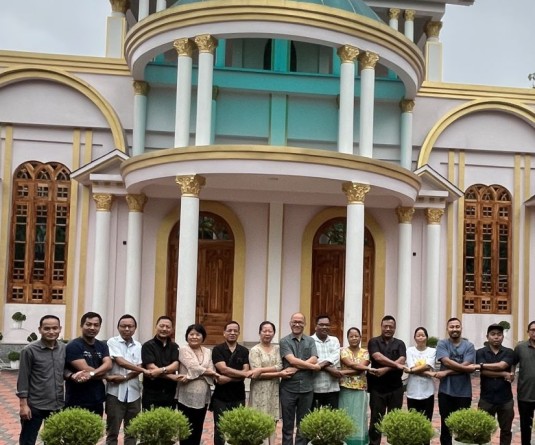
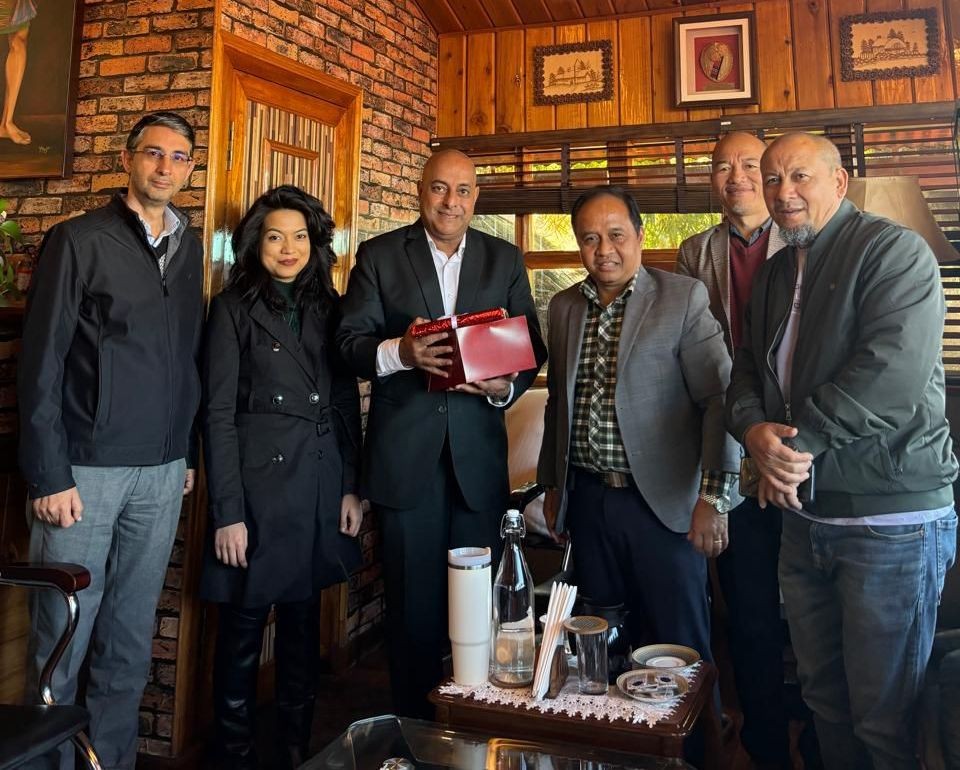
It became clear that many who serve the city do so under constant pressure, yet rarely experience appreciation. Sensing this, the group felt led to respond not with criticism or demands, but with gratitude. Visits were arranged with leaders in the administration and the marketplace, simply to pray for them and to say thank you on behalf of the wider community.
During these visits, the encouragement was tangible. Often, it was not the words spoken, but the act of being remembered that brought visible joy. Once again, it became evident that encouragement offered at the right time can be one of the most meaningful forms of support.
As Christmas approaches, this same spirit can be seen across Shillong. Localities, families, and individuals are engaging in cleaning drives and caring for shared spaces. Year after year, Jiva Cares, the civic and environmental initiative led by Jiwat K. Vaswani, has encouraged city beautification through clean-up drives, planting trees and flowers, and creative waste-management initiatives such as bottle-shaped bins. These consistent and visible efforts do more than improve public spaces; they touch hearts, awaken civic responsibility, and encourage people to take shared ownership of the city. In this way, care for the environment becomes care for the community, and simple acts of stewardship become expressions of hope and renewal.
Conclusion
In a season often filled with activity and expectation, this time of year invites a slower pace. It encourages making room - not only in schedules, but in attention and attitude.
The message at the heart of Advent and Christmas is not confined to religious tradition alone. It speaks to everyday life. Love continues to come close today - in waiting and delay, in quiet provision, in human vulnerability, and in timely encouragement.
As Christmas draws near, the invitation is simple yet meaningful: pay attention. Notice the love that draws close in everyday life. Allow it to shape how we live, how we treat one another, and how we care for the communities we share.
The love that comes close is still at work - quietly, faithfully, and generously - even now.