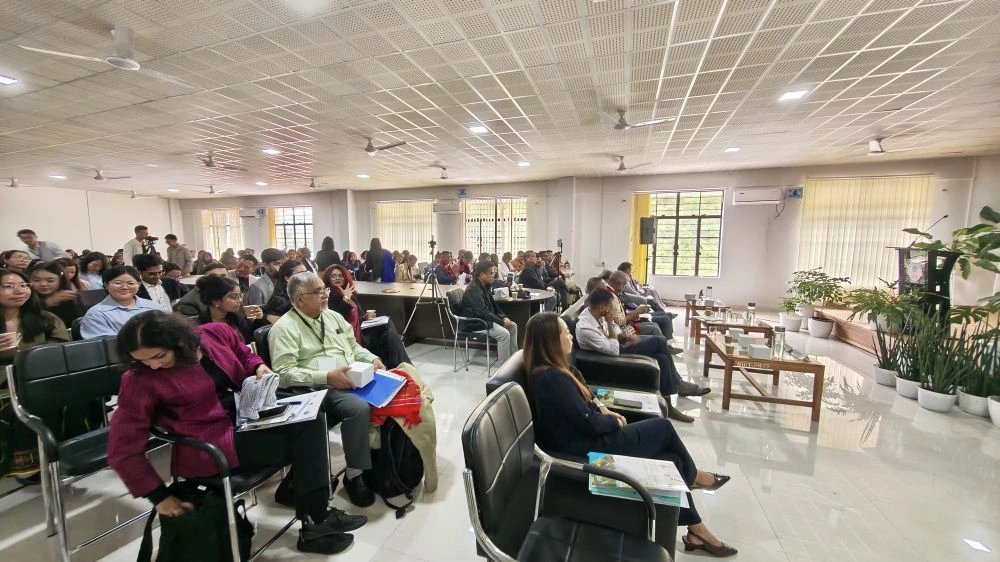
Environmentalist Ashish Kothari delivers the keynote address on the inaugural day of the international seminar on “Ecotourism, Livelihood and Development in Northeast India” at Nagaland University on November 19. (Morung Photo)
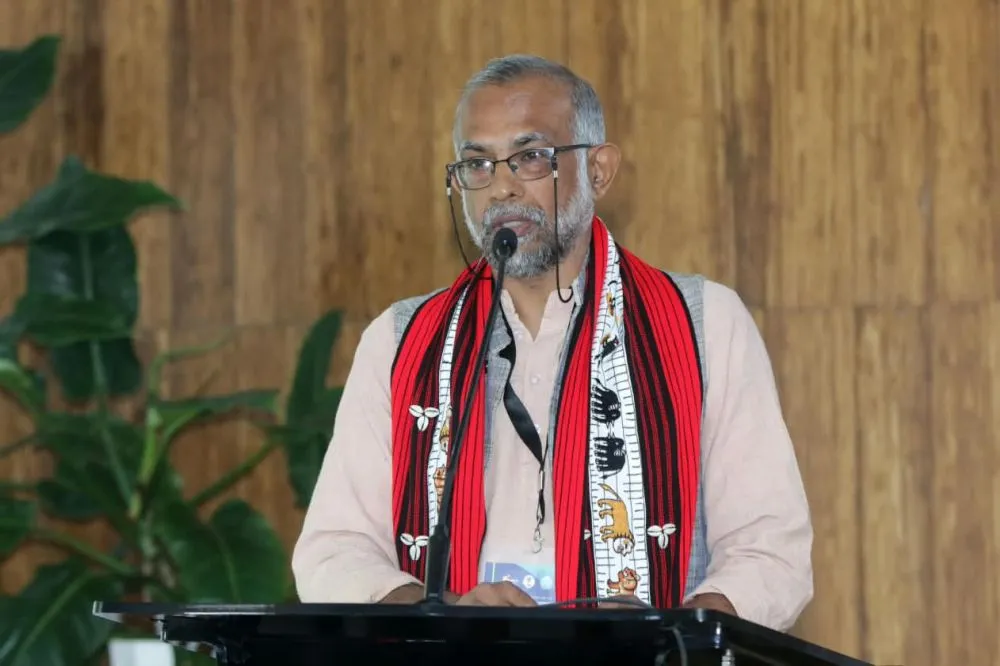
Environmentalist Ashish Kothari calls for community control, diversified livelihoods and protection of traditional knowledge
Morung Express News
Lumami | November 19
Nagaland’s growing interest in tourism must not lead to excessive dependence on visitors or undermine the communities, landscapes and cultural traditions that make the state attractive, environmentalist Ashish Kothari said at Nagaland University on Thursday.
Delivering the keynote address at the international seminar on “Ecotourism, Livelihood and Development in Northeast India,” Kothari, who works on the development–environment interface, biodiversity policy and alternative models of development, argued that tourism should remain part of a diversified local economy rather than become the principal source of livelihood for communities.
“Please don’t go in a direction of depending primarily on tourism. That is not a sustainable option,” he said, referring to the experience of communities that suffered when tourism collapsed during the COVID-19 pandemic.
Kothari said Nagaland’s villages should continue strengthening agriculture, local food systems, handicrafts, forestry and other community-based livelihoods alongside tourism. According to him, local self-reliance in basic needs such as food, energy and water can help communities withstand economic and social disruptions.
Nagaland has been promoting ecotourism, rural homestays, cultural festivals and community-led conservation as part of its tourism strategy. Kothari cautioned that these initiatives should not make local communities dependent on tourism.
Referring to his recent visits to conservation initiatives in Nagaland, including Khonoma and other areas, Kothari said he was encouraged by the work being carried out by communities.
However, he expressed concern over the increasing concretisation of village landscapes.
The transformation, he suggested, reflects a wider development aspiration in which traditional houses, materials and ways of living are often replaced by concrete structures and infrastructure that may not suit the local environment.
Such changes, he said, need to be considered not only in terms of modernisation but also in terms of their ecological and cultural consequences.
Kothari stressed that communities must have a decisive role in determining how tourism is planned and managed. Decisions about visitor numbers, infrastructure, cultural performances, conservation areas and the use of tourism revenue, he said, should not be left exclusively to government departments or private operators.
He also called for greater recognition of traditional governance systems and indigenous knowledge. Village institutions, customary practices and community conservation efforts, he said, contain valuable knowledge about local ecology and resource management. However, he added that traditional systems must also become more inclusive, particularly by addressing the limited participation of women and other marginalised groups.
The environmentalist cited community initiatives in Nagaland, including work associated with Chizami, as examples of efforts to link local livelihoods with ecological and social concerns. He argued that people who possess practical knowledge of farming, forests, crafts and biodiversity should be treated as knowledge holders, even when they do not possess formal academic qualifications.
Kothari also questioned development models that measure progress largely through economic growth. In his view, indicators such as clean air and water, secure livelihoods, access to education, decent housing, ecological health and people’s participation in decision-making offer a more meaningful measure of development than GDP.
Kothari said Nagaland must decide whether tourism development would primarily serve economic growth or the well-being and decision-making power of local communities. He said he was not opposed to tourism but cautioned against making communities overly dependent on it.
He urged Nagaland to adopt a low-impact, community-controlled tourism model that supports agriculture, crafts, forestry and other local livelihoods alongside tourism.