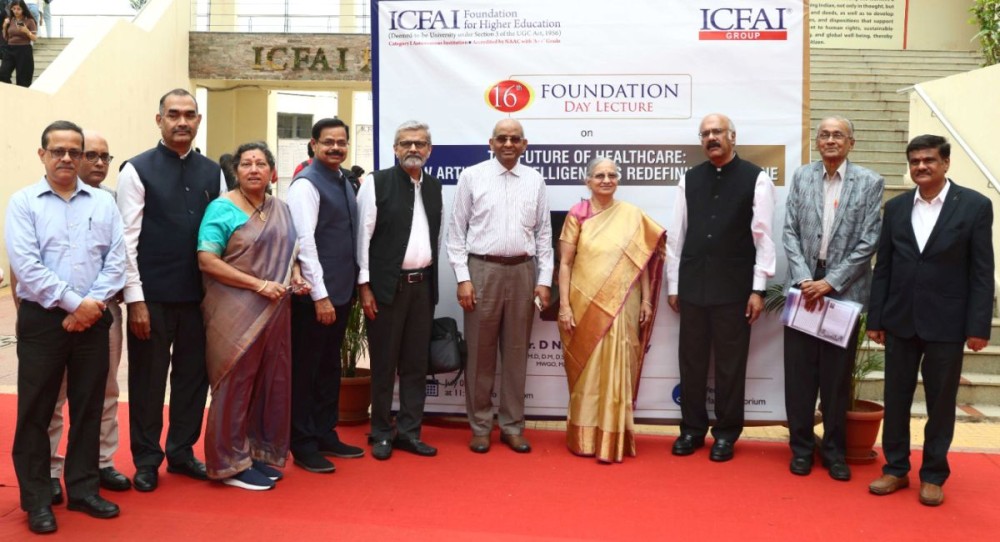
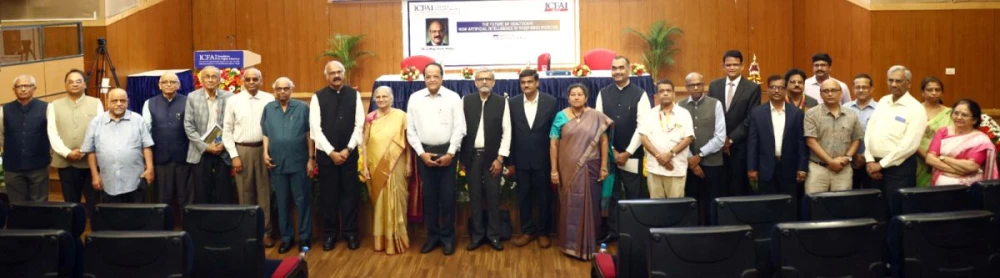
Officials pose for a photo during the 16th Foundation Day Lecture held at the ICFAI Foundation for Higher Education in Hyderabad on June 3.
Hyderabad, July 5 (MExN): Artificial Intelligence (AI) will not replace doctors, but physicians who effectively use the technology will replace those who do not, AIG Hospitals Chairman Dr D Nageshwar Reddy said on July 3, asserting that AI has the potential to transform healthcare by making it more accessible, affordable and efficient.
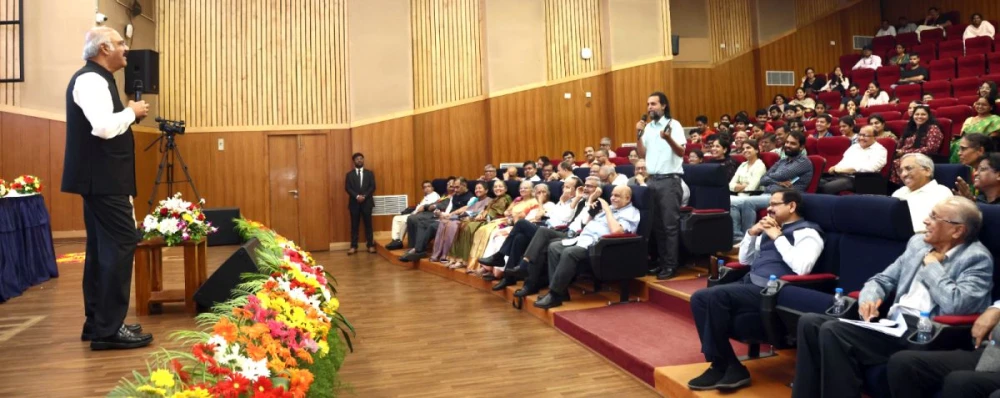
Delivering the 16th Foundation Day Lecture at the ICFAI Foundation for Higher Education on "Artificial Intelligence and the Future of Healthcare", Reddy said medicine has always combined empathy and human intelligence, and AI should be viewed as a tool to augment healthcare professionals rather than replace them.
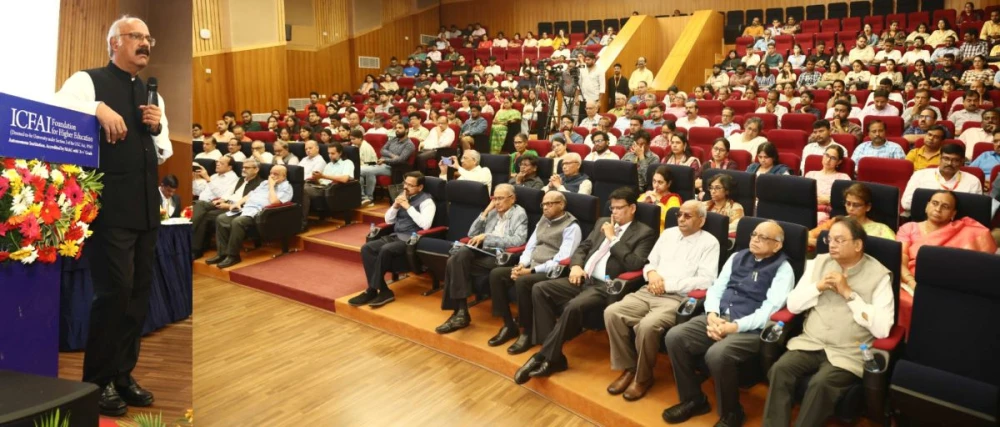
"AI will not replace doctors, but doctors who know how to use AI will replace those who don't," he said, noting that many physicians remain hesitant to adopt AI due to fears of being replaced.
He said AI is increasingly being deployed across healthcare in areas such as drug discovery, radiology, telemedicine, precision medicine, predictive medicine, genomics, cancer detection, dermatology and remote patient monitoring.
According to Reddy, AI has significantly accelerated drug discovery, reducing development timelines from decades to about two years, and the coming decade is expected to witness major changes in pharmaceutical research.
Citing examples from AIG Hospitals, he said the institution has developed MIRA (Medical Information Robotic Assistant), an AI-powered system that assists doctors and nurses, answers patient queries, reduces consultation waiting time and supports medical education.
He also highlighted iSAVE, an AI-based early warning system that continuously monitors critically ill patients and alerts doctors nearly an hour before a patient's condition deteriorates, allowing timely intervention.
Reddy said AI had also helped redesign the hospital's pre-anaesthesia evaluation process by recommending a centralised pre-surgery lounge instead of requiring patients to move between multiple testing stations.
The change reduced patient fatigue and brought down surgery dropout rates from nearly 20 per cent to about one per cent, he said.
He added that AI supports management of the hospital's high-volume endoscopy services, where nearly 700 procedures are performed daily.
Reddy also said AI could help tackle India's growing burden of fatty liver disease by enabling affordable screening using a few simple clinical parameters instead of expensive diagnostic tests.
He said AI-enabled clinical documentation systems can automatically generate medical summaries from doctor-patient conversations, allowing physicians to spend more time interacting with patients. AIG Hospitals also aims to develop interoperable medical records that can eventually be shared seamlessly across hospitals, he added.
AI-powered analysis of CT scans is improving early cancer detection, while wearable devices equipped with AI are enabling continuous health monitoring and early warning of illnesses, Reddy said.
While AI is often perceived as lacking compassion, studies indicate that AI-supported systems can improve patient engagement and communication, he said, while stressing that issues related to data quality, ethics, privacy and regulation must be addressed as AI adoption expands.
Concluding his lecture, Reddy said AI has the potential to democratise healthcare by extending quality medical services to millions who currently lack access, provided it is adopted responsibly and ethically.
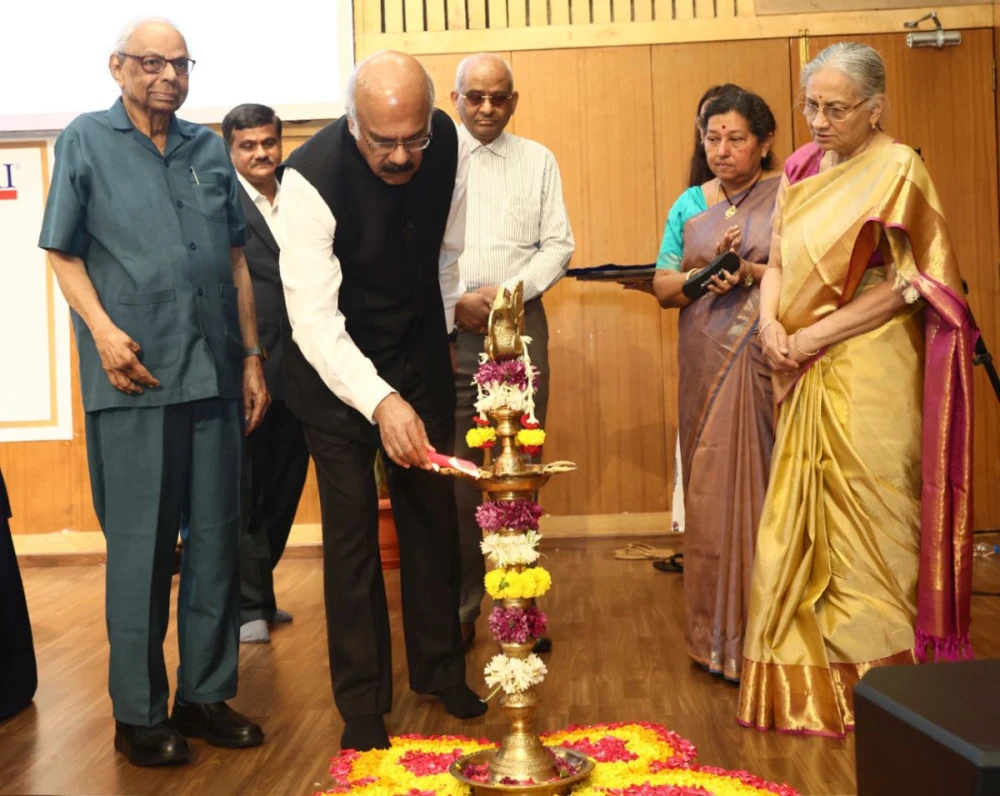
ICFAI Chancellor Dr C Rangarajan, who presided over the function, paid tribute to the founder of the ICFAI Group, N J Yasaswy, and said the best way to honour his legacy was by providing quality education and contributing to national development.
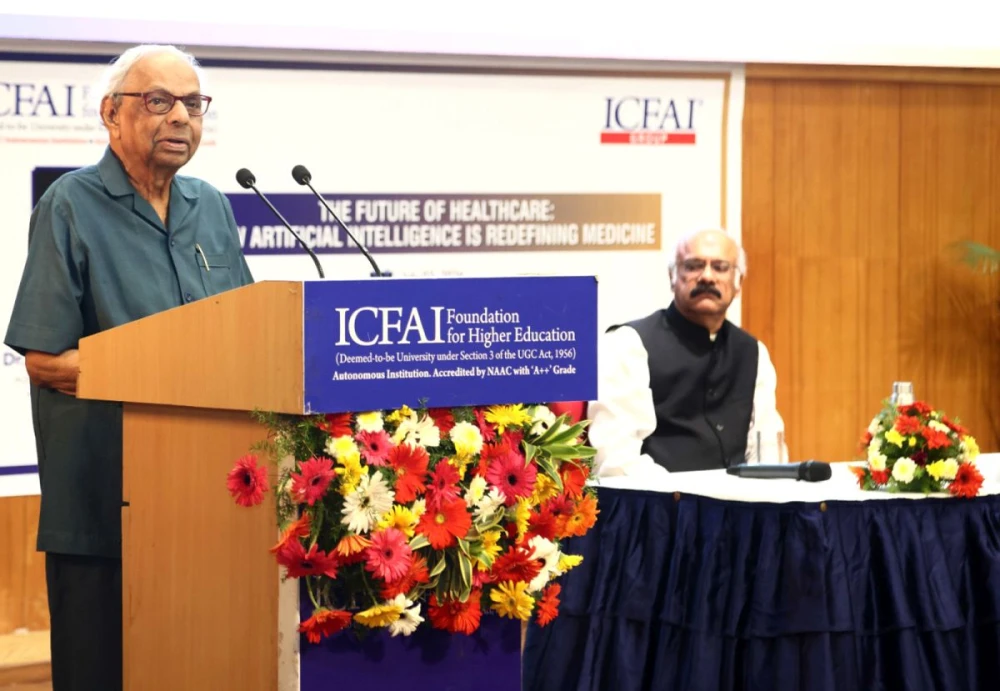
Referring to AI, Rangarajan said the technology was still in its infancy and its long-term impact remained uncertain. While AI was transforming teaching and learning, it should be used responsibly, keeping in mind both its potential and limitations, he said.
He stressed that future innovations should make healthcare more affordable and ensure that the benefits of AI reach all sections of society.
Vice Chancellor (In-charge) Dr T Koti Reddy, in his welcome address, recalled the contributions of ICFAI founder N J Yasaswy to institution building and quality education.
The lecture was attended by faculty members, students, vice chancellors of various ICFAI universities, advisers, dignitaries of the ICFAI Group and research scholars.