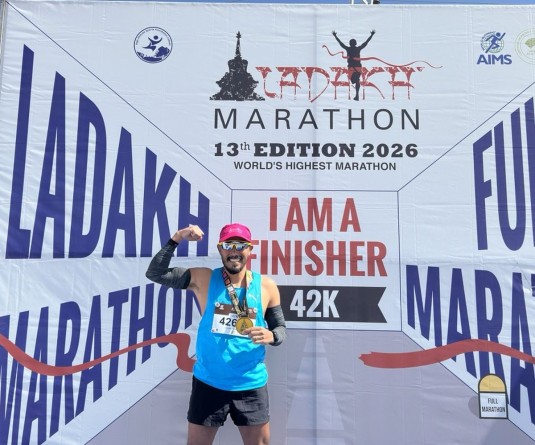
Stop Pitying, Start Including: Disability rights advocate Diethono Nakhro challenges the view of disability as charity, insisting instead on dignity, rights and equal participation, while calling out societal attitudes and policy gaps as the real barriers to inclusion in Nagaland. (File Photo)
Lenni Samuel
Dimapur | June 20
“Disability is too often viewed through a lens of pity, charity, shame or dependence, rather than through dignity, rights and equal participation,” asserts Diethono Nakhro, disability rights advocate and former State Commissioner for Persons with Disabilities.
In an interview with The Morung Express, Nakhro who has spent nearly two decades championing accessibility and inclusion in Nagaland and beyond contends that despite progressive laws and welfare schemes, persons with disabilities (PWDs) in the state continue to face exclusion.
The root cause, she argues, is not their impairments but societal attitudes, inaccessible environments, and the persistent failure to implement policies effectively, a failure she attributes to disability being treated as charity rather than a fundamental rights issue.
Society remains the greatest barrier
While addressing challenges faced by PWDs in Nagaland, Nakhro stresses that the biggest barrier is not the disability itself, but societal perception. She notes that disability is too often viewed through “a lens of pity, charity, shame or dependence,” rather than through “dignity, rights and equal participation.” This leads to low expectations, overprotection and assumptions that become lived realities for many.
Although awareness is improving, Nakhro points out that institutions still fail to “fully understand or disability inclusion,” creating significant gaps in education, healthcare, employment and support services. She argues that lack of awareness is no longer an acceptable excuse, “when accessibility is repeatedly ignored despite laws and guidelines, it becomes negligence.”
For Nakhro, genuine change happens only when persons with disabilities are seen not as charity cases, but as equal citizens whose participation and leadership matter.
Progressive policies,limited implementation
Although several progressive laws and welfare schemes for PWDs have been enacted, Nakhro contends that implementation in Nagaland continues to fall far short of policy promises.
“The lived reality in Nagaland often falls far short of what these policies promise,” she says. A key reason, she argues, is that disability is still treated as a welfare issue rather than a matter of rights and inclusion.
She points out that disability is a cross-cutting concern affecting education, healthcare, transport, employment, housing, elections and digital services. Yet disabilityrelated issues are frequently left to a single department instead of being mainstreamed across government.
Limited trained staff, inadequate disability-sensitive service delivery, and weak monitoring mechanisms further widen the gap between policy and practice, she adds.
Nakhro also stresses on the need for “good leadership, prioritization, budgets, and accountability” for genuine and efficient implementation of policies acknowledging that implementation, ultimately can only be effective in the presence of political commitment.
On true accessibility, representation and hope
Nakhro emphasised that accessibility must be understood beyond the construction of ramps. “True accessibility,” she says, “means creating environments where disabled people can participate independently, safely and with dignity”. This includes accessible transport, information, communication systems and public spaces designed to meet the needs of people with different disabilities.
She also pointed to stigma as one of the most persistent barriers to inclusion, noting that children with disabilities are often overprotected or denied opportunities, while many adults continue to face assumptions about their abilities in education, employment and leadership.
Despite the challenges, Nakhro believes meaningful progress is taking place through growing awareness, stronger selfadvocacy and increased visibility of persons with disabilities in public life.
However, she stressed that lasting change will require greater representation of persons with disabilities in decisionmaking, stronger political commitment and active participation from communities alongside government efforts.
“I remain hopeful because an inclusive Nagaland is possible,” she said. “The real question is not whether it can be achieved, but whether we are willing to invest in it and make it a priority.”