Despite a ban, single-use plastic bags remain in use at New Market Dimapur alongside traditional alternatives such as leaves and newspapers. (Moarula Pongen/Morung Photo)
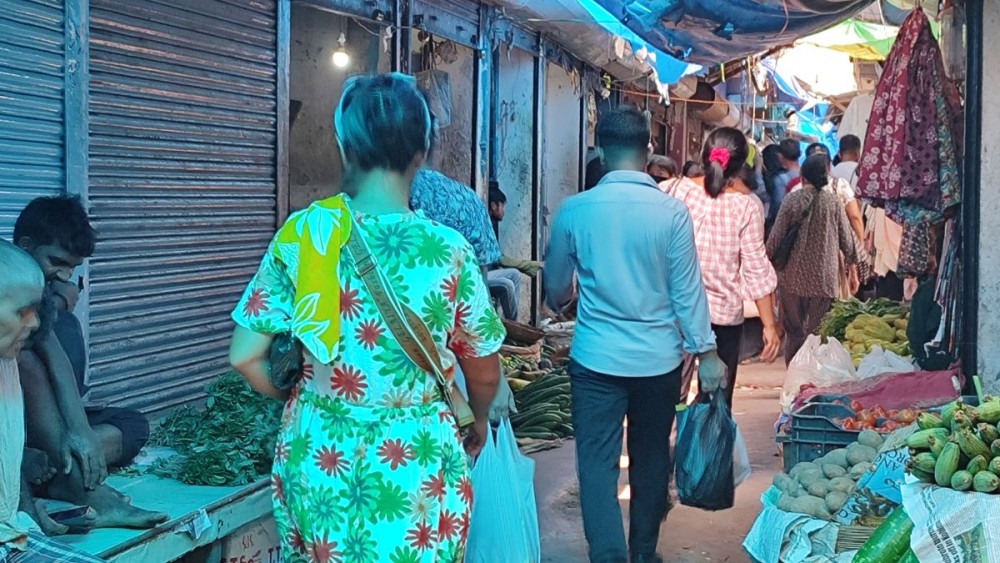
Field visits to three Chümoukedima-Dimapur markets reveal varied compliance
Moarula Pongen
Dimapur | August 16
The ban on single-use plastic (SUP) has brought visible changes to market practices in Dimapur and Chümoukedima, with many vendors shifting to biodegradable bags, newspapers and cloth bags. However, field observations across three major markets in Dimapur and Chümoukedima found that the transition is being hindered by three recurring concerns: higher costs, poor-quality alternatives and uneven enforcement.
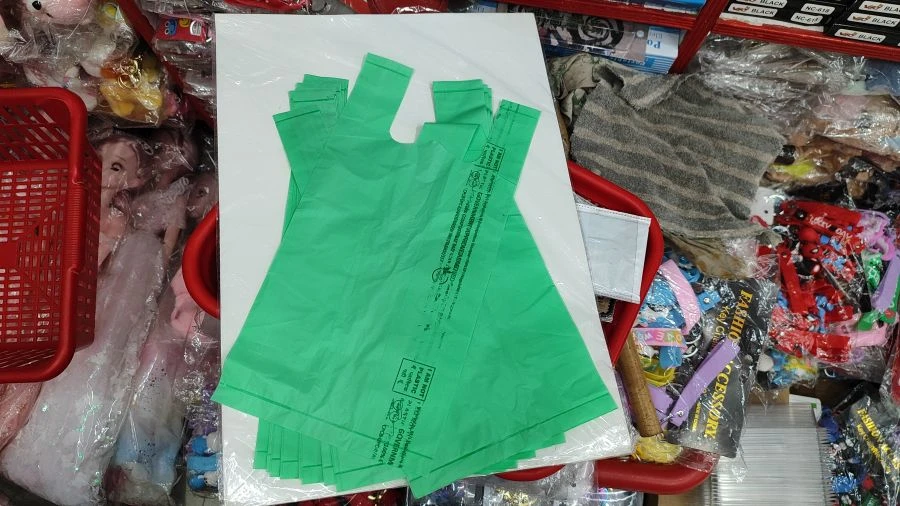
The financial burden of replacing conventional plastic bags with alternatives emerged as a major concern among vendors, with several saying the biodegradable bags supplied by the Dimapur Municipal Council (DMC) cost more and, in some cases, require vendors to use more bags because of their lower carrying capacity.
Ground observations: Alternatives at a cost
At Dimapur's New Market, a major commercial hub for clothes, fresh produce, groceries and fast food, most vendors observed were aware of the ban and were using biodegradable bags supplied by the DMC. The bags are sold at Rs 160 per kg.
A small shop owner said the ban was good for the environment, but the DMC bags were more expensive than the plastic bags used earlier.
For a second-hand apparel seller, the higher cost was accompanied by complaints from customers over the quality of the bags.
“For the environment it is good but as a shopkeeper it is challenging,” he said, adding that the DMC bags cost more than those used previously. He said newspapers were also used as an alternative, although DMC bags remained the main option.
Another vendor selling daily essentials said buying the DMC bags was financially burdensome. He said customers often ask for two bags because a single bag does not hold heavier items properly, increasing his expenditure.
“If selling the DMC bags then we need better quality,” he said.
The New Market Business Owners Association also highlighted the difference in the number of bags obtained per kilogram.
According to the association, conventional plastic bags were earlier available at about 112 pieces per kg, whereas the biodegradable bags provide only around 60–70 pieces per kg.
The difference means that vendors buying bags by weight obtain considerably fewer bags from the biodegradable alternative.
Combined with the need to occasionally use two bags because of their strength, vendors said the cost of complying with the ban can rise further.
The association said the DMC bags are manufactured outside Nagaland, as there are no such manufacturing facilities in the State.
Despite the concerns over cost and quality, several vendors at New Market have adapted to the change.
A fast-food vendor said he purchases containers himself and has shifted to alternatives such as aluminium foil, paper straws and paper plates. Another shop selling disposable products was observed selling paper plates, cups and other non-plastic alternatives.
Vendors also said they were alert to municipal inspections. One vendor said officials conduct inspections about once a week and that those caught using SUP bags are fined Rs 200.
Tackling the root cause
At Chümoukedima Weekly Bazaar in Chümoukedima, the experience was similar but less uniform.
Most vendors interviewed were aware of the ban, although some older and newer vendors were not fully aware of its provisions.
One vendor said she uses bags collected from home while selling fresh produce. Another vendor said the ‘DMC bags’ were difficult to use because they ‘tear easily.’
“Customers ask for double bags which lead to loss,” he said.
Another vendor said the alternatives were financially burdensome because they could not be used for carrying heavier items.
Vendors said municipal authorities conduct inspections on unannounced days and may confiscate plastic bags or impose fines when violations are detected.

A 40-year-old local vendor, however, said enforcement should go beyond individual vendors and address the continued supply of banned plastic bags.
“To stop it completely we should stop the root cause,” she said, arguing that authorities should investigate how SUP bags continue to reach markets.
The continued availability and use of SUP bags was particularly visible at Tuesday Bazaar at 3rd Mile. During a field observation on August 11, several vendors were seen with SUP bags, while customers were also seen carrying plastic bags.
Vendors said municipal officials do conduct inspections, although no inspection was observed on the day of the visit.
Across the three markets, vendors said they were relying on a mix of DMC bags, newspapers, bags brought from home and handmade cloth bags as alternatives to SUP bags.
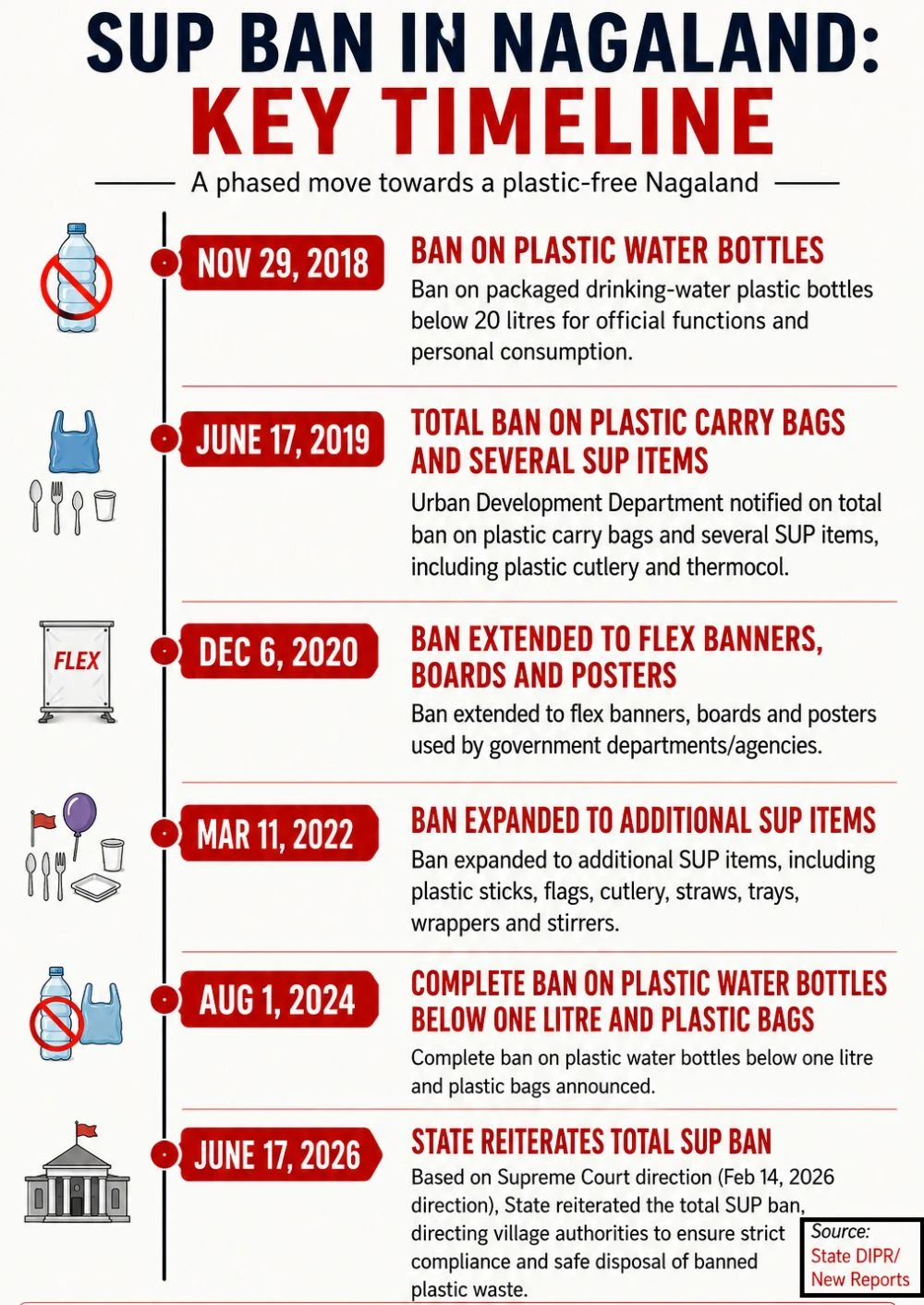
Meanwhile, although the government ‘in principle’, announced a complete ban plastic water and soft drink bottles below 1 litre from August 1, 2024, such bottles commonly spotted widely across Nagaland.
The field observations suggest that the plastic ban is changing behaviour, but the cost of compliance remains a significant challenge for small vendors. At the same time, continued availability of SUP bags and differences in inspection frequency point to gaps in enforcement.
Moarula Pongen is a fifth-semester B.A. student in the Department of Mass Communication, Tetso College, Chümoukedima. This report was produced as part of her one-month internship at The Morung Express.