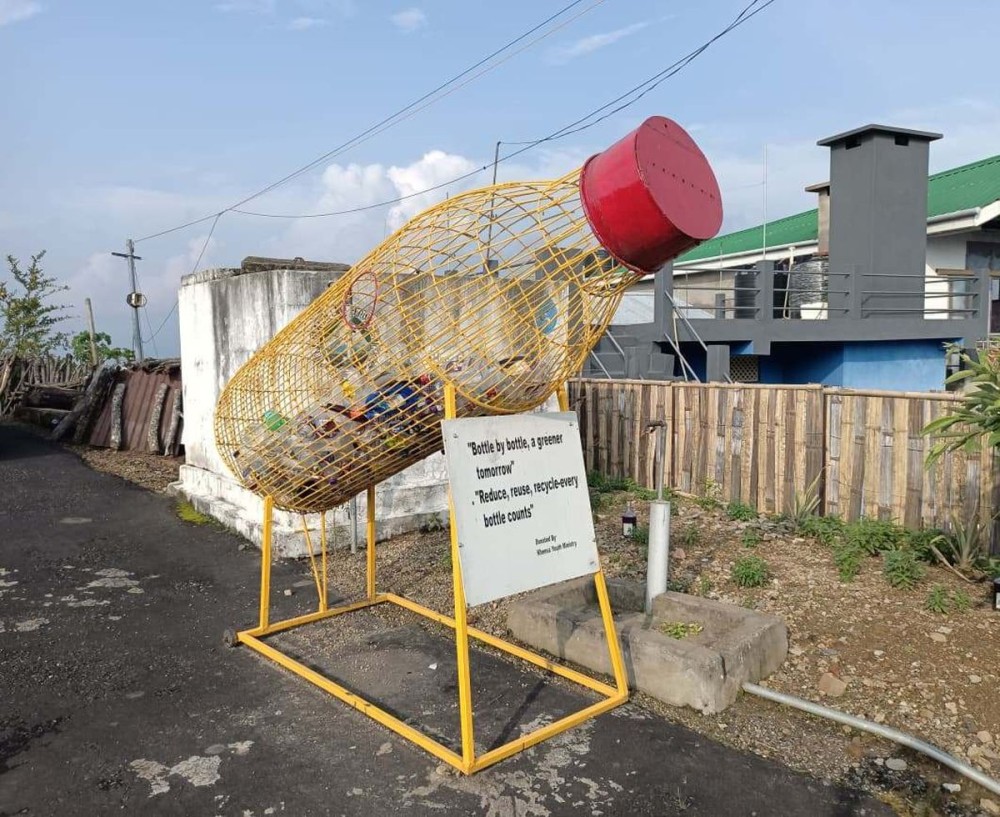
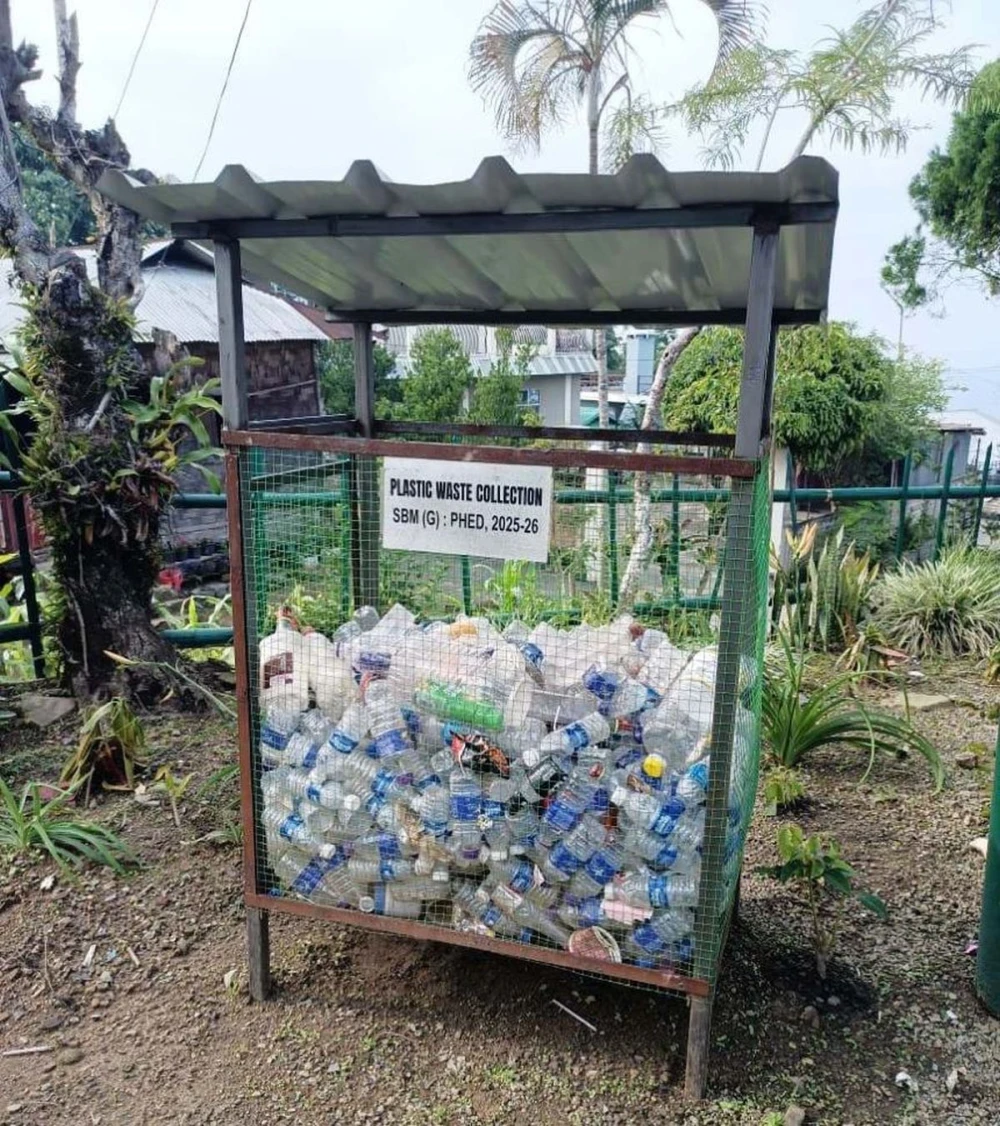
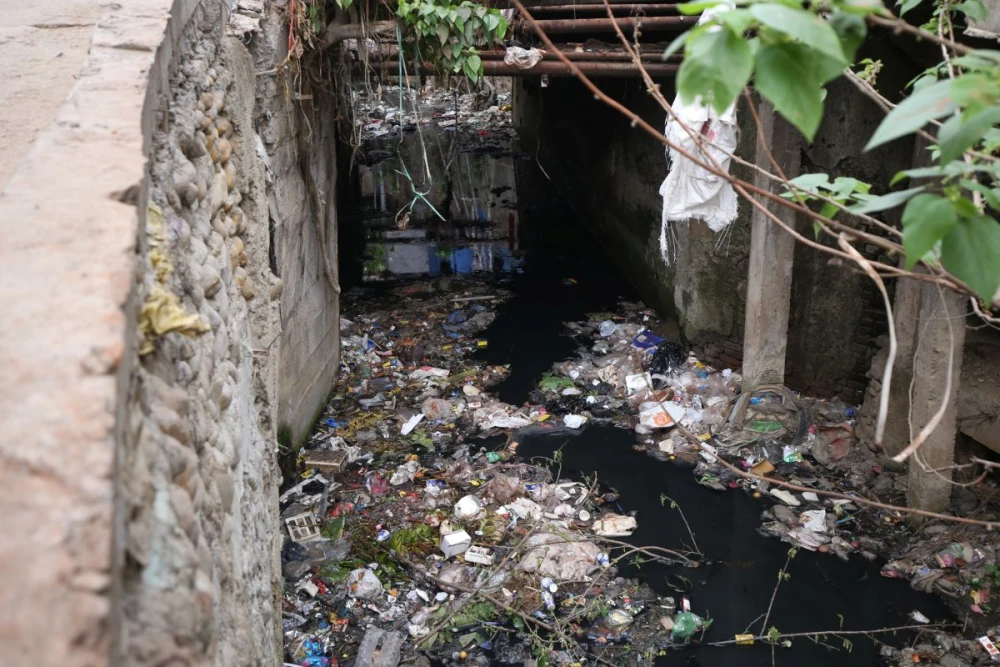
Plastic waste collections in Khensa village under Mokokchung district. (Morung Photo)
Lenni Samuel
Dimapur | June 3
Waste management remains a pressing challenge across Nagaland. Citizens from all walks of life are increasingly advocating for a common solution, a community-led system that ensures both participation and accountability. According to participants from various sectors, sustainable waste management must begin at the household level and can only succeed when communities take collective responsibility.
Waste management begins at home
Pulotoli Yepthomi, a 25-year-old homemaker, believes colonies and villages should manage their own waste. She suggests households manage food waste by creating compost bins that can provide “fertilizers” for kitchen gardens. “We already do this in my home; my vegetables grow better and we throw out less,” she says.
An MSc Environmental Science student adds that local bodies should take the lead by setting up communal composting sites, where food scraps and organic waste can be turned into fertilizer for nearby farms.
Echoing similar views, Vikhuli Achumi, Program Manager at Pro Rural, notes that a large portion of waste in the region remains organic and urges greater adoption of household composting and decentralized waste processing systems.
Segregation as the first step
Waste segregation was a recurring theme among respondents. Kishor Dass, a Social Development Worker at Peace Channel called for “mandatory waste segregation at source,” requiring every household and institution to separate waste into biodegradable, recyclable and non-recyclable categories.
According to Dass, this would reduce landfill burden, lower collection costs and improve the efficiency of recycling and composting. He noted that source segregation reduces workloads later in the waste management chain and speeds up the process. He also recommended installing clearly marked waste bins and adding more collection points in market areas, tourist spots, and other public spaces to reduce indiscriminate dumping and littering.
Adding to this, Imsopangla Ao, proprietor of The Good Place, a convenience store in Duncan Basti, Dimapur, proposed distributing separate waste bins to facilitate segregation, noting that many households may struggle to initiate the practice on their own.
She also emphasised the need to educate the public on waste management as a primary step toward addressing the issue locally. “Many people are still unaware,” she said. “They dump waste in drains and even throw wrappers, juice boxes, and other trash on the roadside without using dustbins that are actually available for them.”
Building community-based systems
Beyond household composting and waste segregation, respondents emphasised the need for local institutions to sustain these practices through community participation and accountability.
From an environmental science perspective, costly landfills and incineration plants are ill-suited to Nagaland’s hilly terrain and limited infrastructure. Instead, existing institutions like village councils and gaonburas offer trusted mechanisms for organizing collection schedules and encouraging participation. Self-help groups could also be formalized into collection cooperatives, channeling recyclables to authorized buyers while creating local livelihoods.
Similarly, Vikhuli Achumi argues that segregation alone is insufficient unless communities can process waste locally. Decentralized solutions, such as colony-level compost pits and small recycling centers are more realistic for Nagaland than centralized facilities, which often struggle with transportation, maintenance, and compliance.
She cautions, however, “It will only succeed with consistent awareness, simple rules, and local enforcement, along with incentives like cleanliness drives, penalties for littering, and support for recycling initiatives.”
Accountability beyond infrastructure
The most practical solution to reduce waste pollution in Nagaland, according to Tolivi Sumi, Environment Waste Management Coordinator at Pro Rural, is a three-pronged approach: ward-level task forces, model wards and strong public participation.
“Dimapur does not have mega waste plants, and our lone landfill is overburdened. We cannot wait five years for new infrastructure,” Tolivi explains. Instead, she advocates mobilizing existing institutions, colony GBs, ward commissioners, churches, student bodies, and community organizations, to strengthen accountability and compliance.
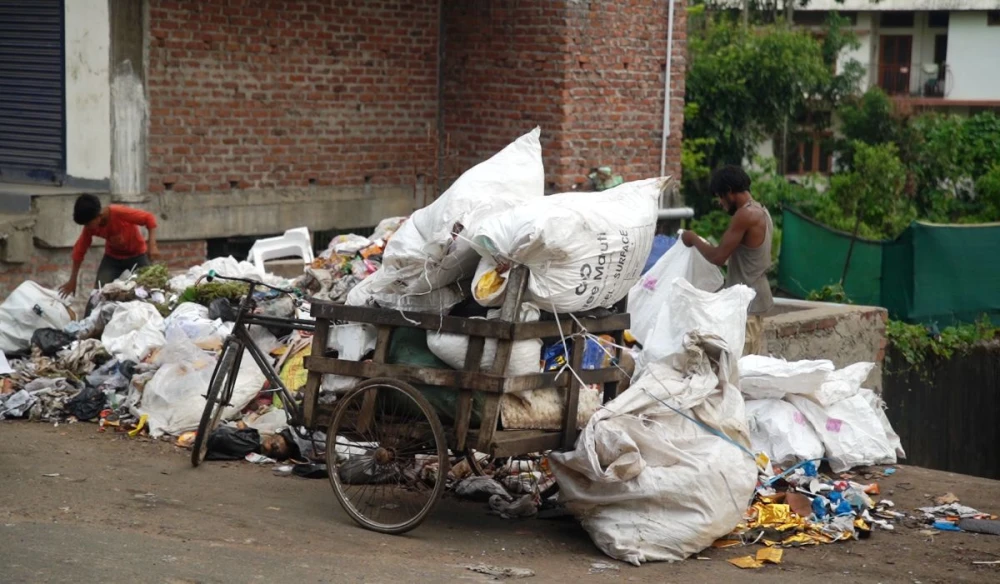
The real challenge, she notes, is not just infrastructure but behaviour. Households mix waste, collection is irregular, and violations often go unchecked. A ward-level task force comprising GBs, SHG women, youth representatives, and municipal inspectors could bridge these gaps through community monitoring and enforcement. Such community-managed systems are faster to replicate and more sustainable than centralized infrastructure, while also creating local jobs in composting and recycling.
Across responses, a clear pattern emerged, waste management cannot succeed through infrastructure alone. It depends equally on community ownership, behavioural change, and consistent citizen participation. From Pulotoli’s compost pit to Kishor’s call for mandatory segregation, Vikhuli’s decentralized systems to Tolivi’s ward-based model, each perspective points to a solution rooted in participation, not dependence.
Their collective message suggests that while technologies and infrastructure remain important, a ‘cleaner Nagaland’ will ultimately depend on what communities are willing to do together. As Tolivi Sumi observes, “When accountability is local, compliance follows.”
The writer is currently a postgraduate student in Political Science at Madras Christian College, Chennai. Her academic coursework includes Public Opinion, Media Strategies and Political Journalism. This report is part of her one-month internship at The Morung Express.