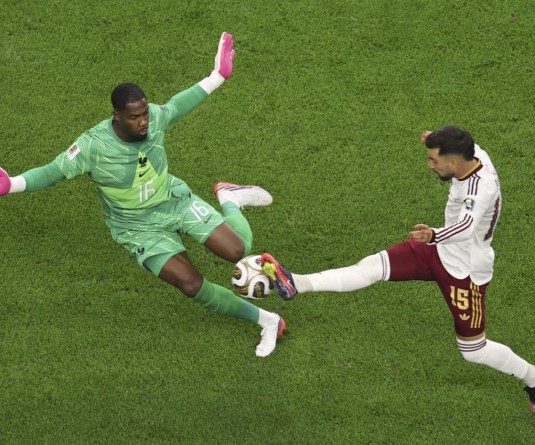
DIMAPUR, JUNE 2 (MExN): Group A of the FIFA World Cup 2026 may lack a traditional football superpower, but it is one of the most evenly matched sections in the tournament. With co-host nation Mexico facing strong challenges from South Korea, Czechia and South Africa, the battle for qualification could be decided by the finest margins.
MEXICO
Javier Aguirre’s team faces severe domestic pressure to secure a deep tournament run on home soil. While El Tri avoided blue-blood opponents in the draw, they must navigate a group composed almost entirely of counter-pressing units structured to exploit defensive impatience.
Milan forward Santiago Giménez is expected to lead the line, supported by veteran Raúl Jiménez and West Ham midfielder Edson Álvarez. The primary tactical concern for Mexico remains its vulnerability to high-speed transitional play, which could expose a veteran backline and goalkeeper Guillermo Ochoa. Playing at the high altitude of Mexico City provides a distinct environmental advantage, but the emotional burden of host-nation expectations has historically complicated early fixtures for Mexican squads.
SOUTH KOREA
South Korea enters the tournament as the group’s most in-form attacking unit. The Asian powerhouse showed considerable offensive fluidity during its pre-tournament training camp in Salt Lake City, highlighted by an emphatic 5-0 friendly victory over Trinidad and Tobago.
Talismanic captain Son Heung-min enters the tournament with renewed momentum after ending a recent international scoring drought with a two-goal performance in preparation play. With Paris Saint-Germain’s Lee Kang-in providing creative service and Bayern Munich’s Kim Min-jae anchoring the central defense, South Korea possesses the tactical balance to challenge Mexico for the top spot in the group.
CZECHIA
Ivan Hašek’s Czechia side brings European physical robustness and low-block defensive discipline to North America. The Czechs are comfortable conceding possession for extended stretches, relying on structural organization and set-piece efficiency to stifle opponents.
West Ham midfielder Tomáš Souček provides aerial dominance in the center of the pitch, while Bayer Leverkusen forward Patrik Schick offers a proven tournament target up front. Czechia projects as the group’s chief disruptor; their rigid defensive positioning is well-suited to neutralize South Korea’s pace out wide and frustrate Mexico’s tempo. Under the new tournament structure, their low-risk style makes them strong candidates to advance.
SOUTH AFRICA
Returning to the World Cup under veteran manager Hugo Broos, South Africa arrives as the definitive underdog in the group. However, Bafana Bafana possesses a distinct advantage in squad chemistry, drawing heavily from a domestic core composed primarily of Mamelodi Sundowns players, including goalkeeper Ronwen Williams and midfielder Teboho Mokoena.
Burnley forward Lyle Foster provides the necessary physical presence against physical European and South American backlines. South Africa is highly disciplined and rarely breaks formation under sustained pressure. Their opening match against Mexico in the capital will immediately test whether their domestic synergy can withstand a hostile host crowd.
Group B’s Continental Clash
DIMAPUR, JUNE 2 (MExN): Co-hosts Canada anchors a highly competitive and balanced Group B, entering a section defined by European tournament experience, distinct stylistic contrasts, and an absolute absence of a clear global superpower. While hosts Canada and the experienced Swiss side may begin as slight favourites, Bosnia and Herzegovina and Qatar have the quality to turn the group into a fiercely contested battle for qualification.
CANADA
Jesse Marsch’s squad carries the substantial burden of home-field expectations as Canada hosts men’s World Cup fixtures for the first time in its history. Building on momentum from a semi-final run at the Copa América, the Canadians rely heavily on an intense, high-pressing transitional style engineered by Marsch to disrupt structured opponents.
Bayern Munich’s Alphonso Davies provides elite world-class pace from the flank, while Juventus forward Jonathan David offers a proven, highly clinical focal point in the attacking third. Backed by Porto midfielder Stephen Eustáquio, Canada’s primary asset remains its dynamic athletic ceiling. However, questions persist regarding whether a relatively thin backline can withstand technical counter-attacks if their aggressive press is bypassed in transitional moments.
SWITZERLAND
Murat Yakin’s side enters the tournament as the most structurally established and experienced unit in the section, marking their fifth consecutive World Cup appearance. The Swiss advanced cleanly through an unbeaten UEFA qualifying campaign, solidifying their reputation as a rigid, low-risk tournament side built to systematically wear down aggressive opponents.
The roster features premium European experience, anchored by Bayer Leverkusen’s veteran midfielder Granit Xhaka and Borussia Dortmund goalkeeper Gregor Kobel, alongside the defensive stability of Inter Milan’s Manuel Akanji. Switzerland thrives on controlling tempo and suffocating space in the middle third. While they frequently face media scrutiny regarding a lack of explosive, elite goal-scoring options up front, their exceptional defensive organization makes them the consensus favorites to secure safe passage out of the group.
BOSNIA AND HERZEGOVINA
The Balkan nation secured its historic return to the global stage by navigating a grueling UEFA playoff bracket, capped by dramatic penalty shootout victories over Wales and four-time world champions Italy. Making only their second World Cup appearance, Bosnia and Herzegovina plays a highly physical, emotionally charged brand of soccer that thrives in direct aerial duels and low-block situations.
The emotional and tactical focal point remains veteran forward Edin Džeko, who continues to defy age as the team’s primary aerial target and leader. Supported by Atalanta defender Sead Kolašinac and Benfica’s Amar Dedić, the squad is constructed to make games as physically punishing as possible. While a lack of overall team speed makes them vulnerable to high-tempo counter-attacks, their elite execution on set-pieces makes them a highly dangerous spoiler.
QATAR
The reigning Asian champions arrive in North America looking to erase the memories of their difficult 2022 campaign on home soil. Under a disciplined counter-attacking structure, Qatar plays a highly flexible, cohesive style refined through long stretches of domestic training camps and continental success.
The team’s prospects rely heavily on the elite attacking partnership of Akram Afif and forward Almoez Ali, both of whom possess the technical speed to punish high defensive lines against the run of play. Backed by veteran midfielder Hassan Al-Haydos, Qatar’s chemistry mirrors a club team. While they face a massive physical disadvantage against the robust European blocks of Switzerland and Bosnia, their tactical synchronization ensures they cannot be discounted as a potential knockout contender.