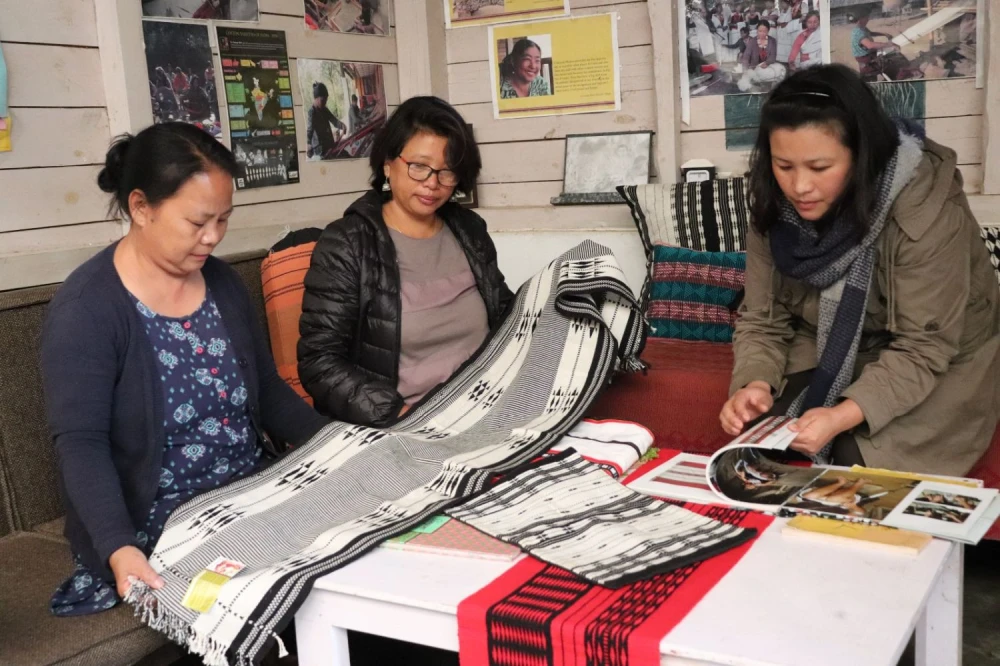
Seno Tsuhah is a community organizer and educator from Chizami village of Phek district in Nagaland.
.jpg)
Lenni Samuel
Dimapur | June 4
As the climate crisis accelerates, collective responsibility is no longer optional, it is essential. The Earth is sending clear signals that demand immediate action. The question is no longer if change will come, but how humanity guides it and how fast.
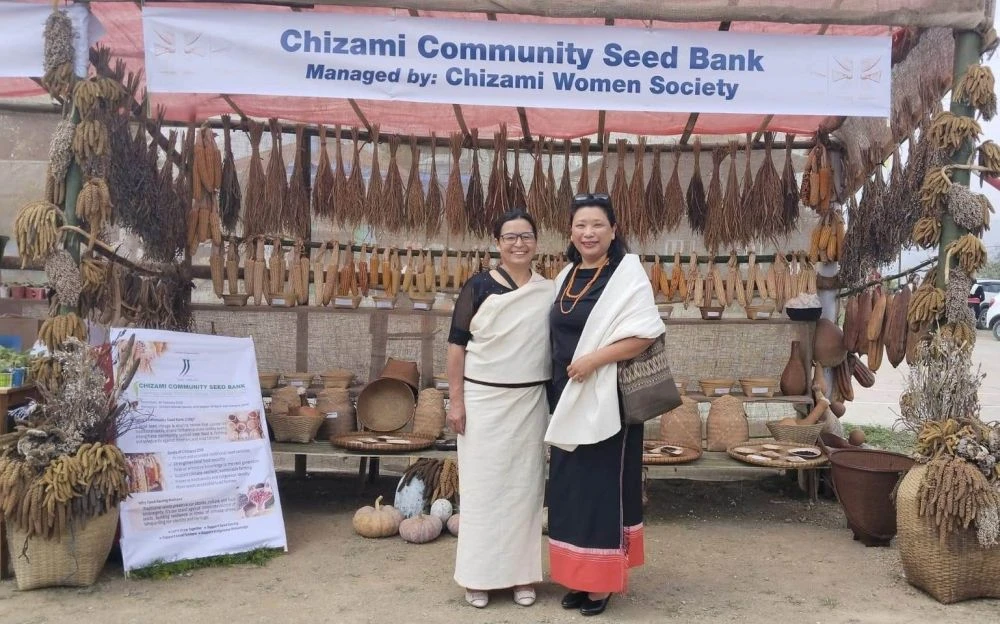
Seno Tsuhah, a community organizer and educator from Chizami village in Nagaland’s Phek district, reminds us that while top-down policies matter, true transformation begins when grassroots communities awaken to drive change. Tsuhah leads women-led seed banks, the craft enterprise Chizami Weaves and serves as Member Secretary of the Chizami Village Biodiversity Management Committee.
Shrinking of the Commons
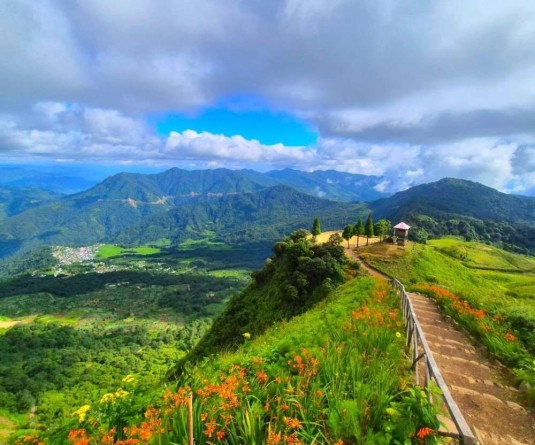
One of the greatest threats to Nagaland’s ecological future, for Tsuhah is the shrinking of the “Commons - shared lands, forests, water bodies, and traditional knowledge.”
Historically, these Commons were the foundation of sustainable living, offering food, livelihoods, ecological security and a collective sense of responsibility. Today, she cautions, they are increasingly being privatized and commodified through commercial activities such as monoculture plantations and extractive development practices.
“When the Commons disappear, we don’t just lose trees or water,” she says. “We lose our biodiversity, our food security and the community-centered cultural values that define who we are.”
The impact goes beyond environmental harm. The loss of shared resources threatens local livelihoods and deepens social inequalities.
Meanwhile, she points to a growing culture of careless consumption that erodes traditional stewardship. “We consume without care and discard without thought,” she observes. “This lack of collective conscience is as threatening to Nagaland’s future as the loss of the land itself.”
The cost of cultural erosion
While discussions often focus on deforestation, pollution or species loss, Tsuhah believes equal attention must be paid to the erosion of culture and indigenous ways of relating to the land.
With over two decades of work in rural Nagaland on biodiversity, food sovereignty, women’s rights and sustainable livelihoods, she has championed community seed banks, indigenous food systems and community-led conservation.
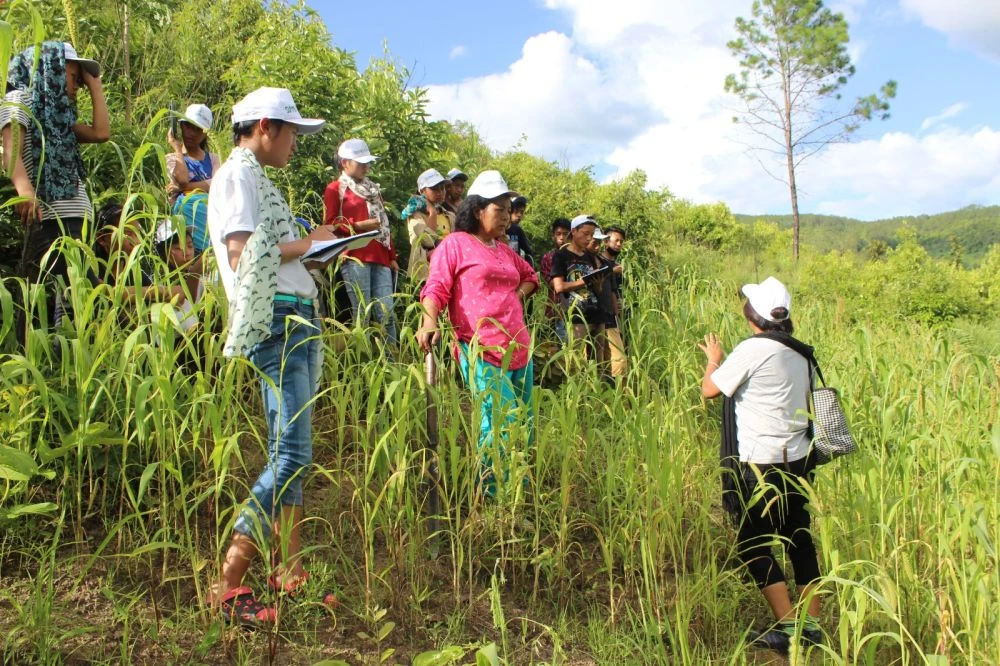
Culture, she argues, is rooted in place. Stories, traditions, knowledge and identity are forged through generations of interaction with specific landscapes. When ecosystems disappear, so too do these cultural foundations.
“When we destroy an ecosystem, we don't just destroy trees, water, or animals, we destroy the stories, the rituals and the indigenous identity anchored to that place,” she says.
This loss undermines conservation itself. When communities lose the values of care, sharing, and responsibility that once guided resource management, environmental decline becomes more likely.
“We cannot protect our cultural diversity without protecting the biological diversity that sustains it. If we do not care for the land, we cannot preserve who we are,” she says.
Communities as climate stewards
“Top-down policies inevitably fail without active participation on the ground,” says Tsuhah. While international negotiations and government policies matter, she insists that lasting environmental action depends on how people live, consume and govern their resources on a daily basis.
“The climate crisis cannot be solved from a boardroom,” she adds. “It can only be halted and reversed through individual and collective action.”
This is particularly relevant in Nagaland, where communities hold significant control over land and natural resources. Village institutions can create and enforce conservation rules, making local governance a powerful tool for protection. Community Conserved Areas, where villages voluntarily protect forests and biodiversity, are living proof that collective action works.
Still, Tsuhah stresses that communities should not be left to act alone. Sustainable environmental change requires collaboration between local communities, civil society, institutions and policymakers.
Why indigenous knowledge matters
Another important resource, says Tsuhah, is Indigenous knowledge. “Indigenous peoples make up less than 5% of the world’s population, yet they steward 80% of our remaining global biodiversity.”
This reflects generations of ecological wisdom rooted in local environments. Still, she cautions against romanticizing Indigenous knowledge or viewing it as a complete solution. “The truth is that our Indigenous knowledge systems are eroding at a terrifying pace,” she cautions.
Rather than pitting traditional knowledge against modern science, she advocates for bringing them together. Indigenous practices, in biodiversity conservation, seed preservation, agro-ecology and community governance, can complement scientific innovation to build more resilient responses to environmental challenges. “If the world is serious about survival,” she says, “we must save this eroding knowledge, evolve it with modern science and put it into practice before it slips away entirely.”
Women at the frontlines
Tsuhah also highlights the often-overlooked role of women in environmental stewardship. “Women play a critical part in biodiversity conservation, resource management, food production, and as custodians of knowledge,” she notes. “Yet these contributions remain largely invisible.”
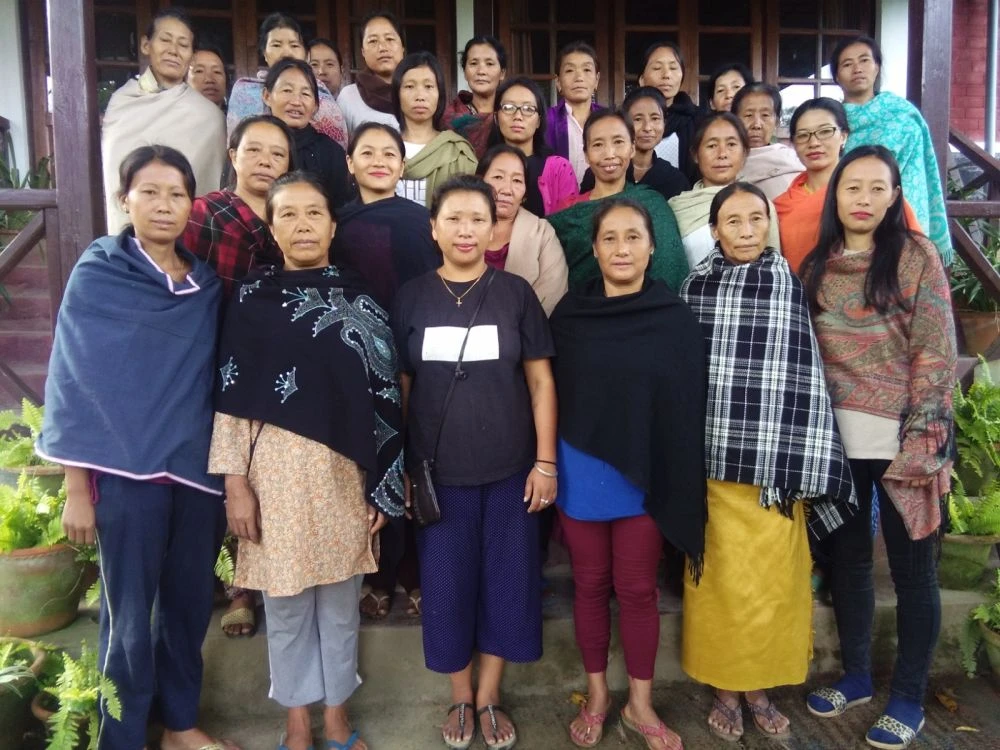
This lack of representation, she argues, limits the perspectives that shape environmental decisions and excludes those most connected to daily conservation work. To address this, Tsuhah believes policymaking must be intentionally inclusive.
First steps include formally recognizing women’s contributions and Indigenous knowledge and securing their place in governance from village to national levels. “True inclusion must be intentional,” she says. “We need to mandate spaces for women in governance and decision-making, starting at the grassroots village level and moving upward.”
As Nagaland undergoes rapid change, Tsuhah sees the challenge not as choosing between modernization and tradition, but as ensuring development stays rooted in ecological sustainability and Indigenous values.
She advocates for “indigenizing development” delivering quality healthcare, education, technology, connectivity and economic stability within the circle of ecological sustainability, guided by Indigenous principles of reciprocity, interconnectedness, custodianship and self-governance.
For her, the goal is not to preserve traditions unchanged, but to adapt them so they remain relevant while protecting the ecological foundations they were built on.
A future worth protecting
Despite the challenges, Tsuhah remains hopeful. She finds hope in ‘natural resources, resilient knowledge systems, community institutions, and people, both youth and elders who still believe in the power of Indigenous practices, innovations, and collaborations.’
For her, these efforts show that sustainable futures are not just aspirations but realities being built on the ground. They prove that indigenous knowledge, biodiversity and community-centered living can thrive and may offer vital lessons for the future. “Across Nagaland and the world, there are countless untold stories of communities quietly building sustainable ecosystems, protecting food sovereignty and working toward climate justice and equity,” she adds.
The writer is currently a postgraduate student in Political Science at Madras Christian College, Chennai. Her academic coursework includes Public Opinion, Media Strategies and Political Journalism. This report is part of her one-month internship at The Morung Express.